


Architectural Decorative Paints: Project-Based Selection
How to choose architectural decorative paints on a project: a guide to room-based criteria, mock-up approval, specification wording and maintenance.

A wall covering that works in a residential project can start to tire within the first six months in the hotel project the same team delivers a year later. The reason is usually not product quality but a selection that was not made according to the real load of the space. In architectural projects, the decorative paint decision is a balance struck between appearance, cleanability, light, maintenance interval and the application schedule. In this article we explain how to strike that balance on a project basis.
Key Takeaways
- Product selection starts with the room schedule: every space has different traffic, humidity, light and cleaning frequency.
- With decorative coatings the appearance depends on the application technique, so the decision is made on an approved mock-up, not on a colour card.
- The specification wording must define surface preparation, primer, number of coats and the protective layer as well as the product name.
- The maintenance plan is made at the design stage; ease of renewal matters as much as the initial investment.
- When standard products do not meet the project, custom formulation and contract manufacturing are an option.
Selection Starts With the Room Schedule
There is no single "wall paint" decision in a project; every space carries its own load. Answering these five questions separately for each space before selecting a product makes all the decisions that follow easier:
- Traffic: Is the surface exposed to contact from shoulders, bags, luggage or equipment?
- Cleaning frequency: How often and by what method will the surface be wiped?
- Humidity and steam: Is there a risk of condensation in the space, and is the ventilation adequate?
- Light: Is there strong grazing light? If so, texture and substrate flatness become critical.
- Service life: How often will the space be refurbished? Can it be closed during renewal?
These five answers determine the product almost by themselves. For example, if the answers are "high traffic + frequent wiping + strong grazing light", a porous and unprotected decorative texture is not the right decision for that space.
Approach by Project Type
| Project type | Decisive criterion | Approach |
|---|---|---|
| Hotel — lobby and public areas | First impression, high traffic | Decorative texture on feature surfaces; protected and washable finish along the contact line |
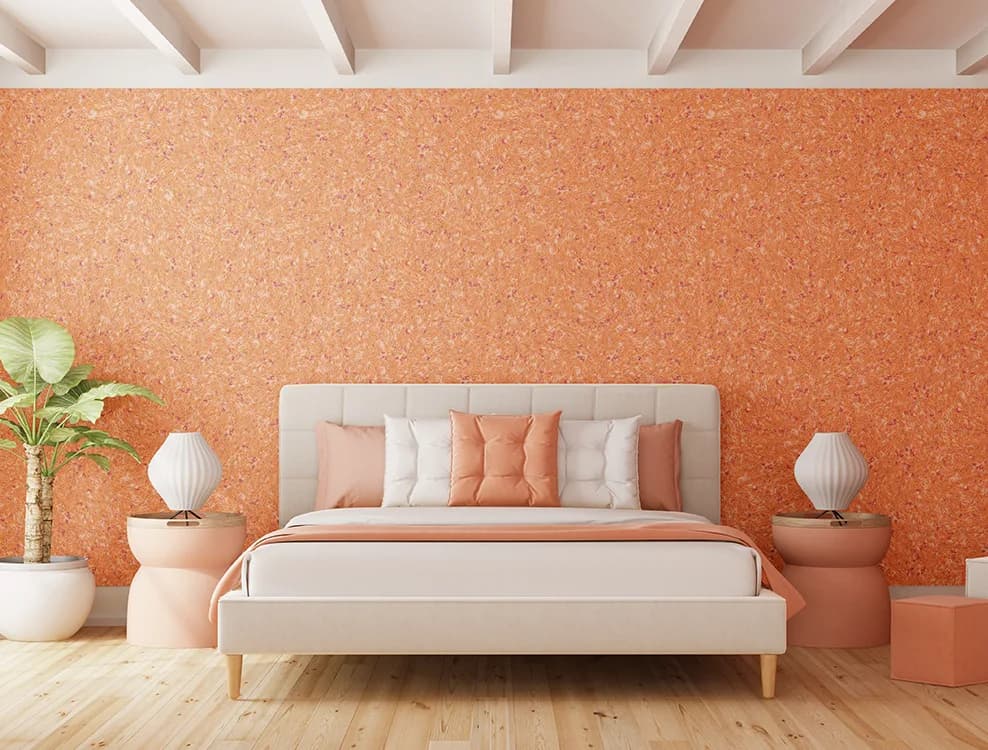
| Hotel — guest rooms | Fast renewal, quietness | Easily touched-up flat surfaces; texture on the headboard wall |
| Restaurant, café | Grease, steam, frequent cleaning | Washable topcoats; protective varnish on textured surfaces |
| Office | Light, acoustic perception, neutrality | Matt and low-reflectance surfaces; feature texture in the reception area |
| Residential | Living comfort, indoor air | Low-VOC interior products; textured accent in the living room and bedroom |
| Retail | Frequent concept changes | Fast-applied systems that are easy to cover over |
We have collected space-based solution examples in the spaces section; for intensively used areas such as hotels, restaurants and cafés, the horeca page also covers durability and cleanability criteria.
Positioning the Product Family Correctly
Three layers usually work together in a project, and each one has a different function:
- Background surfaces: Most of the spaces are finished with flat interior paints. Here the decision is about sheen level and cleanability; in the interior paints and primers group, matt, silk matt and satin options differ for this purpose.
- Feature surfaces: These are the surfaces that give the project its character. The effect paints group holds marble, antique stone, pearlescent and velvet-textured products, while the silk plasters group offers fabric-like, soft surfaces.
- Protective and preparation layers: Primers and protective varnishes are invisible but they determine performance. Leaving them out of the specification is the most common project mistake.
Mock-up: Where the Decision Is Made
With decorative coatings the product name alone does not define the result; with the same product, the surface character changes when the applicator changes. That is why a mock-up is not a formality in projects but part of the contract. A mock-up process that works is set up like this:
- The sample is made on the actual substrate to be used in the project and with the actual primer.
- The size must be sufficient; on small pieces the scale of the texture is misleading.
- The assessment is carried out under the space's own lighting, both by day and at night.
- The approved sample is signed, dated and kept on site; it is the reference for comparison at handover.
- The team that carries out the application must be the same team that made the sample.
Specification Wording: The Product Name Is Not Enough
Writing only the product name in the room schedule means meeting three different interpretations on site. A good decorative coating specification defines at least these six headings:
- Surface preparation and acceptance criteria (flatness, moisture, cleanliness).
- Primer type and number of coats.
- Product name, number of coats and application tool.
- Texture character and approved sample reference.
- Whether a protective layer is required.
- Ambient conditions and waiting times between coats.
The technical equivalents of these headings are defined in the products' technical data sheets; you can download the relevant documents from the TDS archive and reference them directly in the specification. For a general overview of the product groups, the PDFs in the catalogue section are useful at the presentation stage.
Maintenance and Renewal Are Part of the Design
The project life of a surface is measured by its renewability as much as by the quality of the first application. On decorative textures local touch-up usually stays visible; textured surfaces should therefore be used in areas that can be architecturally bounded — a wall, a niche, a column. In the event of damage the whole of that surface is then renewed and no joint mark appears.
By the same logic, highly washable flat products are preferred on surfaces along the heavy contact line; decorative texture is moved above eye level or to areas out of contact. This simple distinction markedly lowers maintenance costs in hotel and restaurant projects.
When Standard Products Are Not Enough: Custom Formulation
In some projects the desired tone, texture or performance is not matched exactly by the standard range. In that case project-based formulation and contract manufacturing come into play: needs such as special batch production for a defined colour and texture, or packaging and labelling specific to your brand, are set out on the services page. If this route is chosen, timing matters; the sample–approval–production cycle must be planned into the project schedule from the outset.
Common Mistakes
- Covering the room schedule with a single product and assuming that every space is exposed to the same load.
- Making the mock-up on a small piece of card and not assessing it under the lighting of the space.
- Not defining the primer and the protective layer in the specification.
- Placing decorative texture along the contact line and meeting touch-up problems in the first year.
- Not keeping the approved sample and losing the comparison reference at the end of the job.
- Noticing the need for custom formulation at the end of the project schedule.
Transitions Between Spaces: Colour and Texture Coordination
Even when individual spaces are resolved correctly, the whole falls apart if the transition between them is not thought through. If the language of the surface changes as you move from the corridor to the room, or from the lobby to the restaurant, that change must have a logic. The approach that works in practice is to define one main palette and a limited number of textures for the project, and then resolve the spaces from within that palette.
Two rules are useful at transition points. First, a change of texture should occur at an architectural boundary: a column, the edge of a niche, a change in ceiling level. A texture that ends in the middle of a wall always looks unfinished. Second, two different textures should not sit directly side by side; a flat surface or a shadow-gap detail between them strengthens both.
On the colour side, the decision must be made together with the lighting design. The same tone reads as two different colours under the cool white fittings of a corridor and the warm white lighting of a room; this is why mock-up assessment is carried out under the space's own lighting.
Conclusion: Space First, Product Second
Choosing the right decorative paint in architectural projects is a process that starts from the space, not from the product. Define the traffic, the cleaning frequency, the humidity and the light; limit the feature surfaces; make the decision on an approved mock-up and write every step in the specification, from surface preparation to the protective layer.
A concrete next step: draw up the room schedule for your project and mark the five criteria (traffic, cleaning, humidity, light, renewal) for each space, then identify candidate products in the products section and send your sample request through the contact page.
The selection starts from the space, not from the product. For each space, traffic, cleaning frequency, humidity, light and renewal interval are defined; the product is determined according to these five criteria. Different spaces in the same project require different products.
With decorative coatings the surface character depends on the application technique; different teams give different results with the same product. A sufficiently large mock-up made on the actual substrate and the actual primer secures both the decision and the acceptance at the end of the job.
Surface preparation and acceptance criteria, primer type and number of coats, product name and application tool, texture character with the approved sample reference, the requirement for a protective layer, and ambient conditions with waiting times between coats.
Texture should be used on a limited number of surfaces that carry character, such as the lobby and the reception area. Along the lines where luggage, shoulders and equipment make contact, highly washable flat products are preferred; this lowers the maintenance cost.
On textured surfaces local touch-up usually stays visible. Textured surfaces should therefore be planned in architecturally bounded areas such as a wall, a niche or a column; in the event of damage the whole of that surface should be renewed.
When the standard range does not meet the project, project-based formulation and contract manufacturing are possible. Because the sample, approval and production cycle takes time, this need must be written into the project schedule from the outset.
The technical data sheets and safety data sheets of the products can be downloaded from the TDS archive. Referencing these documents directly in the specification reduces differences of interpretation on site.
In areas with intensive screen use, matt and low-sheen surfaces that reduce reflection are preferred. Reception and meeting areas, on the other hand, can carry the character of the brand with a textured feature surface.