

Industrial chic guide with concrete effect paint
Discover the key points to achieving industrial chic with concrete effect paint at home and in commercial spaces, layered interior wall systems, and application tips.
What is concrete effect paint, and how does it meet industrial style?
You want a loft vibe in your home or project, but real exposed concrete can be both costly and risky. Your walls are not smooth, there are visible installation lines, or you are a tenant looking for a solution that is easy to reverse. This is exactly where concrete effect paint and decorative coatings come into play.
The concrete effect look is a decorative system that gives walls the feel of raw concrete without pouring real concrete. The aim here is to:
- Create a texture and colour depth that visually evokes exposed concrete,
- Make the surface more suitable for interiors, smoother and cleanable,
- Build a layered structure that can be repainted with interior paint when desired.
Industrial style works precisely with these raw, unfinished looks: exposed installations, metal details, wooden surfaces and walls that give a concrete feel. With concrete effect paint, you can use this language in a controlled and warm way both in homes and in spaces such as cafes, restaurants and offices.
Highlights
- A concrete-effect wall is not made of a single product; it is a system consisting of filler, primer, base interior paint and a decorative layer.
- To achieve industrial chic, it usually gives a more balanced result to apply the concrete effect not on all walls, but on carefully selected feature surfaces.
- In living rooms, bedrooms, kitchens and bathrooms, the choice of tone and lighting plays a critical role in preventing the concrete from looking cold.
- In kitchens and bathrooms, the concrete-effect surface can be made more durable with protective transparent layers against moisture and staining.
- If your style changes in the future, you can refresh the look by repainting over the concrete-effect surface with interior wall paint.
Which surface, which product: effect paint, decorative coating and interior wall system
When people say “concrete-look wall”, they usually think of a single “concrete effect paint”. In practice, however, the healthier approach is to think of the wall as a layered system:
- Lower layers: Surface repair, filler, primer and, if necessary, base interior wall paint
- Top layer: Decorative coating or effect paint that provides the concrete effect
Creating a concrete feel with effect paint and decorative coating
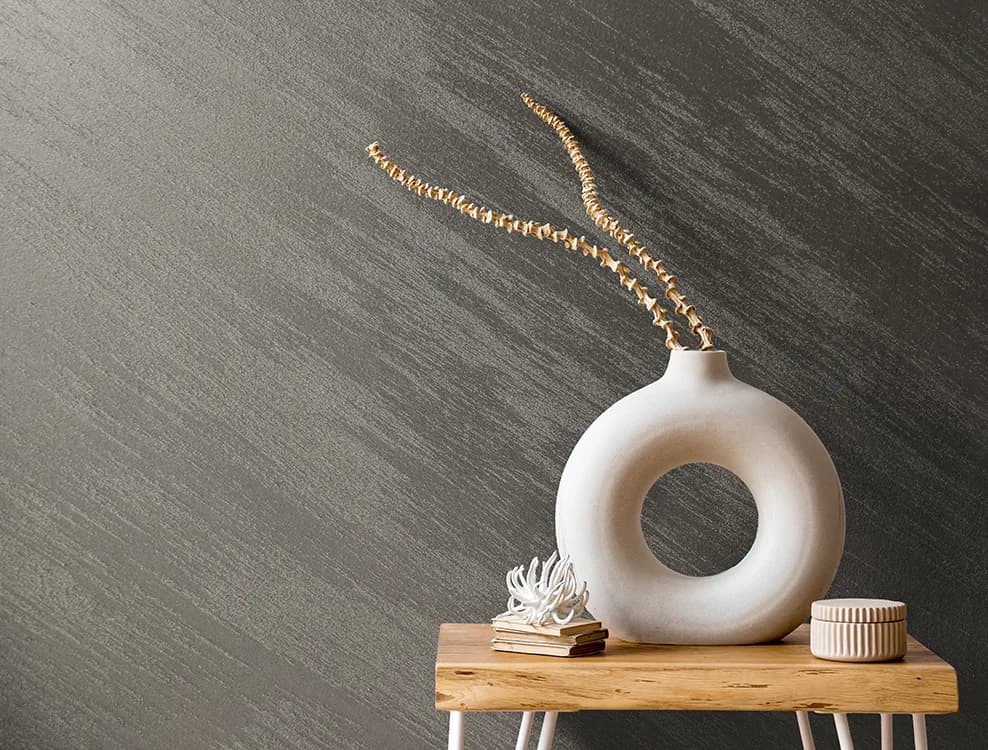
Although there is no specific product called “concrete” at Silkcoat, interior decorative coatings such as Silkofarit can be used for similarly textured surfaces. By using suitable interior paints underneath or on top, it is possible to create a concrete-like base in grey tones. At the same time, different textures in the Efekt Boyalar product category can be brought closer to a concrete feel with brush and trowel techniques.
The basic logic is as follows:
- The interior surface is made smooth and sound with Akrilik Macun (Dahili) and suitable primers.
- If necessary, interior wall paints such as Silkomatt, Natural, Natural Soft can be used for a neutral base colour.
- The decorative product that will give the concrete effect (for example, a coating like Silkofarit or a product from the effect paint category) is applied with trowel, sponge or special roller techniques.
Interior paints and primers: the infrastructure of the system
The infrastructure is critically important for a concrete-effect wall to be long-lasting and to resist cracking and flaking. Some product groups frequently used in Silkcoat interior wall systems are:
- Akrilik Macun (Dahili): To correct uneven surfaces, and to fill cracks and holes.
- Macun Astarı or İç Cephe Astarı: To stabilise the filled surface and prepare it for the decorative layer.
- Brüt Beton Astarı: To increase adhesion directly on exposed concrete surfaces.
- Silkomatt, Class Plastik, Natural, Natural Soft, Silkosil, Latex: Options that can be used as base paint or final interior paint depending on the project.
Layers of the wall system
A typical concrete-effect wall system in interiors can be structured as follows:
- Surface repair (Akrilik Macun)
- Macun Astarı or İç Cephe Astarı
- Interior paint for the base tone if needed (for example, a matt paint like Silkomatt)
- Decorative coating or effect paint (the layer that gives the concrete effect)
- Optional transparent protective coat in humid areas
Design decisions for industrial chic: where, how much and in which tones?
Industrial style is not achieved just by making a grey wall. Which wall you use, how much area you cover, and the warmth of the grey tones greatly influence the result.
Which walls should you make concrete-effect?
In practice, the strongest results are usually obtained on the following feature walls:
- Living room: Behind the TV unit or the main sofa
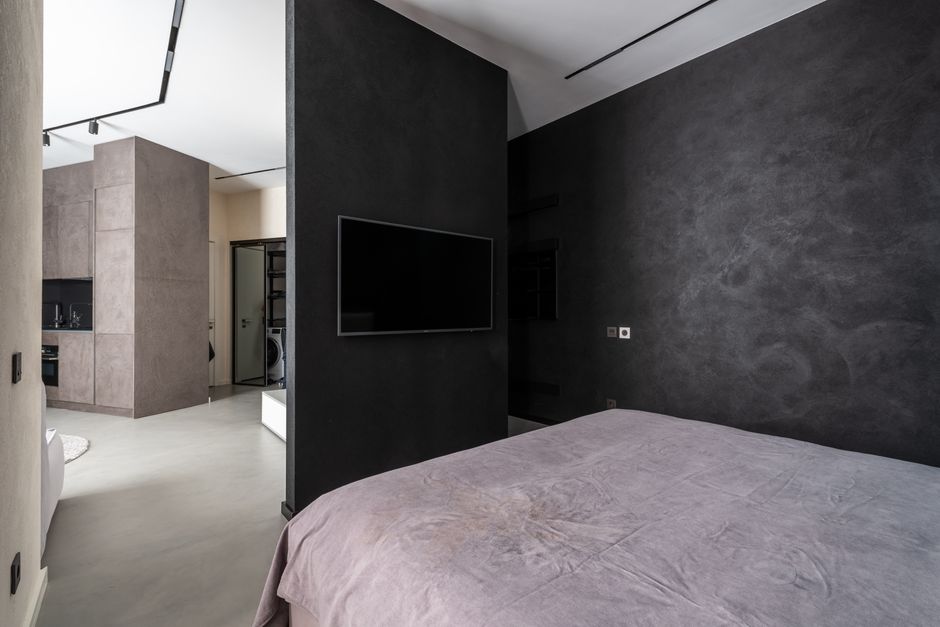
- Bedroom: The headboard wall
- Entrance hall: A narrow but long wall; the focal point when guests first enter
- Cafe/restaurant: Behind the bar or a single long wall in the seating area
- Office: Behind the screen in the meeting room or the reception wall at the entrance
Applying the concrete effect on all walls in small and low-light rooms can lead to a dull and dark atmosphere. Especially in homes, the approach of intense effect on 1 or 2 walls, calm matt paint on the other walls usually looks more balanced.
Cool grey or warm grey?
The difference between a “cold factory” feel and a “warm loft” look with concrete is often hidden in the tone:
- Cool grey: With a slight blue undertone, modern and crisp, but can give a harsh impression when overused.
- Warm grey and beige-grey: With slight beige or brown undertones; when combined with wood and textiles, it creates a more inviting environment.
On concrete-effect walls, choosing warm grey/greige tones in matt interior wall paints such as Silkomatt or Natural as the base colour provides a more liveable industrial style in most homes.
Balancing with furniture and lighting
- Metal details: Coffee tables and shelves with thin black or anthracite metal legs emphasise the industrial side of concrete.
- Wood: Medium or warm-toned wooden tables and consoles balance out the coldness.
- Textiles: Linen-look fabrics, textured rugs and cushions soften the harsh look of the wall.
- Lighting: Pendant lights and sconces with warm (yellow) light make the texture on the concrete-effect surface more vivid. Angling spotlights slightly towards the wall brings the texture to the foreground.
Technical preparation before application: surface prep for a smooth concrete effect
The most important stage determining how realistic the concrete effect will look is the preparation of the surface before application. The path you should follow may differ for different surfaces.
Preparation on previously painted walls
- Inspection: Identify blistered, flaking paint, cracks and damp areas.
- Cleaning and sanding: Scrape off loose paints and lightly sand the surface to remove dust.
- Repair: Fill holes and cracks with Akrilik Macun (Dahili) and smooth the surface.
- Primer: Use Macun Astarı for filled surfaces and İç Cephe Astarı or Süper Primer for large areas to balance absorbency.
- Base coat: If desired, apply a matt interior wall paint (for example, Silkomatt or Class Plastik) to obtain a neutral grey base colour.
Preparation on exposed concrete surfaces
- Examine the surface: Identify segregations, formwork marks, holes and cracks.
- Cleaning: Remove dust, oil and form-release oil residues.
- Adhesion primer: Apply Brüt Beton Astarı, specially developed for concrete, to facilitate the adhesion of decorative layers.
- Correction: Repair necessary areas with Akrilik Macun (Dahili) and prime again.
Creating a neutral and sound base indoors
Whatever the final coat may be (effect paint, decorative coating, silk plaster), your goals are:
- A smooth, sound, dust-free surface,
- A primed wall with equal absorbency,
- A base colour that supports the concrete effect and does not contain unnecessary tone differences.
Step-by-step concrete-effect look: DIY and professional perspectives
Simplified DIY flow for homeowners/tenants
If you are not a professional and want to undertake a more controlled job, you can proceed with the following logic:
- Wall selection: First, select just one feature wall.
- Preparing the surface: Carry out minor repairs with Akrilik Macun, then apply a suitable İç Cephe Astarı.
- Base coat: Choose a matt base colour close to a concrete tone (for example a warm grey tone from Silkomatt). Paint the entire wall.
- Sample test: First test the decorative product or effect paint you will apply on a small piece of cardboard or a sample panel.
- Decorative layer: Apply the product with trowel, roller or sponge according to its technical data sheet. Working with the light behind you allows you to see marks on the surface more clearly.
Notes for professional applicators and interior designers
- Layer planning: Follow the drying times recommended by the manufacturer between filler, primer, base paint and decorative layers.
- Continuous work: Try to finish the same wall in a single go; leaving the effect halfway can create additional marks.
- Texture control: Plan the direction of material application according to the direction of light; especially on surfaces receiving spot lighting, trowel marks should be intentionally directed.
- Sample communication: Getting prior approval from the client regarding tone and texture on a sample panel reduces the need for corrections later.
Small tips to facilitate application
- Frequently check continuity by looking at the wall from the front, not from the side.
- Avoid starting with very dark tones; first experiment with intermediate colours such as medium greys and beige-greys.
- Softening the texture intensity at the corners provides a more natural transition.
Industrial chic scenarios with concrete effect in different spaces
Living rooms and lounges
Goal: A warm, liveable industrial atmosphere.
- Choose the concrete effect on the wall behind the TV or framing the sofa.
- Use soft, matt interior wall paints such as Silkomatt or Natural Soft in light tones on the other walls.
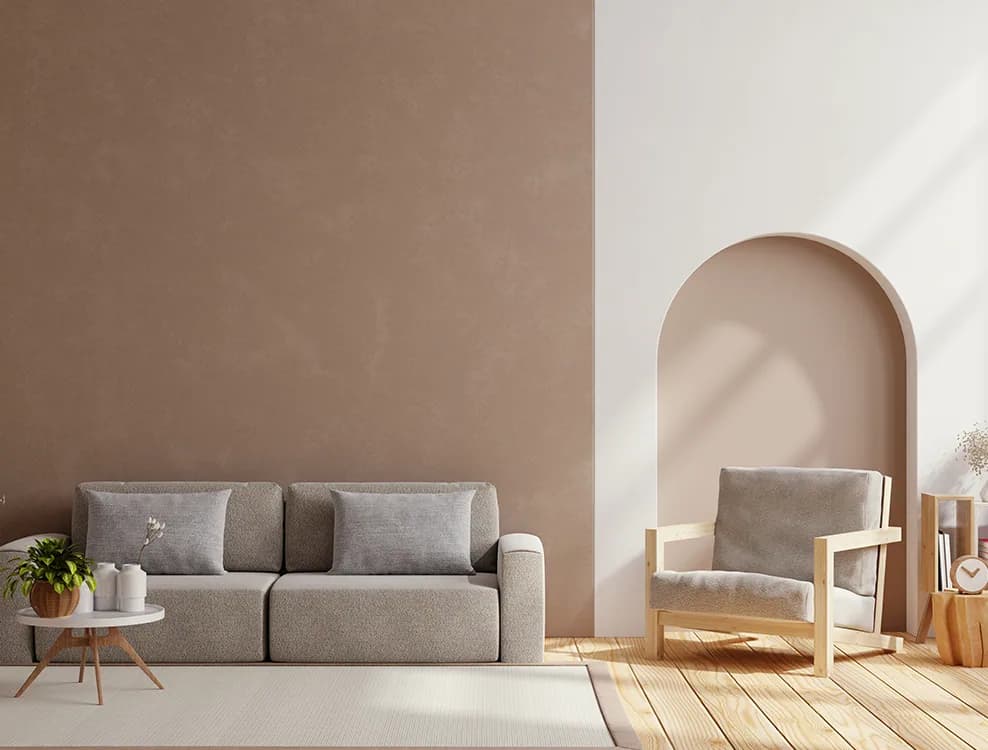
- When warm grey/greige tones are combined with a wooden TV unit and a textured rug, they give a more established loft feel.
Bedroom
Goal: A calm, relaxing industrial line.
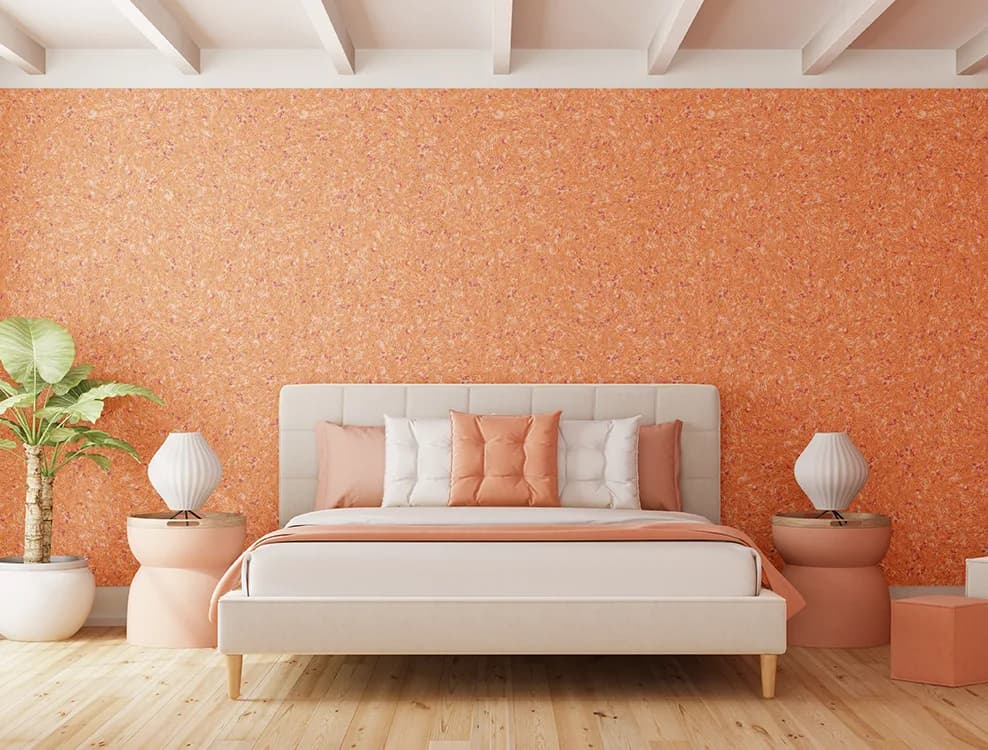
- Apply the concrete effect only on the headboard wall.
- Opting for lighter and silk-matt paints (for example, Natural) for the base colour reduces harshness.
- Soften the contrast with fabric, linen and wooden headboards.
Kitchen and bathroom: controlling moisture and staining
In kitchens and bathrooms, the concrete-effect look is visually strong, but the risk of moisture and staining is higher.
- In areas with frequent water contact (such as inside the shower or behind the sink), instead of leaving the decorative surface bare, plan to use a suitable transparent protective coat on top.
- In areas behind the kitchen counter that are exposed to oil splashes, make sure the surface is wipeable; using highly cleanable interior paints here or combining them with protective layers is an advantage.
- For general areas, interior paints with silicone additives such as Silkosil can be considered in the base layer for better resistance to steam and moisture.
HoReCa and offices
In cafes, restaurants and offices, concrete-effect walls can reflect the brand’s character at first glance.
- Entrances, the wall behind the reception desk, the bar area and meeting rooms are the most preferred surfaces for the concrete effect.
- For impacts and stains due to heavy use, it is important to plan more durable interior wall paints and transparent protective coats where necessary.
- Small highlights in brand colours (logo, thin coloured lines, metal details) can complement the concrete surface.
Maintenance, cleaning and future renewal: avoiding regret later
Daily maintenance and cleaning
- For dust: Use a soft cloth or a dusting attachment.
- For stains: Prefer a slightly damp cloth and a mild, non-abrasive detergent; avoid using hard sponges or wire scourers.
- In humid areas: If a protective coat has been applied, carry out periodic inspections according to the manufacturer’s recommendations.
Local repair and reapplying the effect
Concrete-effect surfaces require a bit more attention in repairs compared to flat paints when they are impacted:
- Fill small dents with Akrilik Macun and smooth the surface with very fine sanding.
- Prime locally and then apply the same decorative product locally, imitating the direction of the existing texture on the wall where possible.
- For damage over large areas, reworking an entire wall provides a more cohesive result.
What happens when your style changes?
If years later you get tired of the concrete-effect wall and want to move to a simpler look:
- Lightly sand the surface and remove the dust.
- Stabilise the surface with a suitable İç Cephe Astarı.
- Then renew the wall by applying several coats of your preferred interior wall paint (for example Silkomatt, Class Plastik or another product according to the project requirements).
A properly prepared concrete-effect wall can easily be adapted to a new style by painting over it.
Conclusion: your practical roadmap to industrial chic
Achieving industrial chic with concrete-effect paint is not just about “choosing a grey product and applying it to the wall”. Surface preparation, the correct sequence of layers, the balance of warm–cool tones and product selection according to the function of the space are the cornerstones of this process.
As a first step:
- Select just one wall on which you are considering applying the concrete effect.
- Plan Akrilik Macun, a suitable primer and a matt base coat according to the current condition of the wall.
- Then choose a decorative coating/effect paint suitable for your project type and test its tone and texture on a small sample.
Once you have clarified this basic plan, getting support from a professional applicator for project-specific product and detail selection will provide more controlled and long-lasting results, especially in large areas.
Concrete effect paint is a decorative system that gives the wall the feel of raw concrete; no real concrete is poured, and visual and textural impact is achieved with layered interior wall products. In this way, the surface becomes smoother, cleanable and can be repainted when needed.
For an industrial style, instead of treating all walls, you can apply the concrete effect to selected feature surfaces and combine it with elements such as metal, wood and exposed installations. It is important to soften the cold look of concrete with proper lighting and warm-toned accessories.
Cracks and uneven areas on the surface are repaired with filler, followed by a suitable primer and, if necessary, a base interior wall paint. After this infrastructure is prepared, the decorative coating or effect paint that will give the concrete effect is worked onto the surface with trowel, roller or sponge techniques.
Silkcoat does not have a product directly named “concrete”; however, interior decorative coatings such as Silkofarit and products in the Efekt Boyalar category can be used together with grey-toned interior paints to create a concrete-like texture. The system should be structured in layers with the appropriate primer and filler.
It can be applied in living rooms, bedrooms, kitchens and bathrooms, as well as in commercial spaces such as cafes, restaurants and offices, on plaster, filled surfaces and previously painted sound walls. In humid areas, surface durability should be increased with protective transparent layers.
The duration depends on the condition of the surface, the number of layers and the size of the space. The drying time of each layer—filler, primer, base paint and decorative coat—should follow the manufacturer’s recommendations, and extra time should be allowed especially for intermediate sanding and final touch-ups in the decorative layer.
With transparent protective layers applied over suitable primer and decorative coating, you can obtain surfaces that are more resistant to moisture and staining. Still, in areas that are in direct and intense contact with water (such as inside showers), technical details should be evaluated specifically.
Yes. Since a concrete-effect surface is a layered structure within an interior wall system, it can be repainted with interior wall paint after a suitable primer if your style changes in the future. Thus, you can give the space a new look without permanent renovation.