
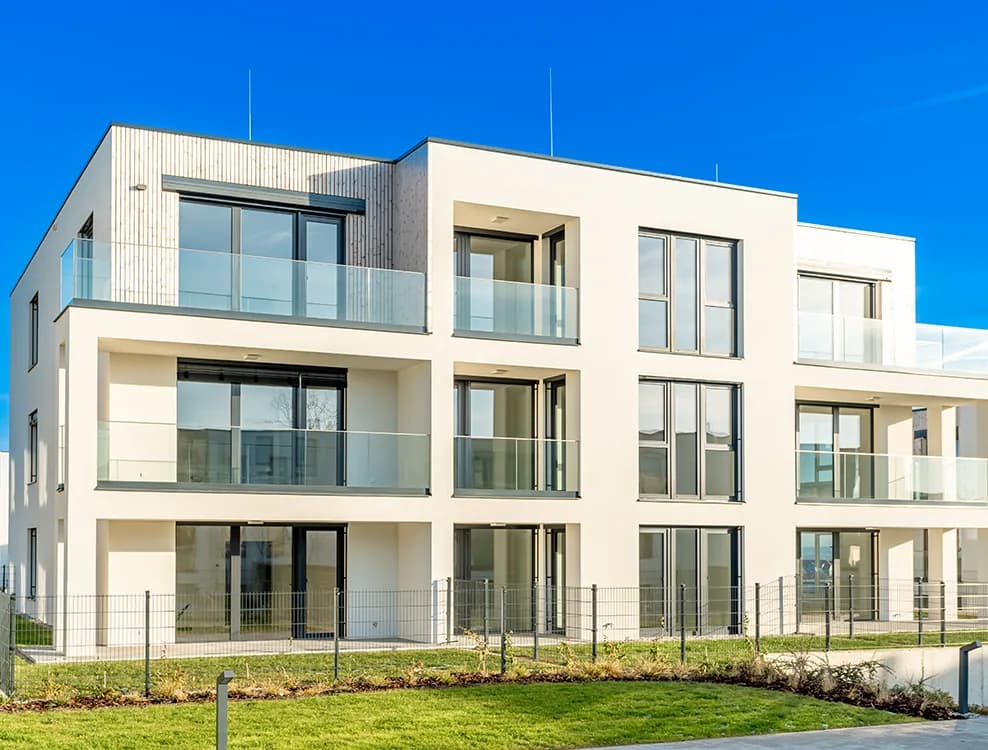
Long-lasting facades with the right exterior paint selection
Learn how to ensure longevity in exterior paint selection by considering climate, substrate and color harmony. Plan the right primer, coating and paint combination together.
Long-Lasting Solutions in Exterior Paint Selection
When choosing exterior paint, people often ask “which paint is the most durable?”; however, what determines the lifespan of a facade is not just the paint, but the entire system. Climate, the current condition of the substrate, the primer and coating used, and even the color choice directly affect cracking, blistering and color fading.
In this article, we address, with concrete examples, the system approach, product types and mistakes to avoid in order to achieve long-lasting exteriors for homeowners, apartment managers, craftsmen and architects.
Key Takeaways
- Longevity depends not on a single “miracle paint”, but on the right combination of primer + coating + topcoat.
- Climate, facade orientation and the condition of cracks on the surface determine whether you should choose silicone, elastic or acrylic.
- On facades with high moisture and rainfall load, water repellency stands out; in regions with high temperature differences between hot and cold, flexibility is key.
- Textured coatings and the right primer increase impact and crack resistance, extending the true lifespan of the paint.
- Application mistakes (painting on a damp surface, skipping primer, using one thick coat) can wear out even the best paint in just a few seasons.
What Does a “Long-Lasting Exterior” Mean?
A long-lasting exterior is not just a surface where the paint stays on; it is a facade that minimizes the following problems over the years:
- Does not crack or blister
- Does not lose its color quickly, keeps staining under control
- Maintains its resistance against rain, snow, sun and wind
- Can release moisture from the surface but does not let water in from outside
What makes this possible is the layers working together. It is more realistic to think of the exterior as follows:
- Primer: Balances the substrate and increases adhesion.
- Coating (textured or decorative plaster): Provides impact resistance, crack bridging, texture and thickness.
- Topcoat paint: Provides color, water repellency, UV resistance and aesthetic appearance.
- Protective / insulation products: Reduce water load in critical details and support the lifespan of the entire system.
Three key factors must be evaluated together here:
- Climate: Is there heavy rainfall, harsh sun or high temperature differences between hot and cold?
- Substrate type: Is it concrete, cement-based plaster, ETICS (EPS, XPS, rock wool) or an old painted surface?
- Color and orientation: The combination of dark color + south-facing facade increases heat load and movement; products must be chosen accordingly.
Technical Features That Make Exterior Paint Long-Lasting
Two exterior paints of the same color can behave very differently on site depending on the binders and additives used. Key points for longevity can be summarized as follows:
Binder type and flexibility
Most exterior paints are acrylic-based; however, the type and elasticity of the acrylic resin used determine how the paint behaves against cracks.
- Pure acrylic, silicone exterior paints (for example Silicone, Acrylic): A good balance for standard plastered surfaces and sound substrates. With a suitable primer, they provide long-term color and film durability.
- Elastic paints (for example Elasticoat, Elasticoat Silikonlu): Advantageous in terms of bridging micro-cracks and tolerating crack formation in regions with high temperature differences. They stand out for exteriors over ETICS or facades with high cracking risk.
Water repellency – breathability balance
On long-lasting facades, the goal is this: Repel liquid water from outside while allowing internal moisture to escape as vapor.
- Silicone systems (for example Silicone, Hydroclean, Hydroclean Plus, silicone textured coatings): Help water bead off the surface in droplets while supporting the breathability of the structure.
- Insufficient breathability can pave the way for blistering and peeling, especially on walls adjacent to wet areas.
Soiling, dust pick-up and cleanability
On a busy street, in an industrial zone or city center, a facade is tested not only by rain, but also by exhaust and dust.
- Low-dirt-pick-up and self-washing systems (for example Hydroclean, Hydroclean Plus): Formulated to help the dirt adhered to the surface be removed more easily with rain.
- Flat, compact film-forming paints can reduce dirt accumulation compared to highly indented surfaces; however, color choice is also a determining factor here.
Degree of gloss and color choice
Matt or silky-matt finishes have advantages on exteriors in terms of masking minor surface defects and providing a homogeneous appearance.
- Dark and vivid colors heat up and cool down faster on sun-exposed facades; this can increase surface movement and potential crack risk.
- In areas with a high load of dust and dirt, medium–light tones are more practical for masking stains and reducing the perception of fading.
Selecting Silkcoat Exterior Paint According to Different Needs
When answering questions like “My house faces north and gets a lot of rain” or “I don’t want cracks on my ETICS facade”, it is necessary to think in terms of categories. Silkcoat exterior paints can be positioned in standout groups as follows:
1. Paints focused on standard protection and aesthetics
- Silicone
Belongs to the group of silicone-modified exterior paints with enhanced water repellency. It can be preferred for north-facing facades with heavy rainfall, on sound plaster or concrete substrates, in applications targeting long-term performance together with the right primer. - Acrylic
Can be used on standard exteriors, where there is no major deep crack problem, in projects seeking an economical and balanced solution. When applied together with an acrylic primer, it supports adhesion and film integrity.
2. Elastic solutions: Crack-bridging systems
- Elasticoat
An elastic exterior paint that helps tolerate surface movement in areas where micro-cracks are present or where temperature differences between hot and cold are high. It stands out in ETICS applications due to its ability to accommodate expansion and contraction caused by heat and cold. - Elasticoat Silikonlu
Combines elasticity with silicone modification. It can be preferred on facades where both water repellency and crack-bridging ability are needed, especially in ETICS systems. - Elasticoat Desenli
As a textured coating, it provides both thickness and elasticity. It can be used to conceal micro-cracks, increase impact resistance and create a decorative texture.
3. Paints focused on soiling and cleanability
- Hydroclean
An exterior paint for repeatedly soiling facades exposed to harsh environmental conditions, with a tendency to be washed clean by rain and with low dirt pick-up. - Hydroclean Plus
Can be considered in projects where soiling is more intense, particularly on inner-city main roads and highway-facing facades, where higher cleanability and surface resistance are required.
4. ETICS and sun-exposed facade scenarios
- On ETICS: An elastic system (for example textured coatings such as Elasticoat Desenli, Ruloser Silikonlu together with Elasticoat or Elasticoat Silikonlu) helps to tolerate facade movements.
- Sun-exposed south-facing facades: Choosing medium–light tones in color selection and working with an elastic or silicone system provides a safer approach for longevity.
The Hidden Heroes That Determine Longevity: Primers, Textured Coatings and Protectives
The most common mistake on exteriors is spending a lot of time on topcoat selection while relegating primer and coating to second place. Yet a significant part of cracking, blistering and staining originates from these layers.
Primer selection and its effect
- Silikon Astar
Can be used before silicone exterior paints (Silicone, Hydroclean, Hydroclean Plus, silicone textured coatings) to balance absorbency and increase adhesion. - Akrilik Astar
Suitable before acrylic exterior paints (Acrylic, some acrylic textured coatings) to balance substrates with different absorbency and to ensure homogeneity between old–new plaster and repair areas.
The primer’s contribution to longevity:
- Reduces the risk of blistering by helping the paint adhere better to the substrate.
- Equalizes surface absorbency, reducing patchy drying and shade differences in the topcoat.
- Strengthens compatibility between systems on previously painted facades.
Enhancing impact and crack resistance with textured coatings
Textured coatings are not only a decorative surface on exteriors, but also a mechanical protection layer. Standout products from Silkcoat include:
- Acrycoat – Acrylic-based textured coating
- Silkoterasit and Silkoterasit Silikonlu – Terrazzo-look decorative and durable coatings
- Ruloser and Ruloser Silikonlu – Textured, decorative coatings applicable by roller
- Stone – Stone-textured decorative exterior coating
Some of the most common combinations in practice:
| Scenario | Recommended Layers |
| Plastered, impact-exposed ground-floor facade | Primer + Acrycoat or Ruloser / Ruloser Silikonlu + Exterior paint |
| Facade where a decorative stone texture is desired | Primer + Stone + Stone Guard protective if needed |
| Old plaster facade with micro-cracks | Primer + elastic textured coating (Elasticoat Desenli) + Elastic exterior paint |
Protective and insulation products
- Stone Guard
Can be used as a protective layer to enhance water repellency and surface resistance over stone-textured coatings such as Stone. - Subend
Is considered part of the waterproofing system on terraces, parapets and horizontal/semi-horizontal surfaces heavily exposed to water, to prevent direct water pressure on the paint. Its indirect contribution to paint life is reducing the water load on the surface. - SX 2005
One of the insulation products that can be used as part of the exterior system in detailing and critical areas.
Exterior System Scenarios by Climate and Building Type
The same paint does not deliver the same results in different climates. Below is an outline of the general approach for four common scenarios:
1. Apartment facade in a cool climate with heavy rainfall
- Priority: Water repellency, breathability, sound film structure
- Example system:
- Clean the surface, remove loose parts and carry out the necessary repairs.
- Balance the surface with a suitable exterior primer (use Silikon Astar if you will apply a silicone system).
- Apply two coats of a silicone-modified exterior paint (for example Silicone).
2. Hot, sun-exposed south-facing facade
- Priority: UV resistance, tolerance to thermal movement, color selection
- Example system:
- Check the surface; if there are cracks, fill them with a suitable repair mortar.
- Equalize surface absorbency with an acrylic or silicone primer.
- Choose an elastic or silicone exterior paint (for example Elasticoat Silikonlu) in a medium–light tone.
3. Facade protection in a coastal, salty atmosphere
- Priority: Resistance to salt and moisture accumulation on the surface, washability
- Example system:
- Clean the surface with a pressure washer; if there is efflorescence, complete the stripping and repair stages.
- Balance the surface with a suitable primer.
- Use an exterior paint with strong low-dirt-pick-up and easy-cleaning properties (for example Hydroclean or Hydroclean Plus).
4. Old building / renovation scenario
- Priority: Condition of existing paint, elimination of cracks and blistering, system compatibility
- Example system:
- Always remove blistered old paint that has lost adhesion. Work only over old coatings that are sound and well-bonded to the substrate.
- Fill cracks with suitable repair mortar and apply local mesh reinforcement where necessary.
- Balance the surface with Akrilik Astar or Silikon Astar (depending on the topcoat system you will use).
- If crack risk persists, choose an elastic exterior paint (Elasticoat, Elasticoat Silikonlu); if impact and crack resistance are also required, add an elastic textured coating (Elasticoat Desenli).
Application Mistakes and Maintenance Plan: 7 Misconceptions That Shorten Lifespan
On site, the following mistakes in particular can make even the best exterior system problematic within a few years:
- Painting on a damp surface: Applications performed right after rain or before the plaster is fully dry can cause blistering and flaking.
- Applying without primer or with the wrong primer: Strong differences in absorbency and weak adhesion increase the risk of patchy appearance and early flaking.
- Applying a single thick coat: Using one thick coat instead of two thin–medium coats adversely affects drying and film formation.
- Not allowing sufficient drying time between coats: Wet-on-wet application, especially in thick systems, can trigger cracking and surface defects.
- Ignoring details: If window sills, parapets, expansion joints and junctions are not properly detailed, water ingress will start from these points.
- Wrong color choice: It is often overlooked that very dark colors can increase heat-related crack risk on sun-exposed ETICS surfaces.
- Completely neglecting maintenance and inspection: If small cracks and local blistering are not repaired in time, they may spread to larger areas later.
A practical approach to maintenance and repainting schedules
- Visually inspect the facade at least once a year (especially after winter).
- Repair local cracks with flexible mastic or repair mortar and, when needed, touch up with spot primer + paint.
- On heavily soiling facades, reduce dirt load by cleaning the surface appropriately (with products such as Hydroclean and Hydroclean Plus).
Balancing Color and Design Decisions with Longevity
Exterior color is not just an aesthetic decision; it also affects maintenance frequency and the service life of the surface.
- Dark colors: On sun-exposed south and west facades, they increase surface temperature and, in turn, thermal movement and potential crack risk. Using them more on partial areas, niches or shaded facades is a more controlled approach.
- Medium–light tones: In streets with high dust and exhaust load, they soften the appearance of dirt and delay the perception of fading.
- Texture choice: Textured coatings (Acrycoat, Ruloser, Silkoterasit, Stone) hide minor surface defects; however, very deep textures can trap more dust. On facades with a high dirt load, choosing a more controlled texture is beneficial for longevity.
When designing the exterior, evaluating climate, street–traffic intensity and building type together while making color–texture decisions extends the service life not only of the paint, but of the entire facade.
Conclusion and Next Step
Achieving a long-lasting solution in exterior paint selection is less about “buying the most expensive paint” and more about designing the right system according to climate, substrate and usage scenario. Considering primer, textured coating, topcoat paint and, when necessary, protective products together significantly reduces the risk of cracking, blistering and early fading.
As a next step, clarify your building’s location, facade orientations and current surface condition; then determine the appropriate primer–coating–paint combination accordingly. Whenever you are unsure, share your project details and photos with the expert team and request technical guidance with a short brief that includes information such as whether the facade is ETICS, old plaster or coastal. This way, you can turn your exterior into a system you can use trouble-free for many years with a single, well-planned application.
For longevity, you must first analyze climate, facade orientation and substrate type. Then select a primer, coating and exterior paint as a system according to these conditions.
Paint alone cannot solve problems like cracking, blistering and fading. The combined behavior of primer, coating and topcoat determines the true lifespan of the exterior.
In regions with heavy rainfall, highly water-repellent paints should be preferred, while in areas with large temperature differences between hot and cold, flexible, elastic exterior paints are more suitable.
Exterior paint should be applied when the substrate is dry and clean, and during periods when frost, heavy rainfall or very high temperatures are not expected. This ensures healthy film formation and adhesion.
Durability depends on climatic conditions, surface preparation, the primer and coating used, and application quality. The right system and proper application considerably extend the repainting interval.
Concrete, plaster, ETICS and previously painted surfaces behave differently. For each substrate, a compatible primer, textured coating where necessary, and a suitable exterior paint combination must be selected.
Painting on a damp surface, not using primer, applying a single thick coat and painting without solving surface problems can wear out even the best exterior paint within a few seasons.
Dark colors increase heat load and movement on sun-exposed facades. In this case, exterior paints with flexible structures and a suitable underlying system should be preferred.