



Effect paint selection guide and decoration ideas for living rooms
Transform your living room walls not only with color but also with texture and light by choosing the right effect paint. Discover the right product according to your living room type and natural light conditions.
Effect Paint for Living Rooms: Why Texture and Light Matter as Much as Color
When renovating your living room walls, focusing only on the question “which color?” usually leads to disappointment. Especially in small, dark, or heavily used living rooms, texture, gloss level, and light reflections are at least as decisive as color. This is exactly where effect paints come into play; they offer a powerful tool to make the living room look both more characterful and more spacious.
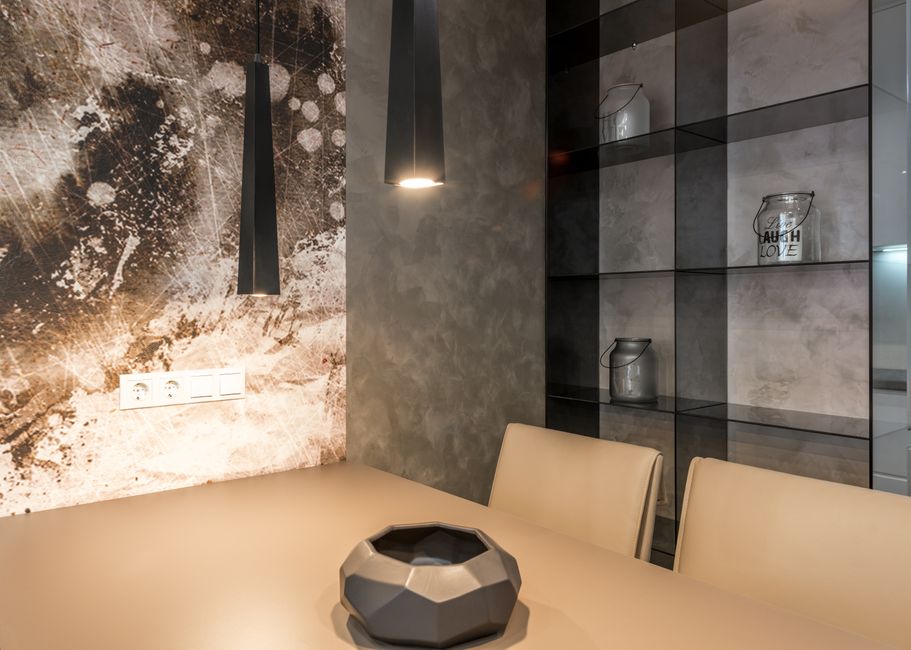
While classic interior paints only provide a flat matt or silk-matt surface, with decorative effect paints it is possible to create very different textures and levels of sheen such as marble, concrete, velvet, stone, and mother-of-pearl. In living areas like the living room, which are considered a “showcase,” these textures can completely change the atmosphere of the space together with the seating group, TV unit, and lighting.
Highlights
- In small and low-light living rooms, light tones and soft pearl / silk-matt effects give more balanced results, while in large and bright living rooms, marble, concrete, and strong textures work better.
- General rule: Using flat interior paint on all walls and effect paint on one or two feature walls keeps the living room both calm and characterful.
- Betoncoat, Travertino, Metalico Soft are good starting points for modern-minimal living rooms; Marmarito, Marmarino Plus, Palace, Velvetto for classic / avant-garde living rooms.
- The performance of effect paint largely depends on substrate preparation and proper use of primer and putty; products such as Interior Primer, Acrylic Putty (Interior), Putty Primer complete the system.
- Silkcoat silk plasters (Prestige, Silk Plaster Series, Smart Colours) and effect paints meet different needs; the choice should be made according to expectations of sound absorption feel, ease of repair, and texture.
Selecting Effect Paint According to Living Room Type and Light
When choosing effect paint, the first things to look at are the size of the living room, ceiling height, and amount of daylight. Incorrectly chosen texture and gloss level can make an expensive application look more oppressive or tiring than it is.
Small / Large Living Rooms and Ceiling Height
- Small living room + standard/low ceiling: Choose light-toned products with shallow texture and a light pearl or silk-matt effect. For example, using Pearl or Pearly behind the TV unit and a silk-matt flat paint (for example Silkomatt or Natural) on the other walls will create a sense of spaciousness.
- Large living room + high ceiling: Marble, concrete, or pronounced stone-effect surfaces fill the living room. More characterful textures such as Marmarito, Marmarino Plus, Betoncoat, or Travertino are perceived better on large surfaces.
North / South Orientation and Natural Light
- Low sun exposure (north-facing, narrow window): Matt and dark effects absorb light and make the living room look darker than it is. In such living rooms:
- Soft pearl-finished surfaces such as Pearl, Pearly, Metalico Soft in light beige, grey, and cream tones can be preferred.
- On general walls, silk-matt flat paints (for example Silkomatt, Natural Soft) can be used to provide slight reflection.
- High sun exposure (south-facing, wide window): Excessive gloss can be disturbing, especially when watching TV. In this case:
- On the wall behind the TV, more matt and deeply textured products such as Betoncoat or Travertino can be used.
- On the wall opposite the window, slightly pearlescent but soft surfaces (for example Metalico Soft, Velvetto Soft) can be preferred.
Gloss Levels and Their Relationship with Light
- Matt / semi-matt effects: They break light reflections, giving a calmer and more modern look. Concrete, stone, and travertine effect products (Betoncoat, Travertino, Decortivo, Stone-like textures) fall into this group.
- Pearlescent / metallic effects: They refract light and create tone changes at different angles. They make the living room look lively, especially with dim evening lighting. Pearl, Pearly, Metalico, Metalico Soft, Palace, Magico offer this effect.
- Velvet / soft-textured effects: They slightly absorb light and, with soft diffusion, create a comfortable atmosphere. Velvetto, Velvetto Soft, Cashmere are suitable for warmer, homely living rooms.
Note for Homeowners: If your living room is small, instead of using a dark and glossy marble-effect product on all walls, trying a light-toned pearlescent product on just a single wall will often give a more balanced result.
Silkcoat Effect Paint Recommendations to Match Your Decoration Style
When choosing effect paint, you need to consider not only the visuals you like, but also your furniture style and lighting type. The table below can be a starting guide for Silkcoat products according to living room decoration style.
| Style | Recommended Effect Products | Suggested Application Area |
|---|---|---|
| Modern / Minimal | Betoncoat, Travertino, Metalico Soft, Decortivo, Arteco | Wall behind TV, dining area wall, column-beam highlights |
| Classic / Avant-garde | Marmarito, Marmarino Plus, Palace, Velvetto, Cashmere, Magico | Wall behind TV, console wall, around fireplace, inside niches |
| Industrial / Loft | Betoncoat, Travertino, Metalico, Cracos | Large main walls, columns, beams, wall between entrance and living room |
| Warm, Homely Living Rooms | Pearl, Pearly, Velvetto Soft, Viabella | Wall behind TV, relaxation corner, reading area wall |
Modern / Minimal Living Room: Concrete and Stone Effects
If you have a simple style with white, grey, and natural wood furniture:
- Suggested combination: Betoncoat on the wall behind the TV, light grey tones of Silkomatt or Natural Soft on all other walls; light parquet on the floor.
- Advantage: A strong feature wall with few materials, a simple yet designed look.
- Application difficulty: In concrete effects, brush/trowel movements are important; professional application is recommended for users without experience.
Classic / Avant-garde Living Room: Marble and Rich Pearlescents
If you use gilded details, classic chandeliers, carved furniture, or heavy fabrics:
- Suggested combination: Marmarito or Marmarino Plus in light marble tones behind the TV or dining console, and a silk-matt flat paint (for example Silkomatt) on the other walls.
- Alternative: For a more pearlescent, sparkling surface, products such as Palace, Cashmere, Velvetto, Magico can be preferred.
- Concern: Using a very heavily patterned marble effect on all walls can be tiring for the space; it is usually more balanced to limit it to a single wall or two walls.
Industrial / Loft Living Room: Concrete, Metal, and Crackle Effects
If you use exposed ceilings, black metal lighting, raw wood, and leather sofas:
- Suggested combination: Betoncoat or Travertino on the main long wall, accents with Metalico or Cracos on some columns or niches.
- General walls: To keep them simpler, flat interior paints such as Silkosil or Natural can be preferred.
Warm and Homely Living Rooms: Soft Pearl / Mother-of-Pearl Effects
In living rooms used as family rooms, with soft rugs, fabric sofas, and warm lighting:
- Suggested combination: Pearl or Pearly on the wall behind the TV or reading corner; Class Plastik or Natural Soft in cream-beige tones on the other walls.
- Extra warmth: Soft, velvety textures can be achieved with Velvetto Soft or Viabella.
Note for Architects: In low-light classic living rooms, using marble-patterned products in lighter tones and with lower-contrast veining gives a sense of richness without reducing the perceived volume.
Selecting the Right Wall and Coverage Ratio in the Living Room
You don’t have to use effect paint on all walls. In fact, in most living rooms, the best result is obtained when flat interior paint and effect paint are used together.
Which Wall Is More Suitable for Effect?
- Wall behind the TV unit: This is the most preferred feature wall. Rule: Avoid very high gloss and intense reflection; especially on walls that receive direct sunlight, this can be disturbing when watching TV.
- Dining area wall: When used together with chandelier and wall lamp lighting, pearlescent and metallic products (for example Palace, Metalico Soft) work well here.
- Around the fireplace: It can be enhanced with marble and stone-effect products (Marmarito, Travertino, Betoncoat).
- Niches and columns: They can be painted with an effect in a tone different from but compatible with the main wall to add depth and movement.
All Walls or Just One?
- Small living room: Usually, using effect paint on a single feature wall and flat paint on the other walls is safer.
- Large living room: A strong texture on one main wall can be supported by a lighter effect or silk plaster on the opposite wall.
- High-ceiling living room: Ceiling cornices, columns, beams, and niches can be highlighted with effect paint to bring out the architecture of the space.
Effect Paint + Flat Interior Paint Combination Example
- Wall behind TV: Betoncoat (concrete effect, matt texture)
- Other walls: Light grey Silkomatt or Natural
- Ceiling: Matt, smooth surface with Class Plastik
Note for Applicators: The gloss level of the topcoat used on flat walls adjacent to the effect wall should not clash with the effect surface. For example, a very glossy flat paint can spoil the contrast with a matt and deep Betoncoat surface in front of it.
Technical Choices for Living Rooms: Substrate, Primer, and Compatible Paints
No matter how good the effect paint is, if the substrate is not smooth, the result will not be satisfying. In spaces like the living room, where you spend long periods during the day, every undulation and crack in the wall becomes more visible.
Basic Steps in Substrate Preparation
- Surface inspection: Flaking and peeling parts of the old paint are cleaned and loose pieces are scraped off.
- Repair: Necessary areas are repaired with Acrylic Putty (Interior), and once dry, sanded to remove roughness.
- Primer after putty: Putty Primer is used on puttied surfaces to balance absorbency.
- General priming: Depending on the chosen system, the entire surface is primed with products such as Interior Primer or Astımat.
- Special cases: Brüt Beton Astarı is preferred for exposed concrete surfaces and Izolac for stained areas.
Flat Interior Paints Compatible with Effect Paint
- Silkomatt: A silk-matt topcoat frequently preferred on living room walls and compatible with many effects.
- Natural / Natural Soft: Suitable for those wanting a more natural and softer matt finish.
- Silkosil: Can be considered together with decorative coatings, especially on walls where breathability is required.
- Class Plastik: Can be used on ceilings and simpler surfaces.
- Latex: Can be used on non-effect surfaces in areas where high washability is expected.
- Silkofarit: As a decorative interior coating, it can provide an alternative or complementary texture to effect paint on some walls.
Surface Protection and Maintenance
- In heavily used living rooms, especially with light-toned effects, a final protective coat with suitable products such as SX 2000 can be applied to make the surface more durable.
- Maintenance and cleaning recommendations for each product are included in the application instructions; abrasive cleaning agents should be avoided especially on pearlescent and metallic surfaces.
For Living Rooms: Silk Plaster or Effect Paint?
For living room walls, silk plasters are a strong alternative, not just effect paints. However, these two systems meet different expectations and offer different advantages.
Key Differences Between Silk Plasters and Effect Paints
| Feature | Silk Plasters (Prestige, Silk Plaster Series, Smart Colours) | Effect Paints (Marmarito, Betoncoat, Pearl, etc.) |
|---|---|---|
| Texture Thickness | Thicker surfaces that can provide a raised / textile feel | Generally thinner, paint thickness or slightly raised |
| Sound Absorption Feel | Due to the texture, it can give the space a slight sense of acoustic softness | Generally similar to classic paint, limited acoustic effect |
| Repairability | Local repair is possible with the right technique; continuity of surface texture is important | Local repair is more difficult in patterned effects such as marble/concrete |
| Visual Impact | Warm, textile-like, soft, and decorative | Wider range of looks such as marble, concrete, metal, and pearl |
Which System Is More Suitable for Which User?
- Families and heavily used living rooms: If expectations for soft texture and repairability are high, Prestige or Silk Plaster Series can be used throughout the living room and only the wall behind the TV can be highlighted with Marmarito, Betoncoat, or Pearl.
- More formal, showy living rooms: The marble, pearl, and metallic effects of effect paints (Marmarino Plus, Palace, Cashmere) work well with classic and avant-garde decoration.
- Colorful and playful living rooms: More colorful backgrounds can be created with silk plaster series such as Smart Colours, and movement can be added on one wall with products such as Magico or Arteco.
Note for Homeowners: It is possible to use silk plaster and effect paint in the same living room. For example, you can create a balanced composition by applying warm and soft silk plaster throughout the living room and an effect paint that will create contrast only on the TV wall or dining area wall.
Practical Tips for Color, Maintenance, and Long Life
After choosing the right product, decisions about color and maintenance will help your living room retain its first-day appearance for years.
Matching Color Charts with Effect Texture
- For most effect paints, the base tone (background color) and the tone of the effect texture should be considered together. For example, an application of gold pearlescent Palace on a light beige base and an application on a grey base will give very different results.
- By choosing your general living room color (flat paint) from Silkcoat Color Charts and then determining an effect color close to this or one tone darker/lighter, you usually get more harmonious results.
Cleaning and Durability in Heavily Used Living Rooms
- In families with children or pets, it is more practical to use washable interior paints (Latex, suitable Silkomatt series) on flat walls in sofa edges and circulation areas, and to limit effect surfaces to feature walls with less contact.
- Avoid using hard brushes, wire sponges, and strong chemicals on effect surfaces; wiping lightly with a damp, soft cloth is usually sufficient.
- If necessary, the surface can be made more durable with a final coat of protective products such as SX 2000, as recommended in the product’s technical data sheet.
Note for Applicators: Especially for pearlescent/metallic products such as Pearl, Metalico, and Palace, uniform surface absorbency is critical; not skipping the substrate primer and choosing the right roller significantly reduces future staining and unevenness.
Conclusion: Create a Decision Step for Your Living Room
When choosing effect paint for your living room, you can ask yourself the following questions in order:
- Is my living room small or large? How high is the ceiling?
- How much natural light does it get throughout the day, and which walls receive direct sunlight?
- Is my decoration style modern, classic, loft, or warmer/more homely?
- Do I want to use effect paint only on a feature wall such as behind the TV, or on several walls?
- What are my expectations regarding maintenance and cleaning; do I have young children or pets?
Based on your answers to these questions, first determine a Silkcoat effect system that suits your style (for example Betoncoat + Silkomatt for a modern living room, Marmarito + silk-matt flat paint for a classic living room), then design a complete system with substrate products (Acrylic Putty, Putty Primer, Interior Primer) and, if necessary, protective products (SX 2000). In cases where you are unsure, watching application videos and getting support from a professional applicator will make it easier for your living room to turn into a “showcase” that you will enjoy using for years.
Effect paint is a decorative interior wall coating that creates special textures and light reflections on the wall such as marble, concrete, velvet, stone, or mother-of-pearl. Unlike classic paint, it provides not only color but also texture and gloss effects.
In small living rooms, light-toned, lightly pearlescent or silk-matt effects provide a more spacious look. Using flat, light-colored interior paint on all walls and choosing a softly textured effect paint only on one feature wall usually gives a balanced result.
In north-facing living rooms that do not receive sunlight, matt and dark effects can make the space look darker. Pearlescent or silk-matt effect paints in light beige, grey, and cream tones that slightly reflect light, and silk-matt flat paints on general walls, offer a brighter effect.
In large and high-ceilinged living rooms, stronger textures with marble, concrete, or pronounced stone effects show themselves more clearly on the surface. In such living rooms, decorative coatings that give a characterful marble or concrete feel create an architectural effect on feature walls.
The application time depends on the square meterage of the living room, the number of coats required by the selected product, and the condition of the substrate. As curing times are needed for each stage of substrate repair, priming, and effect coating, it is better to get a project-specific schedule from a professional applicator.
Effect paints give the best results on smooth, clean, and sound interior surfaces. Cracks and defects in the surface should be repaired with suitable putty and then the substrate should be prepared with the correct primer system (interior primer, putty primer, etc.); these steps ensure that the texture appears clearer and more durable.
Effect paint is preferred for more pronounced decorative looks and various marble, concrete, and metallic textures, while silk plaster can provide advantages in living rooms where a sense of sound absorption, ease of repair, and soft texture are desired. Depending on how intensively your living room is used and the visual effect you want, you can choose one of the two systems or a combination of both.
In living rooms, using flat interior paint on all walls and effect paint on one or two feature walls generally creates a more balanced atmosphere. This way, the living room remains calm while you still achieve a characterful highlight on selected areas such as the TV unit, sofa background, or entrance.