
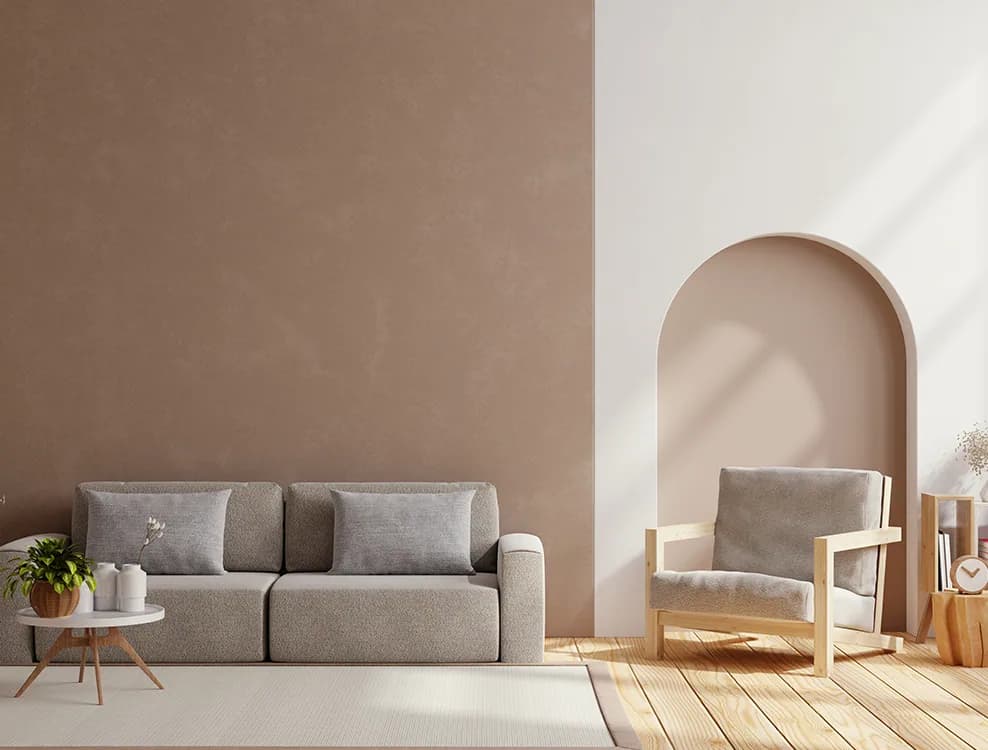

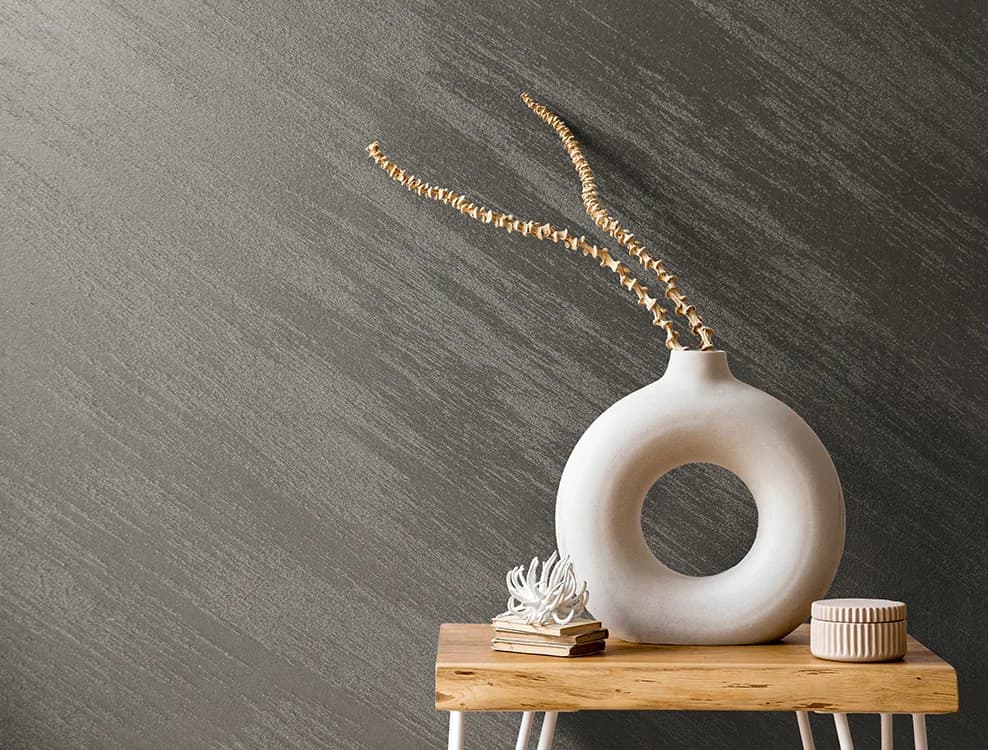
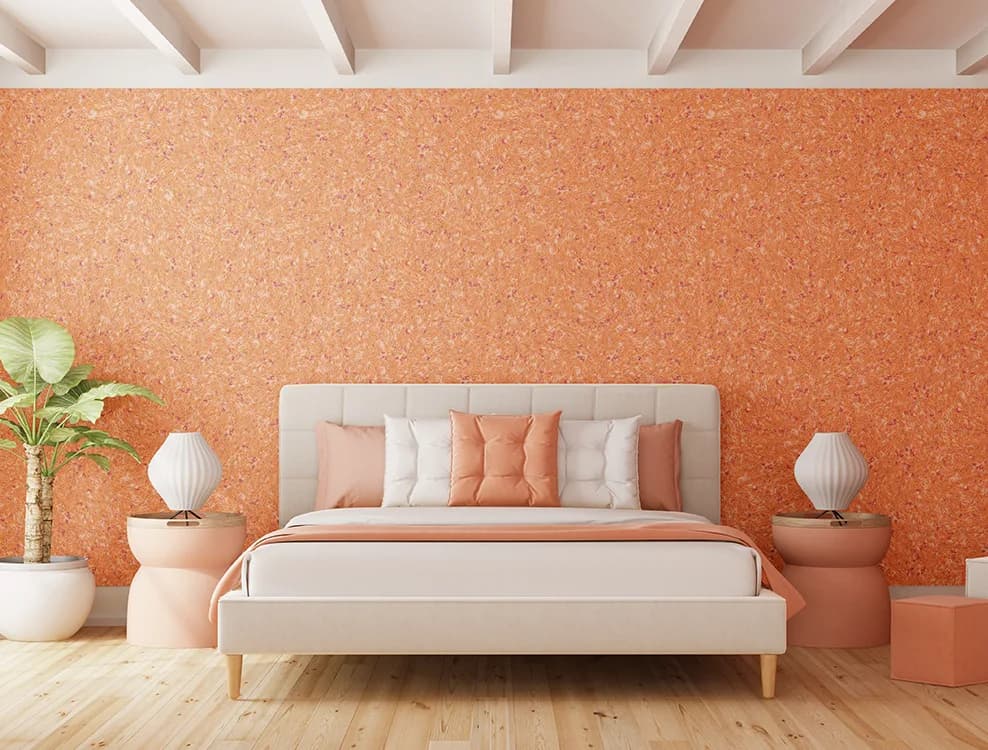


Guide to glossy wall effects with stucco paint types
Learn which gloss level and texture to choose with different stucco paint types and glossy decorative plasters for interiors such as living rooms and stores.
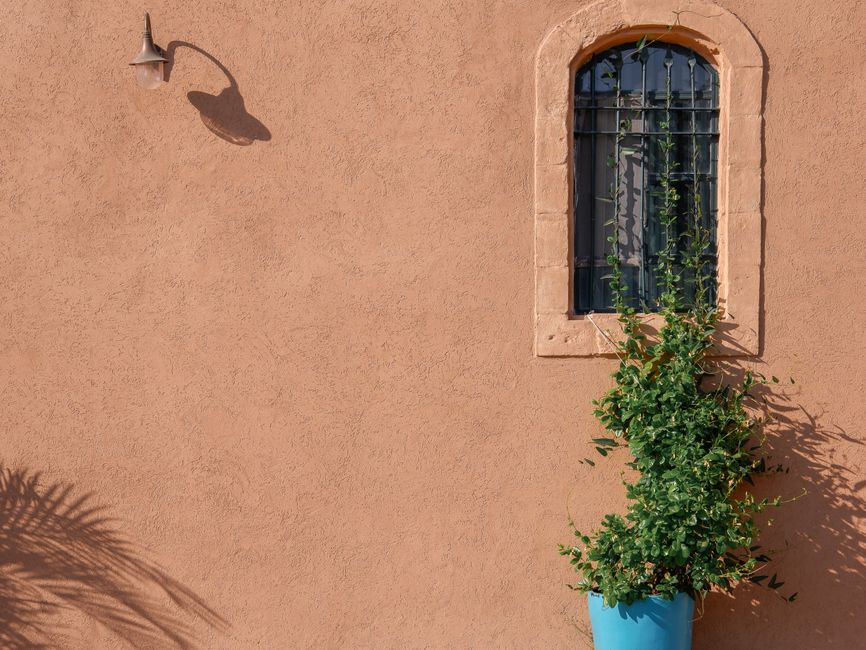
What are stucco and glossy decorative plaster?
If you want a wall in your living room or store that is more characterful and light-catching than flat paint, but you feel lost between “stucco, silk plaster, or effect paint?”, it’s best to start by clarifying the terms.
Stucco is a general umbrella term used for decorative textured plaster surfaces. Traditionally, it refers to gypsum- or lime-based marble-like plasters; in contemporary interiors it is also used for acrylic-binder, nearly ready-to-use decorative plasters.
In the Silkcoat ecosystem, when we say “stucco / decorative plaster”, roughly the following groups come to mind:
- Marble/stone-textured stucco surfaces: Coatings that create a natural stone or concrete appearance with products such as Marmarito, Marmarino Plus, Travertino, Betoncoat.
- Pearlescent, metallic, pearl-gloss surfaces: Glossy decorative paints such as Pearl, Pearly, Palace, Metalico, Metalico Soft.
- Glossy surfaces with a velvet/textile feel: Soft-textured coatings such as Velvetto, Velvetto Soft, Cashmere that reflect light in a controlled way.
- Silk plasters: Coatings such as the Elegant series, Prestige, Smart Colours, which with their fibrous structure provide both texture and a matte/semi-gloss sparkle.
Silk plaster is a separate product group for Silkcoat; with its decorative fibrous structure it gives both texture and a soft glow on the wall. Compared with classic interior paint, it forms a thicker film, covers wall defects better and adds a textile feel to the space.
Classic interior paints (such as Silkomatt, Natural, Natural Soft, Silkosil, Class Plastik) form thin films and generally flat or lightly textured matte/silk-matte surfaces; their main function is to provide color and basic wall protection.
In summary: Stucco/decorative plaster focuses on a combination of texture + depth + gloss, while classic interior paints mainly offer color and basic durability; silk plaster sits between the two, serving both as a coating and as a decorative effect.
Highlights
- “Stucco” within Silkcoat can be considered an umbrella term covering marble/stone-textured, pearlescent and velvet-effect decorative plasters.
- Glossy decorative plasters reflect light, so they can make small areas look more spacious, but they also make surface imperfections more visible.
- Surface preparation (putty + correct primer) determines 50% of the result with glossy decorative plasters; a faulty substrate leads to waves and marks in the light.
- Using stucco on an accent wall and matte interior paint on the other walls is a practical way to manage both budget and visual balance.
- Glossy decorative plasters can be renewed with flat paint on top, without removal, using the right primer and a light sanding.
Gloss levels on stucco / decorative plaster surfaces
When you apply the same texture at different gloss levels, the perception of the space changes dramatically. Therefore, you should think not only “marble or concrete?” but also “how glossy should it be?”.
Gloss levels and sample product families
| Gloss level | Appearance | Sample Silkcoat groups | Defect tolerance |
|---|---|---|---|
| Matte | Soft look that absorbs light and does not reflect | Travertino, some Betoncoat applications, Astımat, Silkomatt | Most forgiving; relatively hides waviness and small scratches |
| Silk matte / satin | Slight sheen up close, matte perception from a distance | Velvetto, Velvetto Soft, Cashmere, some Marmarito / Marmarino Plus applications | Medium; the surface still needs to be smooth but minor defects are not fully revealed |
| Glossy / high gloss | Noticeable reflections under angled light, pearlescent/metal effect | Pearl, Pearly, Palace, Metalico, Metalico Soft, some silk plasters (Prestige etc.) | Low; even the slightest waviness, brush mark or putty defect shows immediately in the light |
Perception of gloss according to light source
- Natural light (window side): As the angle of sunlight changes, glossy plasters change tone and depth throughout the day. Pearlescent Pearl, Pearly or Metalico surfaces show this change strongly.
- Spot / track lighting: Creates strong highlight points on glossy stucco surfaces. Architects who want to create an emphasized brand perception in hotel lobbies, boutiques, restaurant entrances often use this effect with products such as Pearl, Palace, Metalico.
- Strip LED / concealed lighting: On velvet-like glossy surfaces such as Velvetto, Velvetto Soft and Cashmere, it creates a soft gradient effect on the wall. The linear light source makes the wall texture more legible.
The most common mistake in practice is failing to take the actual lighting scheme of the space into account when choosing the gloss level. Especially if ceiling spots are very close to the wall, every wave and trowel mark becomes pronounced on glossy surfaces. In this case either the gloss level should be reduced or the surface preparation and application quality should be raised one notch higher.
Choosing stucco paint by space: Which effect in which room?
Not every glossy decorative plaster gives the same result in every room. Daily usage intensity, light angle, furniture and floor colors should be decisive in your choice.
Living room and lounge
- If you want a marble/stone-textured, semi-gloss room: A feature wall behind the TV unit, fireplace or seating group can be done with Marmarito or Marmarino Plus. Using matte interior paints such as Silkomatt, Natural or Natural Soft on the surrounding walls helps the glossy decorative surface stand out more.
- If you want a subtly shimmering yet calm look: Consider more matte-tuned applications of Travertino or Betoncoat. You can achieve industrial tones with Betoncoat and a natural stone feel with Travertino.
- If you want a velvet feel and warm atmosphere: Velvetto, Velvetto Soft or Cashmere — especially in cream, earth and mink tones supported with strip LEDs — can transform the seating area into a soft hotel lobby ambience.
Corridors and entrance halls
- More spacious and elongated perception: Glossy or pearlescent surfaces (Pearl, Pearly, Palace, Metalico Soft) used with spot lighting add a sense of depth to narrow corridors. Especially using a glossy decorative plaster on the single long wall and a matte paint such as Silkomatt on the opposite wall provides balance.
- Areas with high risk of impact: More robust-feeling coatings such as marble/stone-textured Travertino or Betoncoat can be used on the lower parts, combined with matte paint on top.
Commercial spaces such as hotel lobbies, boutiques, cafés
- Brand wall / behind reception: High-gloss pearlescent Pearl, Pearly, Palace or strong metallic Metalico applications define the character of the space when supported with light behind the logo or bar counter.
- Industrial chic: Matte/semi-matte concrete effect with Betoncoat matches well with exposed ceiling installations and concrete-look floors.
- Elegant yet soft atmosphere: Velvet-like glossy surfaces such as Velvetto, Velvetto Soft, Cashmere are suitable for cafés and lounge areas designed for longer stays.
Combining silk plaster and interior paints
Since silk plaster series (Elegant, Prestige, Smart Colours) provide both decorative texture and soft gloss, they can be used in balance with glossy stucco surfaces in the same space:
- Marmarito or Pearl on the accent wall, silk plaster on the other larger surfaces for a warmer and more comfortable atmosphere.
- In children’s and teenagers’ rooms; a bold effect such as Metalico or Viabella on one wall, and simpler interior paints such as Silkomatt or Class Plastik on the other walls.
Application principles for glossy decorative plasters
On glossy stucco surfaces, the result depends as much on application discipline as on the material itself. The most common issues are surface waviness, trowel marks, color differences and primer defects becoming visible under light.
Surface preparation: Starting from the base
- Check the substrate: If there is old paint, blistering parts or cracks, clean them mechanically and reveal a sound surface.
- Apply putty if necessary: On uneven surfaces, use Akrilik Macun (Dahili) to level large areas. Minimizing trowel marks at this stage directly affects the eventual gloss level.
- Putty primer: Using Macun Astarı to balance the absorbency of puttied surfaces and prepare them for the topcoat helps the decorative plaster spread evenly over the entire surface.
- Choose the right primer: Depending on the substrate type, opt for İç Cephe Astarı, Universal Astar or Brüt Beton Astarı. Especially on fair-faced concrete surfaces, instead of going directly to decorative plaster, the substrate should be stabilized with an appropriate primer.
- Apply insulation when needed: In areas with a risk of moisture or stains, products such as Izolac should be used to prevent stain migration; otherwise stains will be more visible on glossy surfaces.
Post-primer application and tool selection
- Marble/stone-textured products (Marmarito, Marmarino Plus, Travertino, Betoncoat):
- They are generally applied in a 2–3 coat system: first coat for filling, second/third coat for effect.
- The main tool is a stainless-steel trowel; in some effects, a sponge or plastic trowel is used to create relief.
- When gloss is desired, the final coat is compacted (burnished) with a trowel while it is semi-dry; this gives a marble-like sheen under light.
- Pearlescent/metal-effect products (Pearl, Pearly, Palace, Metalico, Metalico Soft):
- They are usually applied in 1–2 coats over a colored base coat.
- Tools include roller + spatula, effect roller or special brushes; the direction of application (circular, criss-cross, vertical) directly affects the aesthetics.
- Since the surface is glossy, it is very important that the primer tone is homogeneous.
- Velvet-effect products (Velvetto, Velvetto Soft, Cashmere):
- They generally require a smooth, well-primed substrate.
- The first coat is spread with a roller, and the finish of the second coat is done with a silk brush or special effect roller.
- The direction of the brush or roller should be planned in harmony with the direction of light in the room.
Tips to reduce the margin of error on glossy surfaces
- Avoid sudden drafts and high temperatures in the application environment; if the surface dries too quickly, lap marks will appear.
- Try to work large surfaces in a single run; breaks in between can create color differences on glossy surfaces.
- Especially with products such as Pearl, Pearly, Metalico, work parallel to the light source to minimize lap marks.
- Before application, test on a small sample panel to decide on the desired texture and gloss level; this reduces revision costs caused by incorrect texture expectations.
Maintenance, cleaning and renewal
Glossy decorative plasters are designed for long-term use; however, the risk of impact and staining is higher especially in commercial spaces. Therefore, it is useful to plan cleaning and possible future renovation scenarios from the outset.
Daily cleaning and spot repair
- Cleaning: Most glossy decorative surfaces can be gently wiped with a soft, damp cloth. Abrasive sponges, strong chemicals and stiff brushes may leave marks, especially on pearlescent and metallic surfaces.
- Spot repair: For minor impacts and scratches, local repairs can be done with the same product; however, on glossy and directional effects (Metalico, Pearl, etc.), the repaired area may shine at a different angle under light. Therefore, in visible areas it is usually better to renew the entire panel from corner to corner for better results.
Using clear protective varnish
In some projects, clear varnish is preferred to make the decorative surface easier to clean or to provide extra protection against moisture and stains. At Silkcoat, products such as SX 2000 and SX 2005, which can also be used on exteriors, are used for this purpose. Before application:
- Make sure the varnish is compatible with the chosen decorative product.
- Take into account that the gloss level will increase somewhat.
- First test on a small area to decide if the appearance is as desired.
Applying flat paint over glossy decorative plaster
The question “What happens if I get bored of it in five years?” is one of the most common questions from end users. In general, it is possible to paint over glossy decorative plasters without completely removing them:
- Lightly sand the surface: This reduces the slipperiness of the glossy layer and helps the new paint adhere.
- Remove dust: Remove all dust from the surface after sanding; otherwise, the primer will not adhere evenly.
- Apply a suitable primer: Product types such as Universal Astar or Süper Primer support adhesion of the new coat over glossy surfaces.
- Apply local putty where needed: Fix major scratches and impact marks with Akrilik Macun and then cover with Macun Astarı.
- Choose your topcoat paint: You can achieve the desired matte/silk-matte appearance with interior paints such as Silkomatt, Astımat, Natural, Natural Soft, Silkosil or Class Plastik.
Design and combination ideas
When stucco and glossy decorative plasters are used on all walls, they can be visually tiring. In most projects, a more balanced and economical way is to work with combinations.
Single accent wall vs. entire room
- Single accent wall: This is the most commonly preferred method, especially for living rooms, headboards in bedrooms, behind TVs or behind reception desks. Decorative products such as Marmarito, Pearl, Velvetto are used on the accent wall, and matte interior paints such as Silkomatt, Astımat, Natural on the other walls.
- Entire room coverage: In small spaces and with heavily patterned decorative plasters, covering the entire room can become overwhelming. If the whole room is to be stuccoed, calmer textures (Travertino, Betoncoat, soft Velvetto Soft applications) and neutral tones should be chosen.
Boosting sparkle with glitter additives
In projects where more sparkle is desired, especially with silk plaster series and some decorative paints, extra sparkle can be achieved on the surface by using Silver and Gold Glitter. The following points should be considered:
- Do not exceed factory-recommended glitter ratios; too much glitter will not distribute evenly and will look blotchy.
- Gold glitter works well with warm-tone color charts (beige, mink, brown); silver glitter is more balanced with grey, anthracite and cool tones.
- First prepare a small sample panel and check it under daylight and artificial light.
Using color charts and samples
With stucco and glossy decorative plasters, color and texture can be perceived differently from color on paper. Therefore:
- Make a preliminary selection via our Color Charts, then request a sample panel or a test application on a small wall area.
- Always view the color under the actual lighting of the space (daylight + night lighting); especially with products such as Pearl, Metalico, Velvetto, the angle of reflection can change the tone.
Cost and choosing an applicator
With stucco and glossy decorative plaster applications, the cost per m² is not just about the bucket price. Labor and surface preparation affect the total budget as much as the material.
Key cost factors
- Product family and number of coats: Marble/stone-textured products (Marmarito, Marmarino Plus, Travertino) generally require 2–3 coats, while pearlescent/metal-effect products (Pearl, Metalico, etc.) require a base coat + 1–2 decorative coats.
- Surface irregularity: Crooked walls, deep cracks, old thick paints create additional need for Akrilik Macun, Macun Astarı and labor.
- Primers and intermediate coats: The use of products such as İç Cephe Astarı, Universal Astar, Brüt Beton Astarı, Süper Primer, Izolac depends on the condition of the substrate.
- Need for protective varnish: In high-traffic commercial spaces, transparent protective coats such as SX 2000 or SX 2005 may increase initial investment costs but can extend surface life in the long term.
Labor and choosing an applicator
- Complexity of the effect: Advanced effects such as criss-cross trowel movements, multi-tone marble veining and special stencils require more experienced craftsmen and longer time.
- Occupancy of the space: In furnished spaces, protection, masking and movement constraints extend the work time; application is faster in empty apartments or new builds.
- Need for a professional applicator: For highly glossy pearlescent/metal-effect products (Pearl, Pearly, Palace, Metalico) and intense marble-textured applications, working with a professional applicator is critically important. When surface defects are corrected later, the cost can be higher than doing a good application from the start.
For those who want to try a DIY approach at home, products with higher tolerance for error (for example, some matte Betoncoat applications or simple textured decorative paints such as Decortivo, Arteco, Viabella) may be more suitable. With high-gloss stucco effects that strongly reflect light, calling in an experienced applicator often turns out to be the more economical choice.
Next step: Analyse your space and pick a sample wall
To make the right decision when choosing stucco paint and glossy decorative plaster, first assess your space objectively: Where does daylight come from, what is the ceiling height, which wall is really suitable for emphasis? Then choose one wall as a pilot area and determine your combination of texture (marble/stone, pearlescent, velvet, concrete) and gloss (matte, silk matte, glossy) for this wall.
Next, plan the appropriate surface preparation steps for the product you have chosen, apply a small sample area if possible, and view the result under real lighting conditions. This preparation both reduces unnecessary expenses and helps you achieve the most suitable stucco effect for your space without surprises on application day.
Stucco paint refers to decorative plaster types that create texture, depth and gloss effects on the wall. Classic interior paint forms a thinner film and focuses more on color and basic protection; with stucco, visual impact and surface character come to the forefront.
Glossy decorative plasters are preferred in areas such as living rooms, entrance halls and stores where there is plenty of light and an accent wall is desired. When used in the right position in small spaces, they can make the area appear more spacious and bright.
Before glossy decorative plaster is applied, the surface must be smooth, dry and sound. Typically, a smooth putty layer and a primer compatible with the product are applied; if waviness, cracks and repair marks are not eliminated, these defects become more visible under light.
Silk plaster is a separate group with a fibrous structure that acts both as a coating and as a decorative effect; it provides both texture and a soft shimmer. Stucco is a broader umbrella term that covers different decorative plasters and paints with marble, stone, pearlescent or velvet appearances.
They can generally be applied on properly prepared interior plastered walls and ceilings, on drywall surfaces, and on previously painted surfaces after appropriate priming. Damp, loose, dusty and low-load-bearing substrates must first be technically reinforced and prepared according to the manufacturer’s recommendations.
The duration depends on the surface area, number of coats, product type and substrate preparation. If the surface is smooth, a small accent wall is usually completed in several stages including surface preparation and drying times; for large spaces, planning should be made accordingly.
For cleaning, use a soft, damp cloth and neutral cleaning products; avoid abrasive sponges and chemicals. Furniture layout should be planned carefully to prevent impacts and scratches, and local touch-ups should be done with the same product when needed.
If the surface is prepared with suitable primer and, if necessary, light sanding, classic interior paint can usually be applied over most glossy decorative plasters without removing them. At this point, the soundness of the existing coating and the recommendations in the manufacturer’s technical datasheet should be taken into account.