

Lighten Marble Texture With Marmarito Coating
Discover the feel of marble in paint form with Marmarito coating; learn light, flexible and decorative solutions for living room, hallway and commercial space walls.

What Is Marmarito Coating? The Role of Marble Texture in Modern Spaces
You may want to add the elegance of marble to your home or workplace but feel hesitant about the weight, installation difficulty and cost. For interior designers, applicators and homeowners looking for a solution that can be applied like paint yet gives the feeling of marble, Marmarito is a decorative system positioned exactly in this gap.
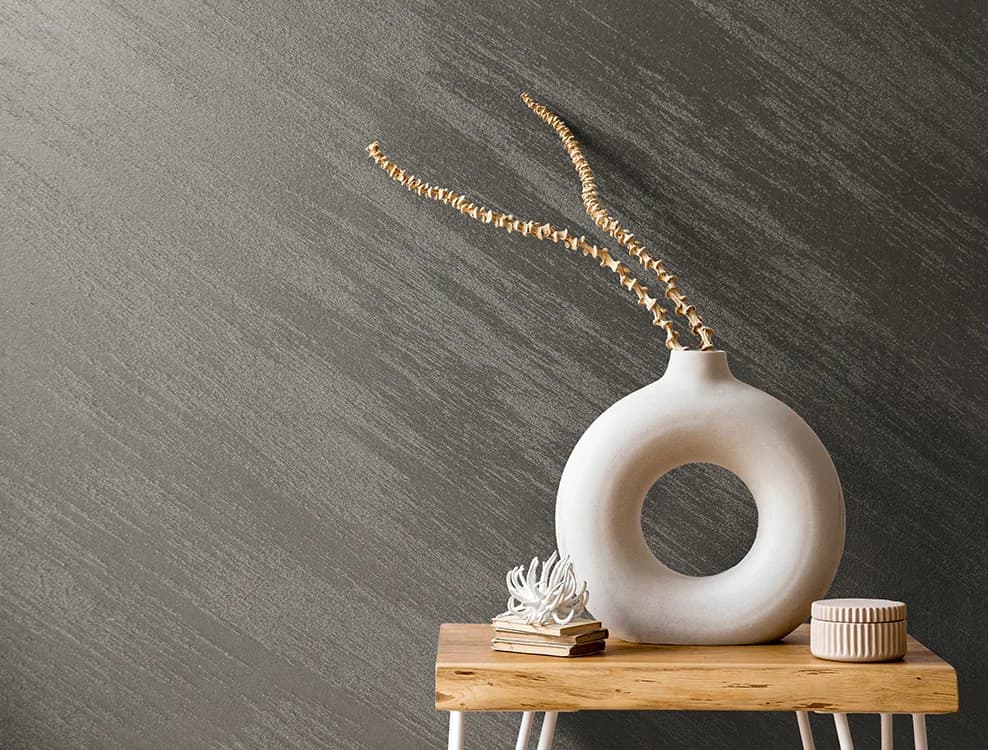
Marmarito is an acrylic copolymer binder-based, marble-patterned decorative interior wall paint. Unlike classic interior paints, instead of a flat, single-colour surface it delivers an effect that imitates marble veining and the dynamic texture of natural stone. In this way, it becomes possible to achieve the visual impact of real marble on living room, hallway, stairwell and store walls in the form of wall paint.
Highlights
- Marmarito is an acrylic-based, marble-patterned decorative interior wall coating; unlike classic wall paints it offers texture and veining effects.
- Compared to real marble cladding it is lighter, more flexible and can be designed specifically for the space; it is applied as a paint system instead of installation.
- The correct system requires a layered approach: suitable primer + putty if needed + primer again + Marmarito + (if required) surface protection.
- Ideal for creating focus surfaces that strengthen the “first impression” behind TV units, in entrance halls, on columns, and on reception and store walls.
- For those seeking different stone textures instead of marble, there are alternatives such as Marmarino Plus, Travertino, Betoncoat, Stone and Marble Stone Effect.
Marmarito or Real Marble? Differences and Choosing the Right Product
When evaluating Marmarito, most users compare it to real marble slabs. Although the two systems offer a similar sense of luxury in appearance, there are distinct differences between them in terms of technical features and usage.
| Feature | Marmarito | Real Marble Cladding |
|---|---|---|
| Application Method | Paint system (primer + decorative coat) | Slab/plate installation, mechanical fixing |
| Weight | Almost no additional load on the wall | High; may require a supporting system |
| Design Flexibility | Colour, vein movement and density can be controlled during application | Dependent on the stone’s natural pattern |
| Maintenance | Can be wiped with a damp cloth, local touch-ups can be made when necessary | Can stain; slab replacement may be needed in case of cracks/breaks |
| Detail Solutions | Columns, niches and curved forms are easy to cover | Cutting and processing are required for details |
Positioning other Silkcoat products that give a similar effect also makes it easier to make the right decision in the project:
- Marmarito → Marble-textured decorative interior wall paint. Marble veins are pronounced, decorative impact is strong; for feature walls in living rooms, entrances and commercial spaces.
- Marmarino Plus → Again a marble-patterned decorative interior wall paint; can be considered for projects that seek a more refined, more “stucco” feel and a different interpretation of marble with different vein density and gloss.
- Travertino → A decorative coating closer to a more rustic, porous stone texture for those who seek the feel of natural travertine stone rather than marble.
- Betoncoat → A concrete-effect decorative coating for those who want an industrial concrete surface appearance instead of marble.
- Stone (exterior) → For those seeking stone texture on the exterior; considered in projects interested in an exterior wall stone feel rather than an interior marble effect.
- Marble Stone Efekt → Spray-form marble effect; can be used to achieve a practical marble appearance on column details, small surfaces and decorative panels.
It is helpful to clarify the following questions when deciding:
- How pronounced should the marble veins be? For more decorative and legible veining Marmarito stands out; for a different interpretation of marble Marmarino Plus comes to the fore.
- Does the language of the space call for marble, travertine or concrete? Travertino is more suitable for a warm stone feel; Betoncoat is better for an industrial effect.
- Is the application area interior or exterior? Marmarito and similar decorative paints should be considered on interior walls; exterior systems such as Stone should be evaluated for exteriors.
Design Scenarios With Marmarito in Modern Spaces
The strength of Marmarito comes not only from creating a marble appearance, but also from being able to design the role of this appearance within the space. In modern, minimal, luxury or commercial interiors, Marmarito is generally used as a “feature wall”.
Living and Sitting Rooms
In living rooms Marmarito is mostly preferred in the following points:
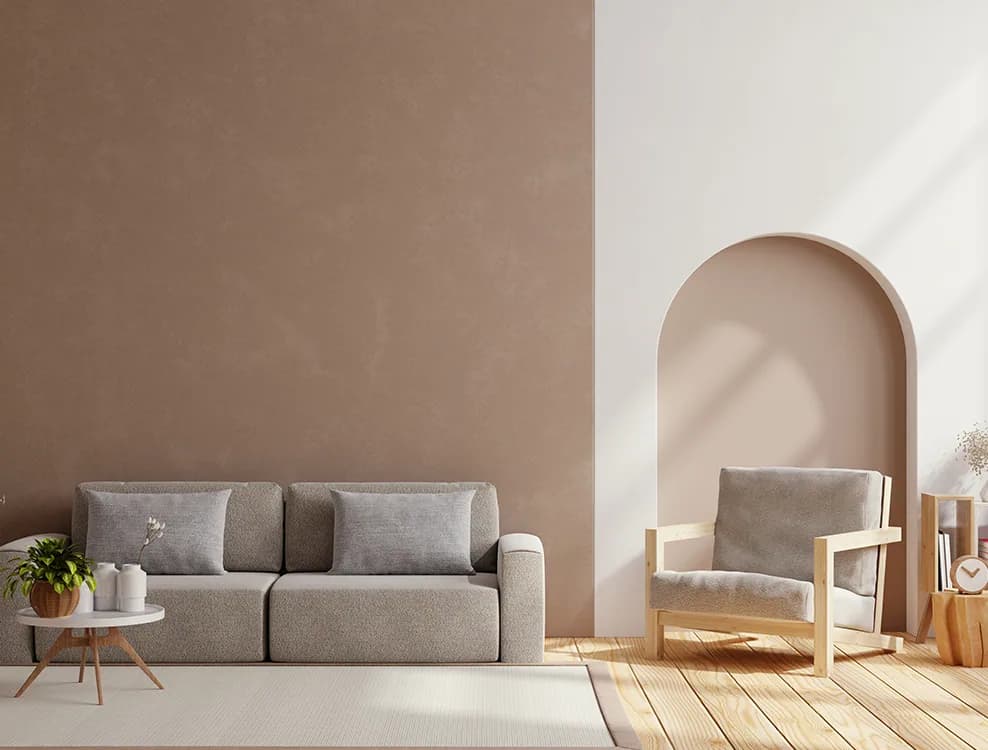
- Behind the TV unit: Highlighting the wall behind the screen with a marble texture and balancing the side walls with matte interior paints such as Silkomatt, Astımat gathers the visual weight while keeping the space from feeling oppressive.
- Around the fireplace: It is possible to interpret the feel of real marble with Marmarito, paying attention to the heat conditions and technical details to be implemented. Working with a skilled applicator here is important in terms of detail solutions.
- All walls vs single surface: In small living rooms it is common to limit the application to a single wall, while in large-volume spaces a frequently used approach is to enlarge the marble effect by joining two adjacent walls.
Entrance Halls, Corridors and Stairwells
Entrance areas are where the first impression is formed and wall surfaces are highly visible:
- Entrance hall: Covering the single wall facing you when you enter through the door with Marmarito and painting the side surfaces with a calmer interior paint makes the area look both spacious and “valuable”.
- Corridor: In long and narrow corridors, instead of overwhelming the entire wall with an intense marble texture, you can create rhythm by designing certain panels or niches with Marmarito and the remaining surfaces with flat matte paint.
- Stairwell: Since there is a high probability of frequent contact (touching by hand, rubbing), a protective transparent coat (for example SX 2000) should be considered on Marmarito surfaces. It is important to consult the technical data sheet and the applicator before application.
Commercial Spaces: Store, Office, Café
On store, lobby, reception and café walls, Marmarito stands out as a background surface that strengthens the brand perception:
- Behind the store display: Covering the back wall where products are displayed with Marmarito increases the sense of luxury together with a few carefully selected products.
- Reception and lobby: A single large surface behind the reception desk can be designed with Marmarito in colours that match the brand’s corporate identity.
- Café & bar: The wall behind the bar counter, niches and columns can be finished with Marmarito, balanced by simple interior paints or wooden panels on other surfaces.
In such projects, it is also possible to create more layered design languages by combining Marmarito with other effect paints such as Metalico, Metalico Soft, Pearl, Palace, Cashmere, Pearly, Velvetto, Velvetto Soft, Decortivo, Arteco, Cracos, Magico, Viabella. For example, you can use a marble texture on the main wall and a fine metallic strip or a mother-of-pearl effect panel inside niches.
Technically Speaking: Marmarito, Surface Preparation and System Approach
For Marmarito and all decorative coatings, the result largely depends on the substrate preparation. Applying decorative paint directly to rough, cracked, damp or weakly bonded surfaces increases the risk of blistering, cracking and an irregular appearance in a short time.
Substrate Conditions
The main points to consider before application are:
- The surface must be sound, dry and clean; old, blistered paint layers must be removed.
- Visible cracks and holes must be filled with appropriate putty materials and the surface must be sanded to make it smooth.
- If there is moisture and water leakage, the source must be eliminated first; damp walls must be allowed to dry before installing the decorative system.
Choosing Primer and Putty
The general approach in Marmarito application is to establish a layered interior wall system:
- Products such as Interior Wall Primer, Universal Primer, Exposed Concrete Primer, Putty Primer are used to balance the absorbency of the surface, increase adhesion and ensure that the topcoat looks uniform.
- If the surface is not smooth, levelling it with Acrylic Putty (Interior) makes a major difference, especially in decorative systems where legible patterns such as marble are used.
A typical Marmarito system proceeds with the following logic:
- Checking the existing surface and removing loose and blistered layers.
- Repairing cracks and defects with appropriate materials if necessary.
- Levelling and sanding the surface with Acrylic Putty (Interior) where required.
- Applying an interior primer suitable for the surface type (for example Interior Wall Primer, Universal Primer, Exposed Concrete Primer or Putty Primer).
- After the primer has completely dried, proceeding with the Marmarito decorative system.
Details are provided in the product’s technical data sheet and application videos; it is recommended to refer to these documents and decide together with the applicator, especially for different substrate types (plaster, exposed concrete, previously painted surfaces, etc.).
Marmarito Application Guide: Step-by-Step Marble Effect
Marmarito is not a “roll and leave” type of product like classic roller paint; it is a decorative coating in which marble veins and tonal transitions are created by hand and that requires a certain level of skill and practice. Therefore, especially on large walls, working with a professional applicator helps prevent unwanted veins and patchy appearances.
Required Equipment
- Suitable type of trowel (to create marble veins and surface movement)
- Roller (for spreading the first coats and applying the base coat)
- Spatula or similar hand tools (for creating local effects)
- Sponge or other auxiliary tools if needed (for tonal transitions and soft effects)
Application Steps (General Framework)
Exact times and coat details must be checked in the product’s technical data sheet; however, the general process is as follows:
- Preparing the surface: Complete the primer and putty system described in the previous section; make the surface smooth, clean and dust-free.
- Applying the base colour / ground coat: Apply a base coat compatible with the Marmarito system to the surface with a roller or trowel. This coat determines the general tone of the marble.
- Applying the effect coat: After providing proper drying, apply the Marmarito effect coat to the surface with a trowel and/or spatula; during this stage, marble veins, shadows and movements are created in a controlled way.
- Toning and touch-up: In the second or possibly third pass some veins are softened and some areas are intensified; the entire wall is adjusted so that it reads as a balanced marble surface.
- Drying and protective coat if needed: Especially in areas with a high risk of frequent contact and staining, a transparent protective product (for example SX 2000) is considered where indicated as suitable in the technical data sheet.
DIY or Professional Applicator?
Some of the most common problems encountered during application are overly harsh or irregular veins, unsettling patches on the surface and tonal transitions remaining as sharp lines. Therefore:
- It is healthier to work with an experienced applicator on large surfaces (such as a living room wall, stairwell or store wall).
- DIY trials can be carried out on small panels, niches or decorative boards; however, the technical data sheet and application videos must definitely be reviewed beforehand and, if possible, practice should be done on a separate test surface.
Protecting and Cleaning the Surface
- For daily cleaning, wiping with a soft, slightly damp cloth in circular motions without pressing is sufficient.
- Abrasive sponges, harsh chemicals containing solvents and equipment that may scratch the surface should be avoided.
- In areas where the surface is frequently touched, such as stairwells, around children’s rooms, and store entrances, considering a suitable transparent protective coat (e.g. SX 2000) can extend the service life. The technical data sheet and the applicator’s opinion are important before application.
Marmarito in Different Decoration Styles: Harmony of Colour, Light and Material
Marmarito is a flexible product family that can be integrated into many styles with the right choice of tone and texture. The way it is used changes depending on your style.
Minimal and Modern
- Colour: If light, neutral tones (off-white, light grey, beige) are preferred, the space remains airy while the marble pattern forms a calm background.
- Accompanying paints: On other walls, matte interior paints such as Silkomatt, Astımat, Natural, Natural Soft, Silkosil keep the space simple while highlighting the marble texture.
- Furniture: Modern furniture with clean, clear lines and minimal detail; slim metal legs, wooden surfaces and plain textiles.
Contemporary Luxury
- Texture: More pronounced veins, tonal differences and high contrast; Marmarito or, where suitable for the project, Marmarino Plus can be considered for a more refined interpretation of marble.
- Details: Brass, chrome or black metal accessories; glass and mirror surfaces; wood textures contrasting with marble.
- Effect combinations: Selective feature surfaces can be created in niches or on columns with products such as Metalico, Metalico Soft, Pearl, Palace, Cashmere, Pearly, Velvetto, Velvetto Soft, Decortivo, Arteco, Cracos, Magico, Viabella.
Industrial or Stone-Texture-Focused Spaces
- In industrial, loft-style spaces, a more coherent language can be created by using concrete-effect coatings such as Betoncoat together with black metal and raw wood instead of marble.
- In more natural, warm and stone-feel-dominated spaces the appearance of travertine stone can be achieved with Travertino; on exteriors or outward-facing areas, the stone texture of Stone can be considered.
Short Suggestions by Space
- Living room: One wall with Marmarito + other walls with matte interior paint; should be planned together with the TV unit and lighting design.
- Entrance hall: Marmarito on the wall facing the entrance; side walls in a lighter, plain colour; can be supported with a mirror and lighting.
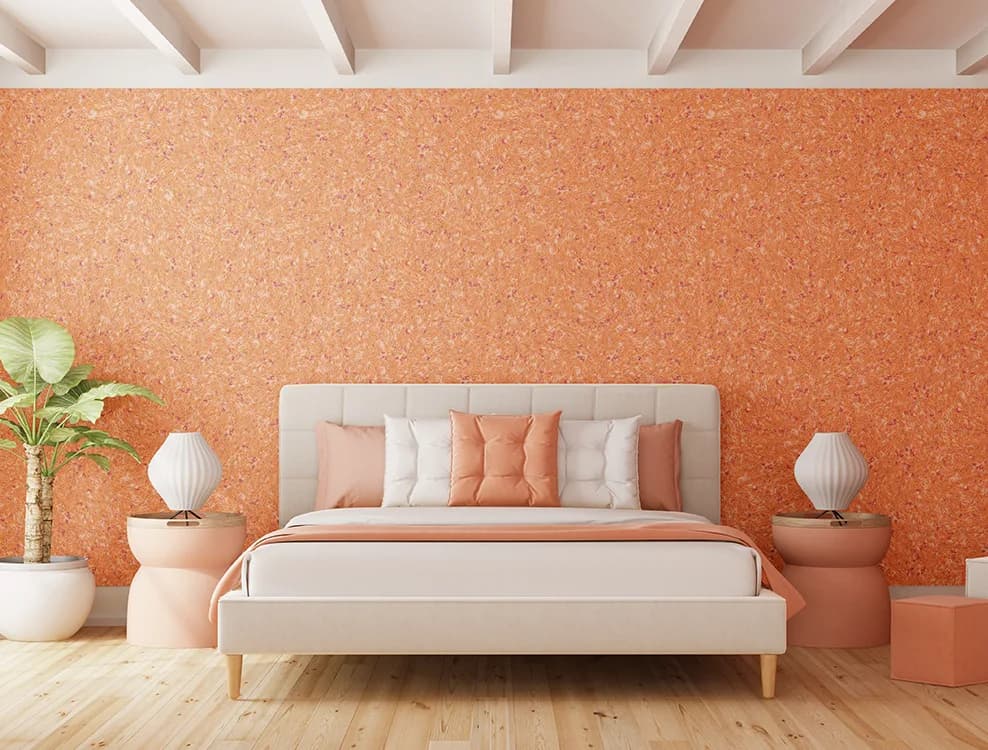
- Bedroom: A calmer marble pattern on the headboard wall; instead of highly contrasting veins, use gentle tones together with soft textiles.
- Horeca and stores: Use Marmarito intensively in reception/welcome areas and focal points; establish a balanced rhythm in circulation areas with simpler interior paints.
- Wet areas: Marmarito is not recommended on walls directly and continuously exposed to water (such as inside showers). Instead, it can be used on dry areas (upper sections behind washbasins, bathroom entrance walls, etc.) where splashing water is limited, observing the conditions specified in the technical data sheet.
Taking the Right Step for Your Project: System, Documents and Next Steps
When used with the right infrastructure and design setup, Marmarito is a powerful decorative tool that can change the character of a space on its own. It allows you to make marble texture a part of the wall paint system without experiencing the weight and installation difficulties of real marble.
As the next step you can:
- Clarify what type of marble texture you are looking for; calmer or more dynamic, warmer or cooler?
- Decide which walls you will use Marmarito on according to your space type (living room, entrance hall, bedroom, store, Horeca, etc.) and note interior paint options for the other walls.
- Assess the condition of your surface (roughness, cracks, old paint, moisture) with an applicator or technical consultant and plan the layers of primer + putty + decorative coating + protective coat if needed together.
- Review colour and texture options, the technical data sheet and application videos and, if necessary, have a small sample panel made or test it yourself.
In this way you can treat Marmarito not just as “a nice-looking paint” but as a well-planned interior decorative wall system and make the marble texture a natural part of your space, whether it is modern, minimal, luxury or industrial.
Marmarito is an acrylic-based, marble-patterned decorative interior wall coating. Unlike classic paint, it offers a dynamic effect that imitates marble veins and natural stone texture.
Marmarito is applied as a decorative coat over a suitable primer, after putty and a second primer coat where necessary. If needed, the system can be completed with an additional protective topcoat at the final stage.
Marmarito is much lighter than real marble cladding, is applied as a paint system and does not add extra load to the wall. Since colour, vein movement and density can be controlled during application, it also offers high design flexibility.
Marmarito can be used on interior walls; on feature surfaces such as living room, entrance hall, stairwell, columns, behind TV units, reception and store walls. It also offers practical solutions on columns, niches and slightly curved forms.
As Marmarito is a paint system, it does not require slab installation or mechanical fixing. The duration depends on surface preparation, area size and the desired effect intensity, and the process is similar to standard decorative paint applications.
Marmarito can generally be cleaned by wiping with a damp cloth. The possibility of local touch-ups when necessary provides practical maintenance, especially in heavily used interior spaces.
For pronounced marble veins and strong decorative impact, choose Marmarito; for a more refined, stucco-like feel choose Marmarino Plus; for a more rustic stone effect closer to travertine rather than marble choose Travertino.
If you are looking for an industrial concrete effect instead of a marble appearance, Betoncoat is suitable; for projects that seek a different stone feel, alternative Silkcoat decorative coating systems such as Stone or Marble Stone Efekt can be considered.