

Spray Paint Types and Their Creative Use in Decoration
What are the types of spray paint and which one suits each surface? Technical tips that prevent runs and orange peel, plus decorating ideas.
On small jobs, spray paint does what a brush and roller cannot: it coats a chair with complex geometry, a radiator panel or a thin-wire lamp cage without leaving a mark. But that same convenience comes back as runs, orange peel and a film that will not hold when it is used incorrectly. In this article we explain the types of spray paint, which one works on which surface, and the realistic projects you can carry out with spray paint in decoration.
Key Takeaways
- Spray paints are classified by their binder; acrylic ones dry fast and have little odour, while alkyd-based ones give a harder film on metal.
- What determines the result is not the product but the technique: thin coats, a constant distance and continuous movement.
- An orange peel appearance usually comes from spraying too far away, while runs come from spraying too close and too thickly.
- No spray lasts long without an anti-rust primer on metal or a suitable primer on plastic.
- On small surfaces, effect sprays produce a marble and stone look with a naturalness a brush cannot reach.
Spray Paint Types: How Are They Classified?
Although the cans standing side by side on the shelf look alike, the paint classes inside them differ. The distinction is made under three headings.
1. By binder type
- Acrylic-based sprays: They dry fast, have less odour and hold their colour well. They are preferred for decorative objects, wood and the refreshing of previously painted surfaces.
- Alkyd (synthetic) based sprays: They give a harder, more durable film and adhere strongly to metal. They take longer to dry and require ventilation.
- Special resin sprays: Heat-resistant, anti-corrosive or plastic-specific formulations belong to this group.
2. By appearance
- Gloss: The option with the highest colour saturation; it also shows every flaw on the surface.
- Semi-matt / satin: The most balanced appearance in everyday use; it is more forgiving of flaws.
- Matt: Preferred on surfaces where reflection is unwanted and in modern decoration.
- Metallic and pearlescent: Looks such as gold, copper and chrome; they give a surface that changes with the light.
- Effect sprays: Products that imitate textures such as marble, stone and hammered metal.
3. By intended use
| Purpose | Property required | What to watch for |
|---|---|---|
| Metal furniture, railings | Anti-corrosive primer + durable topcoat | Do not paint before the rust is fully removed |
| Wooden object, frame | Fast-drying acrylic | Primer first on absorbent surfaces |
| Plastic pot, housing | Primer suitable for plastic | With the wrong primer the film lifts with a fingernail |
| Decorative effect | Effect spray | The texture changes with distance; make a sample |
| Surface exposed to heat | Heat-resistant formulation | A standard spray yellows and cracks |
Decorative Effect: Building a Marble Look with Spray
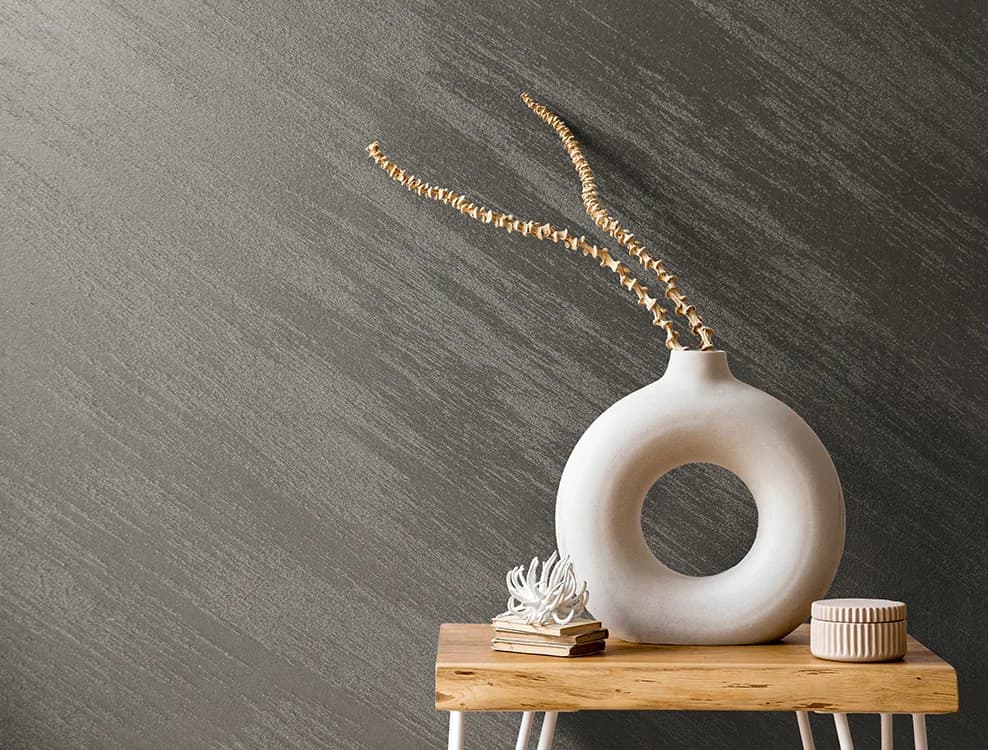
The most interesting use of spray paint in decoration is that it can easily build, on small surfaces, textures that are hard to achieve with a brush. Marble Stone Efekt is a spray paint that creates a realistic marble effect, suitable for interiors and exteriors. Its veined structure gives the look of natural stone in a few minutes on small and medium-sized surfaces such as a coffee table top, a wall panel, a pot or a decorative object.
With effect sprays the texture is directly related to the spraying distance: the closer you get the coarser the veins become, the further away you move the finer and denser they get. That is why, before moving to the actual surface, you need to set the distance on a test piece of the same material. The product information and the TDS on the spray paints page describe the application conditions.
Correct Application: Six Steps
- Clean and dull the surface. Grease, dust and a glossy old paint film prevent adhesion. A surface dulled with fine sandpaper is the best base for the spray to grip.
- Apply a primer. Use an anti-rust primer on metal, a primer on absorbent wood and a primer suitable for plastic on plastic. The primer is the layer that determines how long the spray lasts.
- Shake the can thoroughly. Shaking until the sound of the mixing ball inside becomes regular ensures the pigment is distributed homogeneously.
- Spray at a constant distance and while moving. Keep the distance stated on the product label; move your arm from the shoulder rather than the wrist, and start spraying off the surface and finish off it as well.
- Apply thin coats. Three thin coats are always better than one thick coat. Observe the waiting time between coats.
- Watch the ambient conditions. In very humid weather the surface may go dull, and in direct sun the film skins over before it dries through. Indoors, always ventilate and wear a mask.
Three Common Problems and Their Causes
- Runs and sagging: Spraying from too close, dwelling too long on the same spot or applying a thick coat. Solution: increase the distance, do not stop moving, apply thin coats.
- Orange peel (rough surface): Mostly spraying from too far away; the droplets partly dry before they reach the surface. Cold weather and low can pressure give the same result.
- The film lifts with a fingernail: A surface preparation or primer problem. No spray applied directly onto a glossy, greasy base will be permanent.
Realistic Ideas for Use in Decoration
- Old metal chairs and table legs: After rust removal and an anti-rust primer, a single-colour spray gives garden furniture a new life.
- Door handles, hinges and fitting details: The result is far cleaner when small parts are removed and painted separately.
- Picture and mirror frames: Metallic sprays create harmony with the metal details in the same room.
- Pots and decorative objects: A marble or stone effect spray brings mismatched objects into a single language.
- Wall pattern with a stencil: A cut stencil and a matt spray create a graphic accent on a single wall. Sticking down the edges of the stencil properly is essential for a sharp result.
On large surfaces a spray can is not economical. On medium-to-large surfaces such as a chest of drawers, a cabinet door or a kitchen unit, transformation paints applied with a brush and roller make more sense; Viabella is a water-based transformation paint that adheres to all surfaces and offers an alternative to spray cans in furniture renovation. If a hard, metal-looking finish is wanted, topcoats that give a hammered metal effect such as Hammer can be applied with a brush or a spray gun.
Safety: The Part That Must Not Be Skipped
Spray paints come in pressurised cans together with volatile solvents. Working for a long time in a closed room with no ventilation carries a health risk and also lowers the quality of the drying. Apply outdoors or in a well-ventilated area, wear a suitable mask and gloves, and store the cans away from heat sources and direct sunlight. For product-specific safety information, consult the safety data sheets in the TDS archive.
Masking: The Invisible Half of a Clean Result
With spray paint, half of the work is finished before you spray. Unlike a brush, a spray knows no boundaries: the sprayed particles also spread around the target, and with wind that spread can travel metres. That is why masking is one of the steps that determine the result.
For small objects the most practical method is to place the piece inside a large cardboard box and paint it in there; this both prevents the spread into the surroundings and cuts the air flow. When working with a stencil on a wall, the edges of the stencil must stick fully to the surface; the smallest gap blurs a line that should be sharp. If you use tape, removing it the moment the paint reaches touch-dry rather than waiting for it to dry completely allows the edge line to separate without tearing.
Floor protection must not be forgotten either. Because plastic sheeting is slippery, prefer paper or cardboard where you will step. Leaving a one-metre buffer around the working area shortens the cleaning time noticeably.
Conclusion: The Big Tool for Small Jobs
Used on the right surface and with the right technique, spray paint is the fastest route to small-scale renovations. Prepare the surface, do not skip the primer, work in thin coats and at a constant distance; and with effect products, always set the distance on a test piece first.
A concrete next step: decide on the object you want to renovate, choose the primer-topcoat pair according to its material, and apply three thin coats on a test piece of the same material before moving to the actual surface. If you are unsure about product selection, you can consult our technical team through the contact page.
By binder they are divided into acrylic, alkyd (synthetic) and special resin sprays; by appearance into gloss, satin, matt, metallic and effect sprays; and by purpose into formulations for metal, wood, plastic and heat resistance.
It can be used on metal, wood, plastic, glass and previously painted surfaces. What matters is that the surface is clean, dulled and prepared with a suitable primer; on glossy or greasy surfaces without a primer the film will not grip.
The surface is cleaned and dulled, a suitable primer is applied and the can is shaken thoroughly. Keeping the distance stated on the label and moving the arm from the shoulder, it is sprayed in thin coats. Spraying starts off the surface and finishes off it.
It is mostly caused by spraying from too close, dwelling on the same spot or applying a thick coat in one go. Increasing the distance and working in three thin coats without stopping the movement eliminates the problem.
It is usually caused by spraying from too far away; the droplets dry partly before reaching the surface and a rough texture forms. A cold environment and reduced can pressure can give the same result.
Marble Stone Efekt gives a marble effect suitable for interiors and exteriors; it is used on small and medium-sized surfaces such as coffee table tops, wall panels, pots and decorative objects. The thickness of the veins changes with the spraying distance.
On small parts with complex geometry, spray gives a cleaner result. On medium-to-large flat surfaces such as cabinet doors or chests of drawers, the number of cans rises quickly; in that case transformation paints such as Viabella, applied with a brush and roller, are more economical.
Work outdoors or in a well-ventilated area and wear a suitable mask and gloves. Keep the cans away from heat sources and direct sunlight. Read the safety data sheet for product-specific warnings.