
Travertino Wall Coating: Natural Texture Application Guide
How is Travertino wall coating applied? The layer logic behind the antique stone texture, surface prep, trowel techniques and protective sealer, step by step.
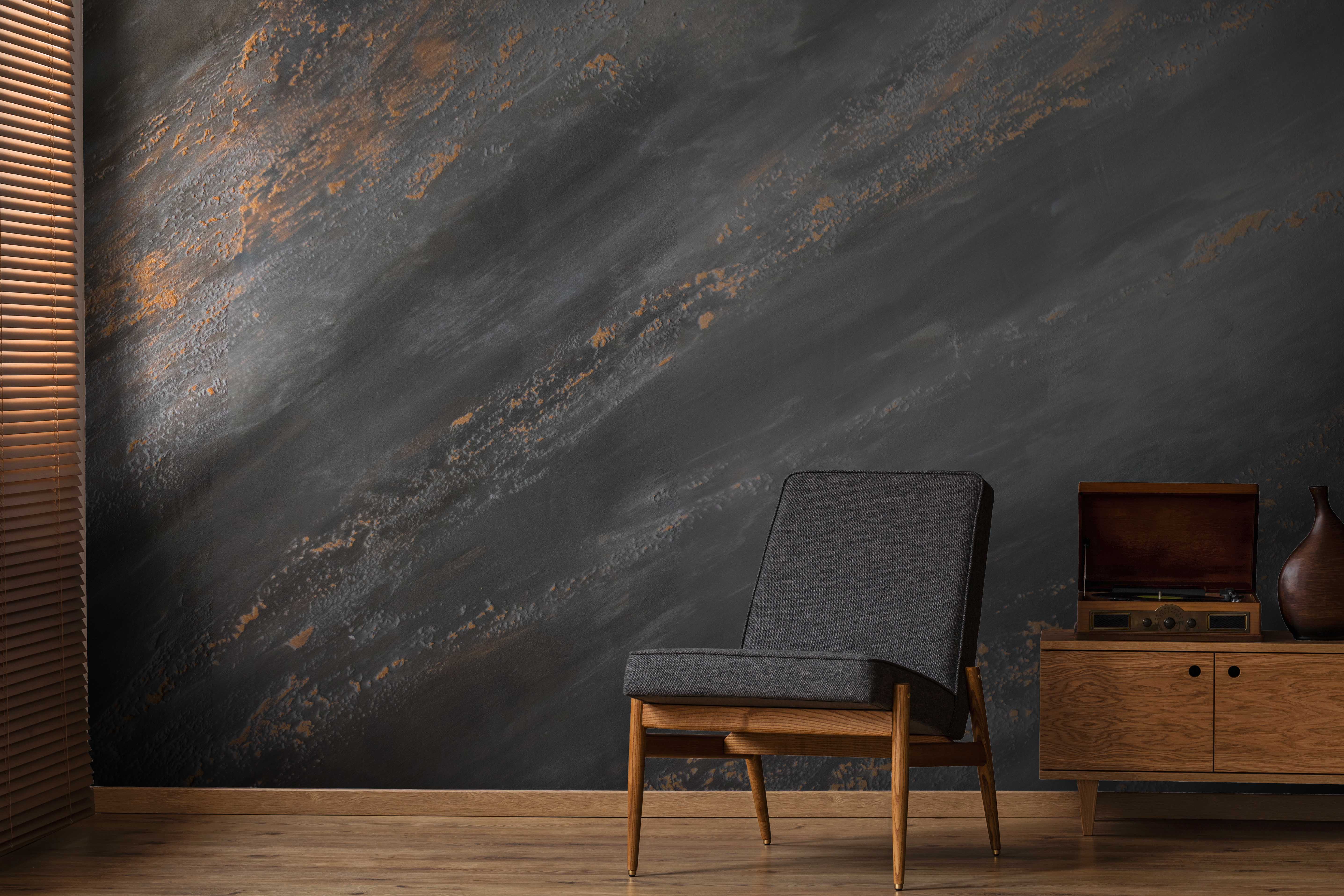
Everyone wants the effect of natural stone on a wall, but real stone cladding means weight, structural preparation, joints and cost. The answer decorative coatings give at this point is simple: carry onto the wall not the stone itself, but the relationship the stone builds with light. Travertino does exactly that — it builds the antique stone texture as a seamless, uninterrupted surface only a few millimetres thick. In this article we explain how the texture is formed, which surfaces it works on and where the application goes wrong.
Key Takeaways
- Travertino is an acrylic copolymer cement based decorative coating with an antique stone look; the texture comes not from the product but from the application technique.
- Three things determine the result: a flat substrate with balanced absorbency, the trowel angle and the timing between coats.
- Very different surfaces can be achieved with the same product, which is why the decision is made on a full-size sample rather than on a colour card.
- In heavily used areas the clear protective sealer is the layer that determines how cleanable the texture is.
- Using it on a single surface rather than across the whole wall protects both the budget and the balance of the space.
What Is Travertino and What Texture Does It Give?
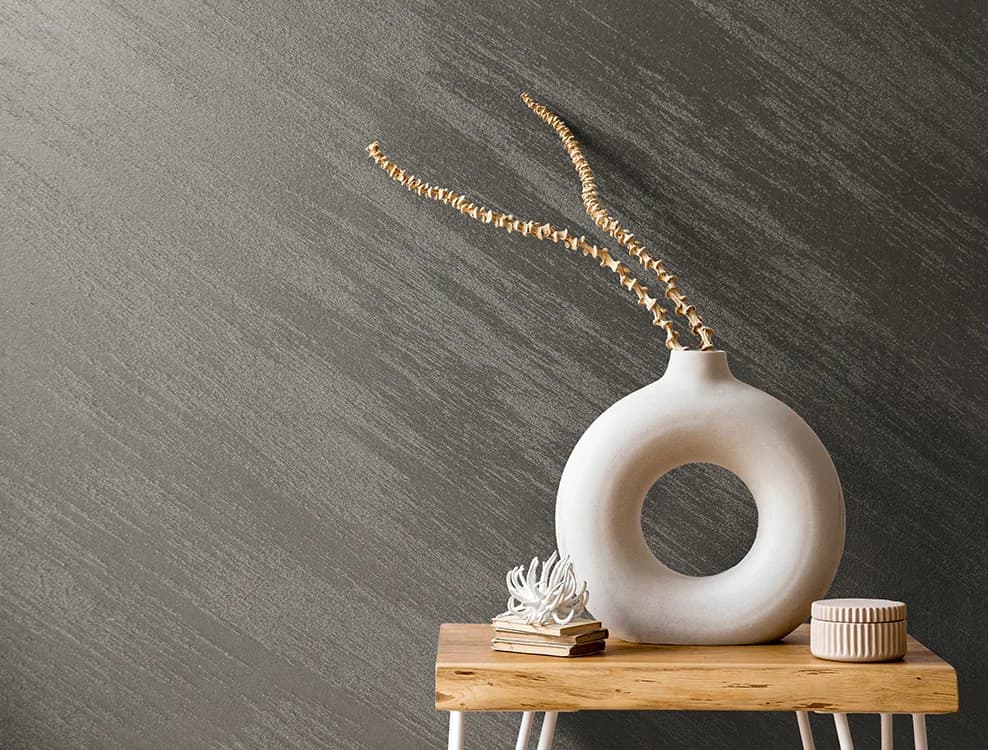
Travertino is an acrylic copolymer cement based antique stone decorative paint. It takes its name from travertine, known for its porous structure and horizontal veining. In application this character is built in two ways: the base coat gives the surface volume and shadow, while the top coat determines the areas that hold and release light. The resulting surface, unlike a single-colour paint, changes throughout the day; in raking morning light the texture deepens, in flat midday light it calms down.
This is why "choosing a colour" is a misleading expression for products such as Travertino. What you choose is not a shade but a surface character. The Travertino colour card shows examples of this character; the final decision, however, should be made on a full-size sample produced by your applicator.
The Natural Texture Family: Which Product, Where?
Within the Silkcoat effect paints group there is more than one direction for those looking for a natural texture. Knowing the difference between them makes it easier to choose the right product for the project:
| Product | Base | Character it gives | Typical use |
|---|---|---|---|
| Travertino | Acrylic copolymer cement | Antique stone, porous and veined | Living room wall, hotel lobby, restaurant |
| Betoncoat | Acrylic copolymer cement | Antique stone look, industrial calm | Loft, office, café |
| Marmarito | Acrylic copolymer | Marble pattern, glossier and smoother | Classic living room, entrance hall |
| Marmarino Plus | Pure acrylic, lime based | Marble pattern, matt and deep | Bedroom, boutique spaces |
| Decortivo | Pure acrylic | White particle texture | Wide surfaces with a neutral texture |
| Stone | Acrylic copolymer, granite-marble | Durable stone texture | Exterior walls and entrance façades |
If the space has little light, a lighter texture with less contrast reads better; in a large, brightly lit area a texture with deeper shadows reads better.
Surface Preparation: Seventy Per Cent of the Result
The most common mistake made with decorative coatings is assuming that the texture will hide the flaws of the substrate. The opposite is true: raking light magnifies the unevenness of the substrate along with the texture. Before application:
- Level the surface. Cracks, voids and flaking old paint are removed; if necessary filler is applied and sanded.
- Balance the absorbency. If the primer is skipped on gypsum and absorbent surfaces, the coating loses its water rapidly, grips under the trowel and the texture can no longer be worked. On fair-faced concrete surfaces Brüt Beton Astarı is used to increase adhesion.
- Colour the substrate. In textured coatings the colour of the base coat determines the shadows of the top coat. A texture applied over a light base looks airy, one applied over a dark base looks dramatic.
- Prepare the environment. On surfaces that are very hot, in direct sunlight or exposed to draughts the product sets early and the texture cannot be worked.
Application: Where Does the Texture Form?
With Travertino the texture is born from the angle the trowel makes with the surface and from the timing of the pressure. The general logic is this: the first coat covers the surface and gives volume; once the product has reached a certain consistency the second coat is drawn with short, broken movements and the direction of the veining is set. Finally the trowel is held flat and the surface is compacted; this step adjusts both the sheen level and how closed the surface is.
Three points to watch during application:
- Do not split the wall. A wall must be finished in one go, from corner to corner. A joint mark remains where work was interrupted, and that mark cannot be corrected afterwards.
- The same hand, the same rhythm. Two different applicators working on the same wall create a visible difference in the character of the texture.
- Keep the sample. The approved sample is the reference for comparison at the end of the job.
Describing trowel movements in writing remains limited; in the recordings on the application videos page you can watch how the texture is built.
The Protective Layer: What Makes the Texture Cleanable
Porous textures hold dirt as readily as they look beautiful. In heavily used interior areas — corridors, restaurant walls, hotel lobbies — a clear protective layer is applied over the coating. SX 2000 is a water-based clear surface protection varnish based on an acrylic copolymer binder, and it is used for this purpose.
Make your decision knowing that the protective layer has two effects: it makes the surface cleanable, but it also increases the sheen to some extent. If you are aiming for a matt appearance, try the varnish on a sample first and see the result.
Where to Use It, Where Not to Use It
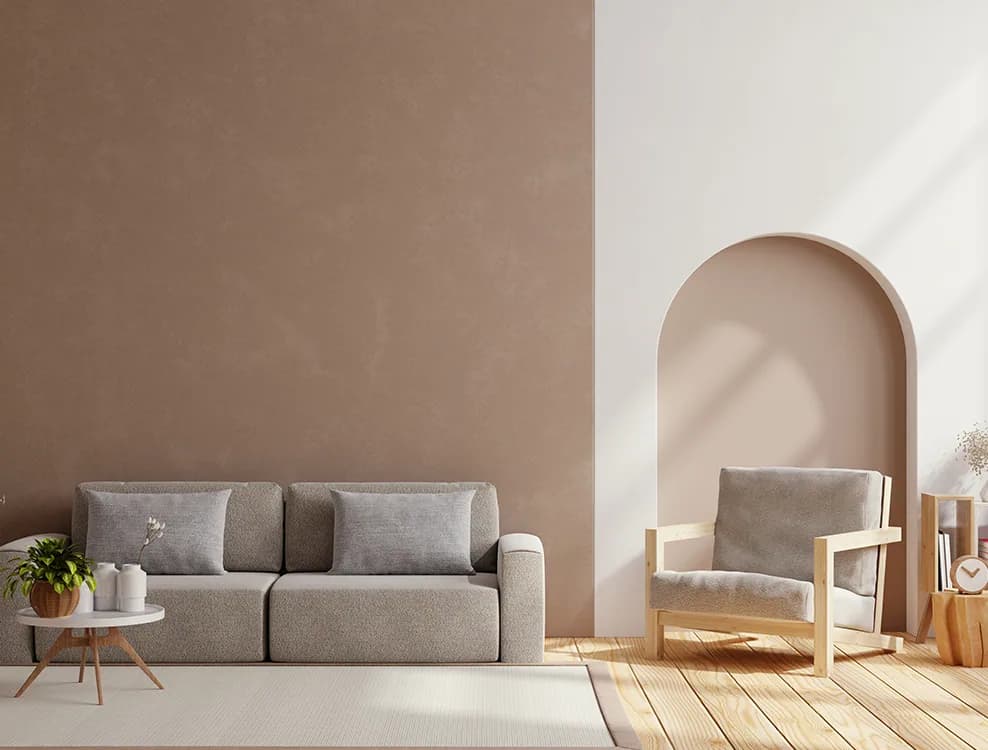
Travertino and similar natural texture coatings give their strongest result when used on a single surface: the television wall in a living room, the welcome wall at an entrance, the area behind the bar in a restaurant. Covering all four walls of a room with texture both weighs the space down and makes the effect of the texture commonplace.
Areas in constant contact with water, such as the inside of a shower, are not the domain of these products. In areas exposed to steam and indirect humidity they should be evaluated together with a suitable protective layer. For heavily used spaces such as hotels, restaurants and cafés, we have covered the durability and cleanability criteria separately on the horeca page.
Common Mistakes
- Applying without levelling the substrate and then seeing the unevenness in raking light.
- Applying to an absorbent surface without primer and causing the product to set early under the trowel.
- Leaving a wall half finished and continuing the next day; the joint mark is permanent.
- Deciding by looking at the colour card and not asking for a full-size sample.
- Skipping the protective varnish in a heavily used area and facing stains that cannot be cleaned within the first year.
- Spreading the texture across the whole room; it stops being a feature wall and turns into background.
Cost and Time: What Is the Calculation Based On?
With decorative coatings the budget is formed not by the price of the tub but by the total of three items: material, surface preparation and labour. Of these, the item that surprises people most is usually surface preparation. On an uneven wall, the filling, sanding and priming labour can take longer than the coating itself. This is why the current state of the substrate must have been seen when you request a quote; decorative coating prices given on the basis of a photograph often change on site.
Expectations also need to be set on the timing side. Because textured coatings are applied in layers, the waiting times between coats determine the schedule of the job; even if a wall is finished in a single day, the total process including the protective varnish can spread over several days. If the ambient temperature is low, this period lengthens.
When making comparisons, evaluate the price per m² not on its own but together with service life and maintenance cost. A decorative surface applied over a correct substrate and protected offers a renewal interval far beyond that of flat paint.
Conclusion: You Are Choosing a Surface, Not a Product
The result obtained with Travertino depends far more on the application itself than on the product in the tub. Prepare the substrate, balance the absorbency, finish the wall in one go and do not skip the protective layer in heavily used areas. When these four items are in place, a layer a few millimetres thick more than matches the effect of real stone.
A concrete next step: decide on the single wall you want to cover with texture, compare the characters of Travertino, Betoncoat and Marmarito on the effect paints page, and ask your applicator for a sample at least 50×50 cm in size, to be assessed under the same light.
It is an acrylic copolymer cement based decorative coating that gives an antique stone look. It is applied with a trowel in layers a few millimetres thick and creates a seamless, uninterrupted stone texture.
It can be applied to gypsum, plaster, fair-faced concrete and previously painted interior walls; the substrate must be flat and sound. A primer is used on absorbent surfaces, and Brüt Beton Astarı, which increases adhesion, is used on fair-faced concrete surfaces.
The general logic is two layers: the first coat covers the surface and gives volume, the second coat sets the direction of the veining and the shadows with the trowel. The number of coats and the waiting times are determined according to the values in the product's TDS.
Both are acrylic copolymer cement based products with an antique stone look. Travertino gives a surface close to the porous, veined character of travertine; Betoncoat is preferred for a calmer, industrial appearance.
Porous surfaces hold dirt, which is why a clear protective varnish is applied in heavily used areas. Protected surfaces are wiped with a soft cloth and lukewarm water; abrasive sponges and solvents damage both the texture and the varnish.
Areas in direct contact with water, such as the inside of a shower, are not the field of use for these products. On bathroom walls exposed to steam and indirect humidity, they should be evaluated together with a suitable protective layer and with ventilation conditions taken into account.
The texture comes from the application technique, not from the product; very different surfaces can be obtained with the same product. A sample at least 50×50 cm in size, assessed in the space's own light, is far more reliable than deciding by looking at a colour card.
Usually not. Texture gives its strongest effect when used on a single feature wall; spread over four walls it weighs the space down and loses its impact. The remaining surfaces are left as background with a flat interior paint.