






Should a Professional Apply Your Effect Paint, or Should You? A Cost and Result Analysis
Effect paint professional or DIY? Decide using product difficulty, waiting times, cost items and Silkcoat's applicator training information.
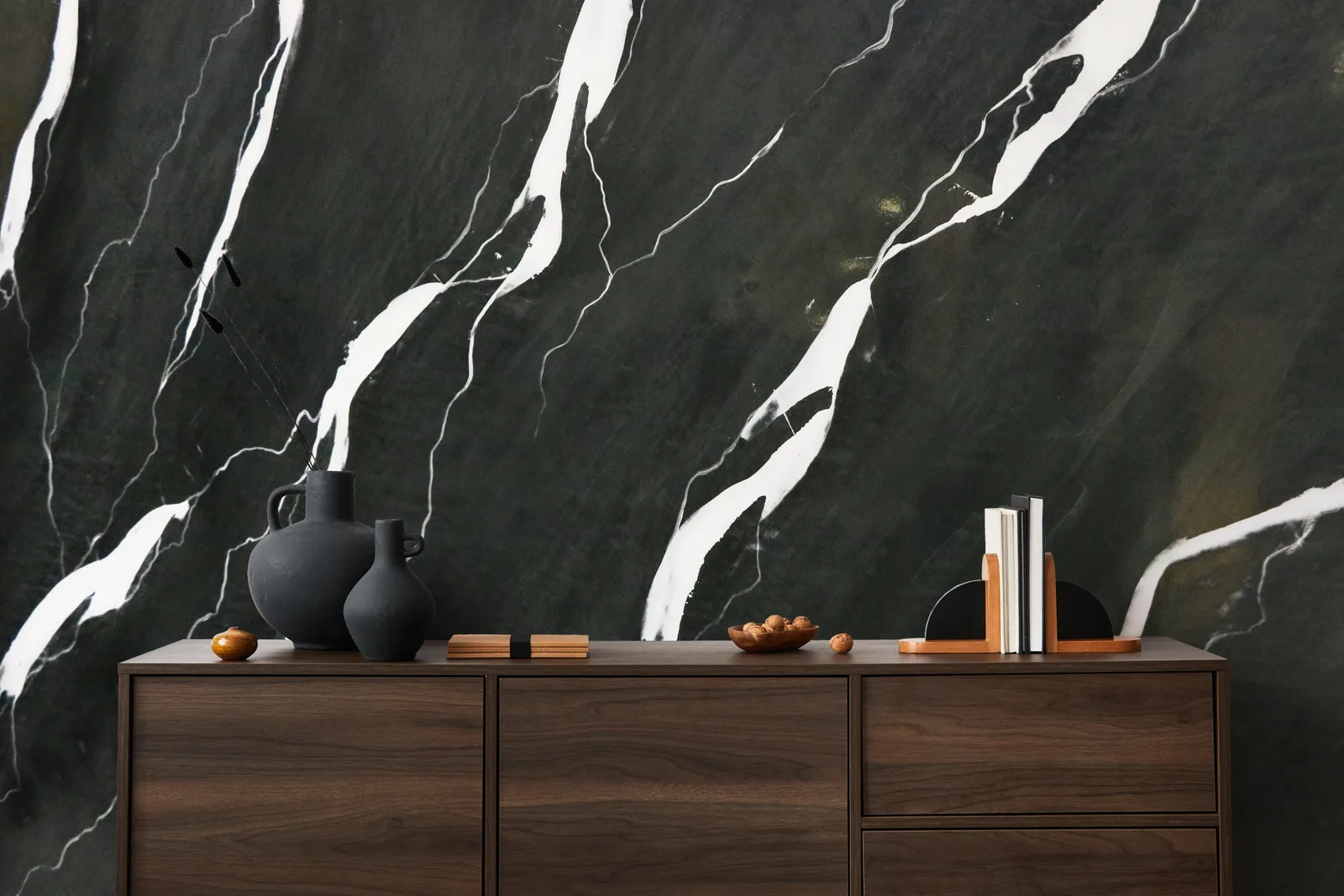
Short answer: Whether you should hire an effect paint professional or apply it yourself depends on how many steps and how much manual skill the chosen product requires. According to silkcoat.com instructions, single-coat products such as Pearl and Decortivo are better suited to DIY, while Marmarito's spatula strokes and burnishing or Travertino's coats spread over several days give a safer result with an effect paint professional. On the cost side, a professional adds a labour item but reduces the material and time lost to faulty application.
What is an effect paint professional?
An effect paint professional is an applicator who creates textures such as marble, travertine, velvet or mother-of-pearl on the wall by applying decorative effect paints with trowel, spatula, brush and sponge techniques. Because the pattern in effect paint is formed by hand movements during application, the result depends largely on the applicator's technique.
The silkcoat.com effect paints page states that the texture result depends on the application technique and recommends testing on a small area before moving on to large surfaces. According to Silkcoat's Services page, the company runs hands-on training for applicators on its effect paint and silk plaster products, and also provides technical data sheets, application instructions and on-site support for every product. This shows that, unlike standard flat paint, effect paint requires a distinct application skill. Timing is part of that skill too: according to silkcoat.com instructions, Marmarito needs at least 4 hours between the two coats, while Travertino needs 1 day after each coat. An effect paint professional fits these waiting times into the work schedule, whereas with DIY the same times have to be planned around how the home is used. The difference between an effect paint professional and DIY is that, even with the same product and the same instructions, experience shows in how even the pattern is.
Can you apply effect paint yourself?
Yes. According to silkcoat.com instructions, some effect paints involve fewer steps and are therefore suitable for applying yourself. Pearl is applied undiluted in a single coat with a glass trowel, and the same trowel is used to create line or swirl patterns; Decortivo is brushed on in criss-cross strokes and smoothed with a plastic trowel once it starts to dry.
The following criteria can help you choose a product for DIY:
- Number of coats: Single-coat products eliminate the risk of timing mistakes between coats.
- Number of tools: Products that need only one tool reduce the risk of spoiling the pattern while switching tools.
- Waiting time: Products with short waiting times let you finish the job in one go.
- Pattern technique: Products that do not require burnishing or irregular spatula strokes call for less manual skill.
We covered five beginner-friendly textures, with their tools and drying times, in our DIY effect paint article.
Which effect paints call for a professional?
According to silkcoat.com instructions, an effect paint professional should be preferred for products that involve several coats, long waits between coats and pattern steps requiring manual skill. Marmarito and Travertino are examples of this group: Marmarito involves spatula strokes and polishing with a trowel, while Travertino involves coats spread over several days and lines drawn with the back of the trowel.
The table below compares the application steps of the products according to silkcoat.com instructions:
| Product | Coats | Waiting time | Pattern technique | DIY suitability |
|---|---|---|---|---|
| Pearl | Single coat | None | Lines or swirls with a glass trowel | Suitable |
| Decortivo | Single coat | None | Criss-cross with a brush, smoothing with a plastic trowel | Suitable |
| Marmarito | Two coats | At least 4 hours between coats | Criss-cross and vertical-horizontal spatula strokes, polishing with a trowel | Professional recommended |
| Travertino | Several coats | 1 day after each coat | Lines with the back of the trowel | Professional recommended |
The final step in the Marmarito instructions is to polish the whole surface by pressing the trowel up and down and to the right. This burnishing step is the part of the marble look that depends most on manual skill; we explained the steps in detail in our how to apply marble effect paint guide. The first coat of Travertino is thinned with 20-25% water, and according to the silkcoat.com instructions the application is spread over several days.
How do the costs of an effect paint professional and DIY compare?
The costs of an effect paint professional and DIY are compared by adding up the material, tools, surface preparation, labour and error-risk items over the same square metres. Since silkcoat.com does not list product prices or labour rates, the comparison can be made item by item rather than in figures.
The cost items of the two options break down as follows:
| Cost item | With a professional | DIY |
|---|---|---|
| Material | Same, based on coverage | Same, based on coverage; extra product may be needed for a test surface |
| Tools | Usually the professional's own tools | Trowel, spatula, brush or sponge must be bought |
| Surface preparation | Done by the professional | Done by you; primer and filler are needed |
| Labour | Additional fee | Your own time |
| Error risk | Lower thanks to experience | On a faulty surface, the base and the effect are reapplied |
In both options the material item is calculated from coverage: according to silkcoat.com, Marmarito covers 4.5-5.5 m²/kg and Pearl covers 2-3 m²/kg in a single coat. We explained the step-by-step calculation of the cost per square metre in our how to calculate effect paint price per m² article.
What affects the result when you apply it yourself?
When you apply it yourself, the result is affected most by surface preparation, sticking to the waiting times in the product instructions and practising the pattern movement beforehand. According to silkcoat.com instructions, the surface must be free of dust, dirt and grease, and the ambient and surface temperature must be between +5°C and +35°C throughout application and drying.
A DIY checklist based on Silkcoat instructions consists of the following steps:
- Prepare the surface: Blistered surfaces are lightly sanded, and defects are repaired with Silkcoat Dahili Akrilik Macun (interior acrylic filler).
- Choose the right primer: Depending on the surface, Silkcoat İzolac, Silkcoat Universal Astar or Silkcoat Macun Astarı (filler primer) is used.
- Test first: silkcoat.com recommends testing on a small area before moving on to large surfaces.
- Follow the instructions: Silkcoat's Application Videos page shows Marmarito, Velvetto, Travertino and Cashmere applications step by step.
- Clean your tools: Once the application is finished, the tools are cleaned with water.
We gathered the most common mistakes and ways to fix them in our effect paint application mistakes article.
What are the trade-offs of hiring a professional?
The main trade-off of hiring a professional is that, in return for the labour fee, you get a more predictable result and a shorter learning process. DIY eliminates the labour fee, but leaves the time for testing, learning and possible reapplication to you.
The following situations can be kept in mind when deciding:
- Large, highly visible walls: In areas such as a living room or the wall behind the TV, pattern differences are more noticeable, so a professional may be preferable.
- Small accent areas: A single small wall or niche is a lower-risk starting point for DIY.
- Difficult textures: With multi-step products such as Marmarito and Travertino, a professional's experience clearly affects the result.
- Choosing a professional: Silkcoat's Services page states that it runs hands-on training for applicators; when looking for a professional, you can ask whether they have applied the product before.
According to silkcoat.com, Silkcoat's technical team provides guidance on surface type, application conditions and coverage. According to the Services page, Silkcoat also offers colour and texture consultancy with colour charts and sample work. Even when working with a professional, settling the product and colour choice in advance on a sample reduces the gap between expectation and result after application.
Conclusion
- The choice between an effect paint professional and DIY depends on the product's number of coats, waiting time and pattern technique.
- According to silkcoat.com instructions, Pearl and Decortivo are applied in a single coat and are better suited to DIY.
- Marmarito's spatula strokes and burnishing and Travertino's coats spread over several days are the steps that benefit most from a professional's experience.
- Since silkcoat.com does not list prices or labour rates, costs should be compared using the material, tools, surface preparation, labour and error-risk items.
- You can browse all the products on our effect paints page and contact us for help with product selection and application.
It depends on the product. According to silkcoat.com instructions, Pearl and Decortivo are applied in a single coat and can be done yourself; for multi-step products that require manual skill, such as Marmarito and Travertino, an effect paint professional gives a safer result.
DIY eliminates the labour fee, but adds the cost of tools, test product and reapplication if something goes wrong. Since silkcoat.com has no price information, the two options should be calculated item by item over the same square metres.
Yes. According to the silkcoat.com Services page, Silkcoat runs hands-on training for applicators on its effect paint and silk plaster products and provides technical support.
silkcoat.com recommends testing on a small area before moving on to large surfaces. The surface should be clean, dry and sound, a primer suited to the surface should be used, and the number of coats and waiting times in the product instructions should be followed.