





Effect Paint or Silk Plaster? Texture, Price and Lifespan Compared
Effect paint or silk plaster? Compare texture, application, coverage, price calculation and durability in one table, based on silkcoat.com data.
Short answer: Whether to choose effect paint or silk plaster depends on the texture you want on the wall. Silkcoat silk plasters are powder polymer-based coatings applied with a trowel in a single coat about 1 mm thick, creating a seamless, lightly textured and warm surface. Silkcoat effect paints, on the other hand, are decorative paints that give the wall a marble, mother-of-pearl, velvet, metallic, travertine or concrete look. silkcoat.com does not list prices or a lifespan in years for either product group, so the comparison is based on texture, application, coverage and area of use.
Effect paint or silk plaster: what is the main difference?
The main difference between effect paint and silk plaster is that silk plaster is a powder polymer-based wall coating mixed with water, while effect paint is a ready-to-use decorative paint supplied in liquid form. According to silkcoat.com, silk plaster is mixed with about 6 litres of water per bag, whereas effect paints such as Marmarito, Marmarino Plus, Velvetto and Pearl are applied without thinning.
Silk plaster, as silkcoat.com defines it, is a "powder polymer-based, healthy and decorative interior wall covering material". Silkcoat's silk plaster range includes Prestige, İpek Sıva Serileri (Elegant) and Smart Colours, while Gümüş ve Altın Sim (silver and gold glitter) is a glitter additive that gives these products a decorative look. Unlike roller-applied paint, silk plaster is applied with a trowel in a single coat about 1 mm thick, and its drying time is 24 hours. Effect paint is a decorative paint that gives the wall texture, pattern and shimmer instead of a flat colour. Silkcoat's effect paints category contains 17 products, including Marmarito, Travertino, Pearl, Velvetto, Magico and Betoncoat. Depending on the product, the binder of an effect paint can be pure acrylic, acrylic copolymer, lime-based or cement-based. Both product groups are designed for interiors; the choice between them comes down to the surface feel you want and the application method.
The table below compares the two product groups based on the information on silkcoat.com:
| Feature | Silk plaster (silkcoat.com) | Effect paint (silkcoat.com) |
|---|---|---|
| Composition | Powder polymer-based | Pure acrylic, acrylic copolymer, lime- or cement-based, depending on the product |
| Preparation | Mixed with about 6 lt of water per bag and left to rest for at least 20 minutes | Marmarito, Marmarino Plus, Velvetto and Pearl are applied without thinning; Travertino is thinned with water for the first coat |
| Application | Single coat with a plastic trowel, 1 mm on average; can also be applied with a spray gun | Roller, glass trowel or spatula depending on the product; one or two coats |
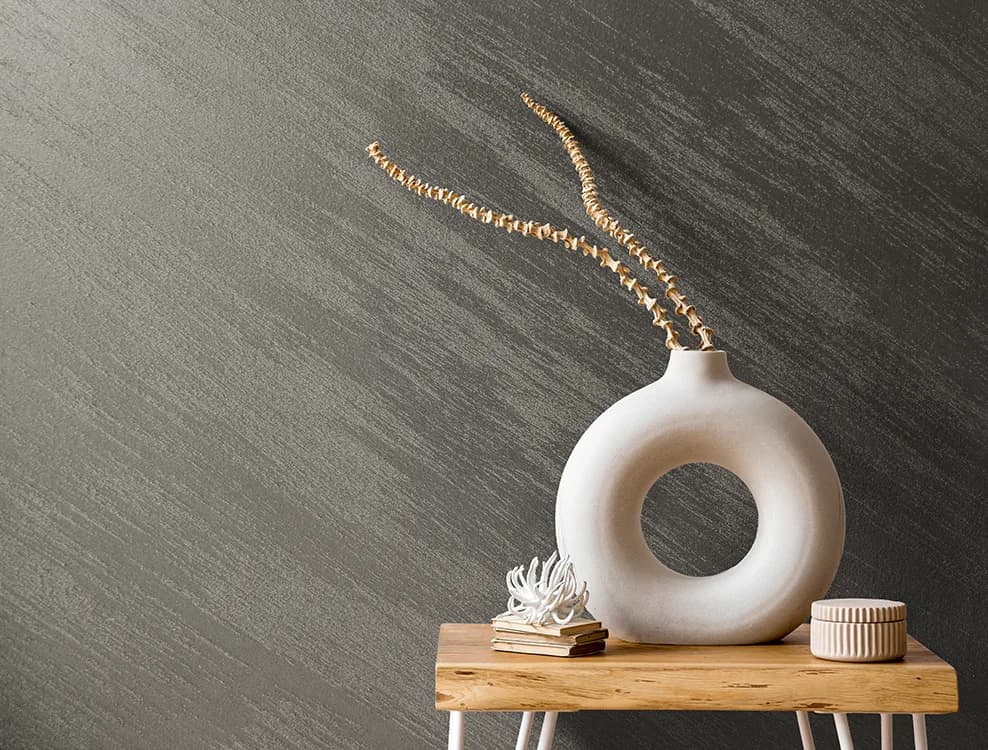
| Appearance | Seamless, lightly textured and warm surface | Marble, mother-of-pearl, velvet, metallic, travertine, concrete, colour-shifting |
| Full drying | 24 hours | 24 hours for most products |
| Coverage | Prestige and Elegant: 220-300 g/m² | Varies by product; for example Marmarito 4.5-5.5 m²/kg |
Effect paint or silk plaster in terms of texture?
In terms of texture, silk plaster gives a soft, seamless and lightly textured surface, while effect paint imitates the look of a specific material such as stone, marble, fabric or metal. According to silkcoat.com, silk plaster creates "a seamless, lightly textured and warm surface" on the wall.
The texture of effect paints varies markedly from product to product. Based on the product descriptions on silkcoat.com, the main textures are:
- Marble: Marmarito is a marble-patterned paint, and Marmarino Plus is a lime-based, marble-patterned interior paint.
- Mother-of-pearl and pearl: Pearl contains mother-of-pearl and has a pearl-like look; Metalico Soft is a soft metallic mother-of-pearl with the elegance of pearl.
- Velvet: Velvetto and Cashmere are velvet-patterned products with a glossy appearance.
- Stone and concrete: Travertino gives an antique stone look, and Betoncoat is a cement-based paint with an antique stone appearance.
- Colour-shifting: Magico is a decorative interior paint that changes colour depending on the viewing angle.
Silk plaster can also be varied in colour and sparkle. Smart Colours is described on silkcoat.com as "tintable", and Gümüş ve Altın Sim is a glitter additive used to give silk plaster a decorative look. We explain the texture terms used for effect paints separately in our effect paint terms glossary.
Effect paint or silk plaster in terms of price?
An exact price comparison cannot be made from silkcoat.com data, because the site does not list prices for silk plaster or effect paints. Current prices are requested through the quote section on the product pages or via the contact page; the cost per square metre is then calculated using the price together with the coverage value.
When comparing the cost per square metre of the two product groups, the following items should be added up over the same area:
- Material: The price of the pack is divided by the number of square metres it covers.
- Coverage: According to silkcoat.com, consumption is 220-300 g/m² for Prestige and Elegant silk plaster, and one bag of Smart Colours covers about 4 m²; among effect paints, Velvetto and Cashmere cover 3.5-4 m²/lt, Palace 3-4 m²/lt and Travertino 1-1.5 m²/lt.
- Surface preparation: For silk plaster, a Silkcoat primer is first applied to newly plastered surfaces; for effect paints, İzolac, Universal Astar or Macun Astarı is used depending on the substrate.
- Additional products: Some effect paints require a separate topcoat product; for example, the Velvetto instructions call for Silkomatt as the final coat.
Because coverage values are given in different units (g/m², m²/kg, m²/lt), the calculation should be done in each product's own unit. We walk through the calculation step by step in our article how to calculate effect paint price per m².
Effect paint or silk plaster in terms of lifespan?
In terms of lifespan, silkcoat.com does not give a figure in years for either silk plaster or effect paints; the information on the product pages concerns durability-related properties. According to silkcoat.com, Elegant series silk plaster is antistatic and does not attract dust, while effect paints such as Magico, Pearl and Metalico Soft are described as washable.
According to the Silkcoat product pages, the durability-related properties of the two product groups are as follows:
| Feature | Silk plaster (Elegant) | Effect paint |
|---|---|---|
| Dust | Antistatic, does not attract dust | Not specifically stated on the pages |
| Cleaning | No washability information on the page | Magico is highly washable; Pearl and Metalico Soft are washable |
| Unsuitable areas | Glass, brick, metal, exterior facades and constantly wet areas | Most are interior products; check the technical data sheet for exterior use |
| Storage | At least 1 year in unopened packaging | For example, Marmarito at least 2 years in unopened packaging |
According to Silkcoat's instructions, the ambient and surface temperature during application and drying must be between +5°C and +35°C for silk plaster and for the effect paints reviewed. The silk plaster and Pearl instructions require waiting at least 28 days on freshly plastered surfaces. Whether the surface keeps its original look for a long time depends largely on following these preparation rules. We cover the cleaning properties of effect paints product by product in our article is effect paint washable.
Which is easier to apply?
In terms of application, silk plaster is applied in a single coat with a single tool (a plastic trowel), whereas with effect paints the number of coats, the tools and the patterning technique vary by product. According to silkcoat.com, silk plaster is applied with a plastic trowel or spray gun at an average thickness of 1 mm.
For silk plaster, the application sequence on silkcoat.com is as follows:
- Prepare the surface: The surface is cleaned of dust, dirt and grease; blistered and previously painted surfaces are lightly sanded.
- Apply primer: A Silkcoat primer is applied to newly plastered surfaces; dirty or damp previously painted surfaces are cleaned, treated with SX 2000 Cila (varnish) and then primed.
- Prepare the mix: The bag is emptied into a container holding about 6 litres of water, mixed thoroughly and left to rest for at least 20 minutes.
- Apply: The mix is applied with a plastic trowel at an average thickness of 1 mm; the surface should not be left half-finished during application.
With effect paints, the steps differ from product to product. According to Silkcoat's instructions, Velvetto is applied with a roller and given a circular pattern with a special trowel; Pearl is applied undiluted in a single coat with a glass trowel; Marmarito is applied in two coats with a spatula, waiting at least 4 hours between coats. Marble and travertine textured effects involve steps that require manual skill, such as burnishing and trowel strokes.
Which rooms suit effect paint, and which suit silk plaster?
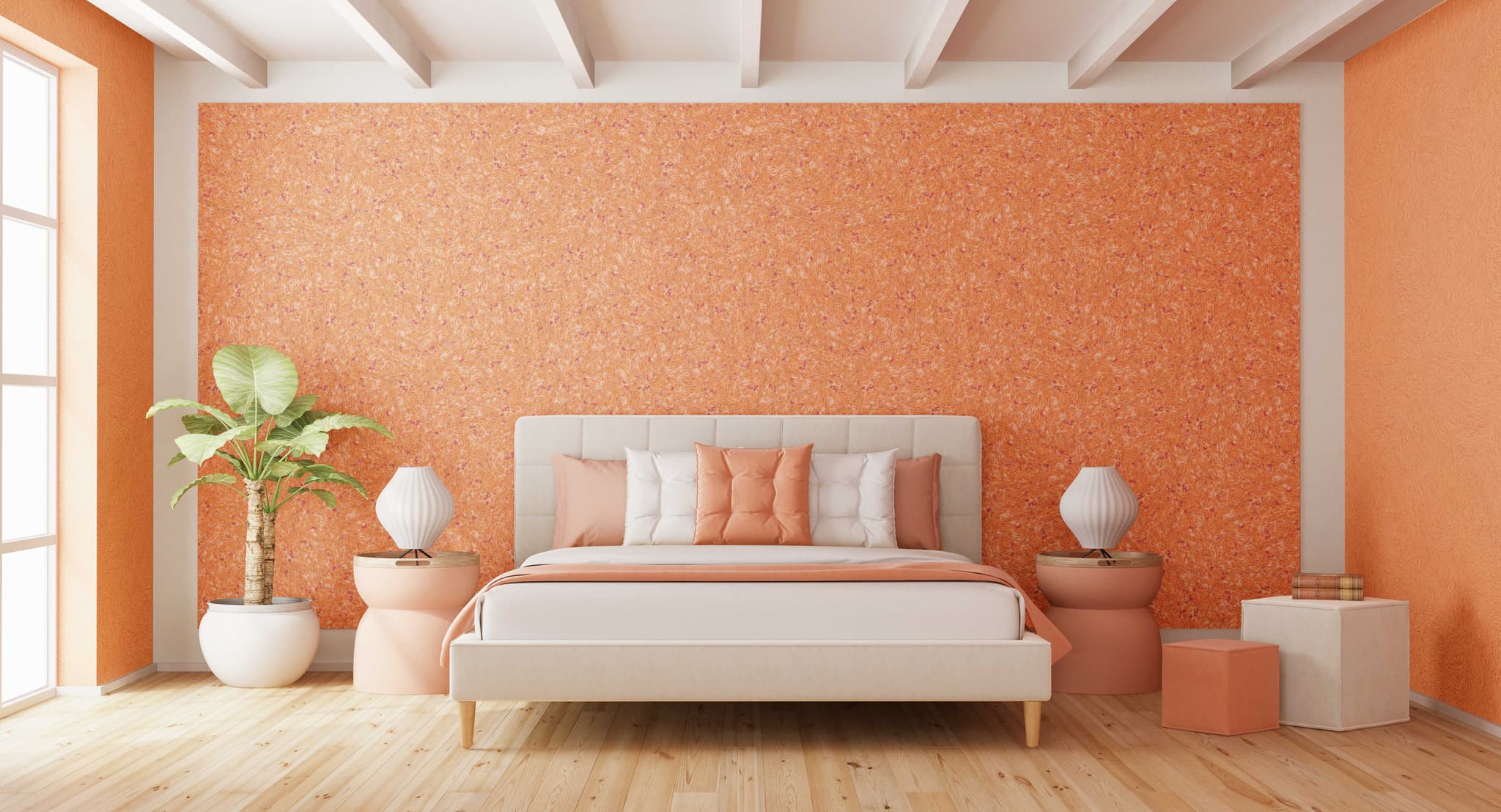
According to silkcoat.com, silk plaster is suitable for skim-coated walls, gypsum plaster, plasterboard, wood and non-alkaline interior surfaces, while effect paints are typically used for a single accent wall in areas such as the living room, behind the TV, behind the bed or in the entrance hall. The choice should take into account both how the room is used and the effect you want.
When choosing by room, the limitations stated on silkcoat.com are decisive. According to silkcoat.com, silk plaster is not applied to glass, brick or metal surfaces, exterior facades or constantly wet areas. Most effect paints are described as decorative interior paints, and checking the product's technical data sheet is recommended before using them outdoors. If you want to cover a whole room in a calm, warm texture, silk plaster is the better starting point; if you want a striking marble, metallic or velvet effect on a single wall, effect paint is.
What are the trade-offs when choosing between effect paint and silk plaster?
The main trade-off is that silk plaster is applied in a single coat with a single method but offers limited texture options, while effect paint offers a wide range of textures but, depending on the product, requires more coats and technique. Because silk plaster is a wall coating and effect paint is a paint, the two products also have different substrate and tool requirements.
According to silkcoat.com, the advantages of silk plaster in the Elegant series are that it contributes to heat and sound insulation, is odourless and breathable. The advantages of effect paints are a wide range of looks from marble to concrete, and a washable surface with products such as Magico, Pearl and Metalico Soft. You can explore the full range of Silkcoat silk plasters on the silk plasters page, and the general properties of silk plaster in our guide what is silk plaster.
Conclusion
- The choice between effect paint or silk plaster depends first on the texture you want: silk plaster for a seamless, lightly textured and warm surface; effect paint for a marble, mother-of-pearl, velvet, metallic or concrete look.
- silkcoat.com gives no prices and no lifespan in years for either product group; the cost per square metre is calculated from a price quote and the coverage value.
- Silk plaster is mixed with about 6 litres of water per bag and applied with a plastic trowel in a single coat, 1 mm on average; with effect paints, the number of coats and the tools vary by product.
- Silk plaster is not applied to constantly wet areas or exterior facades; for outdoor use of effect paints, the technical data sheet should be checked.
- To get a price quote for all effect paints and silk plaster series, or for help choosing a product, get in touch with us.
silkcoat.com does not list prices for silk plaster or effect paints. For an accurate comparison, get a price quote for both products and use the coverage value to calculate the total cost over the same area, including material, primer and labour.
silkcoat.com does not give a lifespan in years for either product group. Elegant series silk plaster is antistatic and does not attract dust, while effect paints such as Magico, Pearl and Metalico Soft are described as washable.
According to silkcoat.com, Silkcoat silk plasters are not applied to constantly wet areas, glass, brick or metal surfaces, or exterior facades. They are used on skim-coated walls, gypsum plaster, plasterboard, wood and non-alkaline interior surfaces.
silkcoat.com gives no specific information on using the two products together. Since silkcoat.com recommends effect paints for a single accent wall, whether both products can be used on different walls of the same room should be confirmed with Silkcoat before application.