
Effect Paint Terms Glossary: Pearl, Velvet, Marble, Satin, Relief, Travertine
What do effect paint terms mean? Pearl, velvet, marble, satin, relief and travertine effects explained, with their Silkcoat equivalents.

Short answer: Effect paint terms describe the look you get on the wall: pearl means a pearl-like, shimmering sheen; velvet a soft look that shifts between semi-gloss and matt; marble a veined, glassy stone appearance; satin the silky-matt sheen of a plain paint; relief a raised texture on the surface; and travertine a porous, streaked antique stone look. Knowing the right term is the quickest way to tell your decorator and supplier exactly what you want.
Why do effect paint terms matter?
Effect paint terms help you tell apart products that all go by the name "decorative paint" yet deliver very different results. When a catalogue says "pearlescent", "velvet finish" or "stone look", it tells you how the paint reflects light, how it feels to the touch and how it is applied. Every product on Silkcoat's effect paints page is also described with one of these terms.
Effect paint terms at a glance
| Term | Look | Example Silkcoat product |
|---|---|---|
| Pearl | Pearl-like sheen, a surface that shimmers in the light | Pearl, Metalico |
| Velvet | Soft look shifting between semi-gloss and matt | Velvetto, Cashmere |
| Marble | Veined, velvety, glassy stone appearance | Marmarito |
| Satin | Silky-matt, slightly glossy plain paint | Natural |
| Relief | Raised texture you can feel on the surface | Decortivo, Palace |
| Travertine | Porous, streaked, aged antique stone | Travertino |
What is a pearl effect?
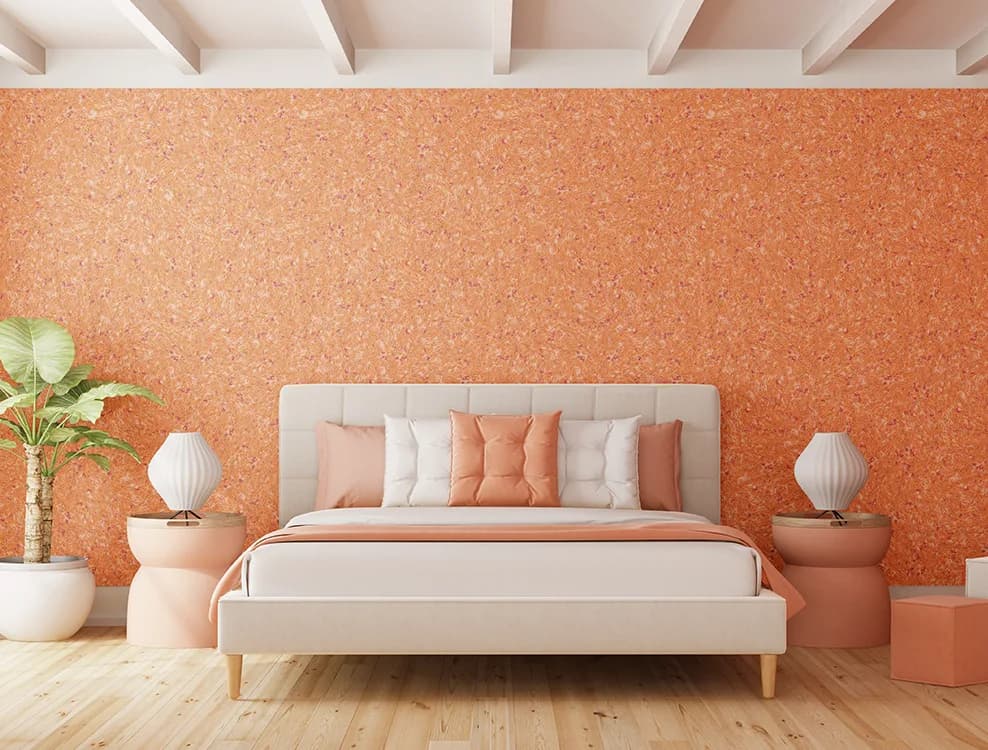
A pearl effect makes the wall shimmer like a pearl, thanks to the mother-of-pearl additive in the paint. As the angle of the light changes, so does the sheen. Silkcoat's Pearl is an interior coating with a mother-of-pearl additive and a pearl-like appearance, applied in line or swirl patterns. Metalico is an interior paint with a mother-of-pearl additive that offers a distinctive, pearl-like lustre.
- Where it works best: On walls where you want to play with light, such as living rooms, behind bedheads and in hotel lobbies.
- Watch out: Because a pearlescent surface reflects light, application marks are more visible, so the decorator's experience matters.
What is a velvet effect?
A velvet effect is a decorative paint that gives the wall a soft, fabric-like look shifting between semi-gloss and matt. Silkcoat's Velvetto, thanks to its pearlescent formula, creates a pearl-like, semi-gloss and matt velvety appearance. Cashmere belongs to the same family and is said to produce very smooth surfaces once applied.
- How it differs from pearl: Pearl is glossier and more shimmering; velvet is softer, with matt and glossy areas blending into each other.
What is a marble effect?
A marble effect is a decorative paint that gives the wall the veined, deep look of natural marble. Marmarito is an interior paint with a marble pattern and a velvety texture; its glassy surface is easy to clean and does not crack. In the final step of application, the surface is burnished with a trowel. For step-by-step instructions, see our article on how to apply marble effect paint.
What is satin paint?
Satin is a sheen level for plain paint that sits between flat matt and gloss, giving a silky-matt finish. It is a sheen term rather than an effect, but it is often confused with effect paints. Silkcoat Natural is a washable interior paint with a satin, silky-matt look.
- When to choose it: For anyone who doesn't want a pattern but wants a surface that is a little livelier than matt paint and can be wiped clean.
What is a relief effect?
Relief is the general name for finishes that create a raised texture on the surface that you can both see and feel. Instead of a flat paint film, the surface is raised with grains, sand or a pattern. At Silkcoat, Decortivo is a decorative paint with a granular structure and white particle texture, while Palace is a grainy, sand-textured interior paint with a pearl effect.
- Advantage: A textured finish gives the surface a sense of depth compared with plain paint.
- Watch out: Raised textures can collect more dust than smooth surfaces, so choose according to your cleaning habits.
What is a travertine effect?
A travertine effect is a decorative coating that brings the porous, streaked and aged look of natural travertine stone to the wall. Travertino is an antique stone decorative paint based on acrylic copolymer and cement, made for interiors. For a comparison with real stone, read our article does travertine effect paint look like real travertine.
What other effect paint terms should be in your glossary?
- Metallic: A pearlescent surface with a metallic shine (e.g. Metalico).
- Crackle (craquelure): An antique look with a controlled crack pattern on the surface (Cracos).
- Colour-shifting (chameleon): Colour that ripples with the light and viewing angle (Magico).
- Concrete look: The effect of raw concrete and weathered stone walls (Betoncoat).
- Water-based: As stated in the product descriptions of Silkcoat effect paints, a formula that is thinned and cleaned off tools with water and is harmless to human health and the environment.
Summary
- Effect paint terms fall into three main groups: light (pearl, satin), touch (velvet, relief) and stone look (marble, travertine).
- Satin is a sheen level; the others describe pattern and texture.
- If you're not sure which term suits your space, get in touch with us for colour and application advice.
A pearl effect gives a glossy, shimmering, pearl-like surface. A velvet effect offers a softer look in which semi-gloss and matt areas blend into each other.
No. Satin is a silky-matt sheen level used for plain paints. It does not create a pattern or texture; Silkcoat Natural is an interior paint of this type.
At Silkcoat, the granular Decortivo and the sand-textured, pearl-effect Palace are the products that create a raised texture on the surface.
No. A marble effect (Marmarito) gives a veined, velvety and glassy look. A travertine effect (Travertino) creates a porous, streaked and aged antique stone look.