



The Difference Between Marmarino Plus and Venetian Plaster
Marmorino vs Venetian plaster: how lime-based Marmarino Plus is made and applied, and where it differs from classic Venetian plaster, in one table.
Short answer: The difference between marmorino and Venetian plaster comes down mainly to surface sheen and application method. Classic Venetian plaster produces a glass-like, glossy marble finish by compressing and burnishing many thin coats with a steel trowel. Marmarino Plus, according to silkcoat.com, is a water-based, lime-based decorative interior paint with a pure acrylic binder and a marble pattern; it comes ready to use, is applied in two coats plus a texture coat, and leaves a softer, velvety marble look.
What is the difference between marmorino and Venetian plaster?
The difference between marmorino and Venetian plaster is that Venetian plaster is a multi-coat, high-gloss burnished system, while marmorino is a marble finish applied in fewer coats, with a matte-to-satin sheen and a stone-like feel. Both aim for a marble look and both are applied with a trowel; where they differ is how much the surface is polished and how many stages the application involves.
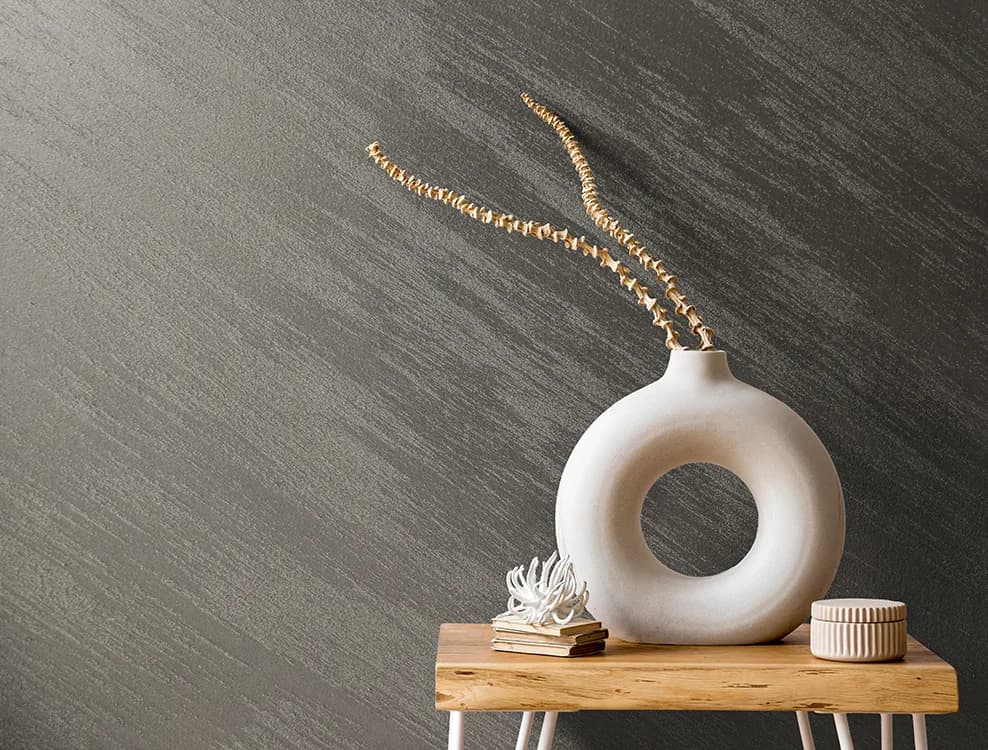
"Venetian plaster" (Italian stucco veneziano) is a general name for an application technique, not a single product. Traditionally, a mix containing lime and marble dust is spread in very thin coats with a steel trowel and compressed at each coat; in the final stage the surface is burnished with the trowel and, in most cases, sealed with a protective wax. Marmorino is also a lime-based plaster from the Venetian tradition, but its coarser texture and less polished surface make it look closer to natural stone. Silkcoat's range has no product called "Venetian plaster"; for a marble look, the site offers Marmarino Plus and Marmarito.
What is Marmarino Plus?
As silkcoat.com defines it, Marmarino Plus is a water-based, lime-based decorative interior paint with a pure acrylic binder and a marble pattern. It sits in the marble effect group of the effect paints category, is used without thinning and creates a marble pattern when burnished with a trowel.
Marmarino Plus is a decorative coating designed for anyone who wants the lime-based marble look of classic marmorino from a ready-to-use, water-based product. According to the technical data on silkcoat.com, coverage is 4.5-5.5 m²/kg, i.e. 250-300 g/m². The product is applied undiluted in two coats with a spatula, waiting at least 4 hours between coats depending on weather conditions. Once the second coat is dry, the product is again spread with a spatula in irregular diagonal and vertical-horizontal strokes to build a textured surface; finally, the trowel is pressed up and down and sideways, and the whole surface is burnished with light circular movements. The result is a wall with a velvety texture and a marble pattern. Because it is water-based, tools clean up with water; the site describes the product as harmless to human health and environmentally friendly.
According to silkcoat.com, the product's key features are:
- High hiding power: Covers the surface evenly.
- Crack resistance: Leaves no cracks once dry.
- Easy cleaning: Its glassy surface is easy to clean.
- Colour variety: Different colour effects can be achieved.
How is Venetian plaster applied?
Classic Venetian plaster is applied by laying thin coats on top of each other with a steel trowel, compressing each coat, and finally burnishing the surface with the trowel. The method involves many stages, and the sheen depends on how thinly the coats are spread and how firmly they are compressed.
The general stages of the traditional application are:
- The substrate is made smooth, clean and dry.
- The first thin coat is spread with a steel trowel and left to dry.
- The following coats are also spread very thinly; the trowel is moved in different directions to create colour variations.
- On the final coat, the surface is compressed with the trowel to bring up the shine.
- In most cases, the surface is sealed with a protective wax and polished.
Since the number of coats, waiting times and coverage vary with the product used and the applicator, it would not be accurate to give a single figure for classic Venetian plaster. Silkcoat's website lists no separate technical data for Venetian plaster, so this article only gives the values for Marmarino Plus and Marmarito.
What are the differences between Marmarino Plus and Venetian plaster?
The main differences between Marmarino Plus and Venetian plaster are the binder, the preparation, the number of coats, the surface sheen and the need for a protective top coat. The table below compares the values of Marmarino Plus on silkcoat.com with the general characteristics of classic Venetian plaster:
| Feature | Marmarino Plus | Classic Venetian plaster |
|---|---|---|
| Composition | Pure acrylic binder, water-based, lime-based | Traditionally lime and marble dust |
| Preparation | Ready to use, not thinned | Varies by product |
| Application | 2 coats with a spatula, then a texture coat and trowel burnishing | Many thin coats compressed with a steel trowel |
| Time between coats | At least 4 hours | Varies by product |
| Coverage | 4.5-5.5 m²/kg (250-300 g/m²) | Varies by product |
| Surface | Velvety texture, marble pattern | High-gloss, glass-like marble |
| Finish | Trowel burnishing | Wax in most cases |
| Full cure | 24 hours | Varies by product |
The most obvious difference in the table is the workload: Marmarino Plus comes ready to use and is finished in two coats plus a texture coat, whereas Venetian plaster requires the applicator to compress and burnish each coat one by one. In terms of appearance, Venetian plaster gives a shinier, more reflective surface, while Marmarino Plus gives a softer, textured one. For the meaning of terms used with effect paints, see our effect paint terms glossary.
What is the difference between Marmarino Plus and Marmarito?
Marmarino Plus has a pure acrylic binder and is lime-based; Marmarito, according to silkcoat.com, is a decorative interior paint with an acrylic copolymer binder and a marble pattern. The site lists the same coverage, drying times and application steps for both products.
| Value (silkcoat.com) | Marmarino Plus | Marmarito |
|---|---|---|
| Binder | Pure acrylic, lime-based | Acrylic copolymer |
| Coverage | 4.5-5.5 m²/kg | 4.5-5.5 m²/kg |
| Touch dry | 30-45 minutes | 30-45 minutes |
| Dust free | 1-1.5 hours | 1-1.5 hours |
| Full cure | 24 hours | 24 hours |
| Packaging | 12 kg and 4 kg plastic buckets | 12 kg and 4 kg plastic buckets |
If you specifically want a lime-based marble look, Marmarino Plus is the right choice; if you want an alternative with an acrylic copolymer binder and the same application method, choose Marmarito.
How should the surface be prepared before applying Marmarino Plus?
The surface for Marmarino Plus must be clean, dry and sound; very glossy or glassy surfaces should be sanded beforehand for better adhesion. According to silkcoat.com, after surface preparation the product can be applied to previously painted surfaces, concrete, plaster, cement boards, wallpaper and glass fibre wallcoverings.
The surface preparation instructions on Silkcoat's Marmarito page serve as a guide for marble effects applied the same way:
- Cleaning: Remove grease, dirt and dust; scrape off blistered and old paint.
- Levelling: If the surface is uneven, first apply Silkcoat Akrilik Macun (acrylic filler).
- Primer: On smooth, previously painted surfaces, use Silkcoat Universal Astar.
- Conditions: According to silkcoat.com, ambient and surface temperature should be between +5°C and +35°C during application and drying.
We cover primer selection in detail in our article on choosing a primer for effect paints. To see step by step how the marble pattern is created, take a look at our guide how to apply marble effect paint.
When should you choose Marmarino Plus, and when Venetian plaster?
Choose Marmarino Plus if you want a velvety marble look in less time with a ready-to-use product; choose classic Venetian plaster if you want a very glossy, mirror-like marble surface and can allow time for a skilled multi-coat application. The decision is a trade-off between the sheen you want and the time and budget available for the application.
These criteria make the choice easier:
- Appearance: Marmarino Plus for a soft, textured surface close to natural stone; Venetian plaster for a reflective, glass-like surface.
- Application time: Marmarino Plus is finished in two coats plus a texture coat, with at least 4 hours between coats; Venetian plaster needs more coats and compression.
- Preparation: Marmarino Plus is used straight from the bucket, without thinning.
- Location: silkcoat.com defines Marmarino Plus as an interior paint, so it is intended for indoor walls.
To see other types of decorative coating side by side, have a look at our decorative plaster guide.
Conclusion
- The difference between marmorino and Venetian plaster lies in sheen and workload: Venetian plaster is a multi-coat, high-gloss finish, while marmorino is a less glossy coating with a stone-like feel.
- According to silkcoat.com, Marmarino Plus is a water-based, lime-based interior paint with a pure acrylic binder and a marble pattern.
- The product is applied undiluted in two coats, with at least 4 hours between coats, followed by a texture coat and trowel burnishing; full cure takes 24 hours.
- Coverage is 4.5-5.5 m²/kg, and it comes in 12 kg and 4 kg packs.
- You can browse all marble-look products on our effect paints page and get in touch with us to find the right product for your space.
No. According to silkcoat.com, Marmarino Plus is a lime-based decorative interior paint with a marble pattern. It gives a marble look similar to Venetian plaster, but it comes ready to use and is applied in fewer coats.
According to Silkcoat's application instructions, the product is applied undiluted in 2 coats with a spatula, waiting at least 4 hours between coats. Once the second coat is dry, a texture coat is applied and the surface is burnished with a trowel.
According to the technical data on silkcoat.com, it is touch dry in 30-45 minutes, dust free in 1-1.5 hours and fully cured in 24 hours.
According to silkcoat.com, after surface preparation it can be applied to indoor surfaces such as previously painted surfaces, concrete, plaster, cement boards, wallpaper and glass fibre wallcoverings. Very glossy surfaces should be sanded beforehand.