



Decorative Plaster Guide: Types, Uses and Application
What is decorative plaster and what types are there? Uses and application of silk plaster, marble-effect Marmarino Plus and Travertino, from silkcoat.com.
Short answer: Decorative plaster is an interior wall finish applied with a trowel to give the wall texture, pattern and depth instead of a flat colour. In Silkcoat products, this look is achieved in three ways: silk plaster, which is based on powdered polymer and prepared by kneading with water; Marmarino Plus, a lime-based finish with a marble pattern; and Travertino, which gives an antique stone look. According to silkcoat.com, silk plaster is recommended for dry interiors such as living rooms, bedrooms, children's rooms and offices.
What is decorative plaster?
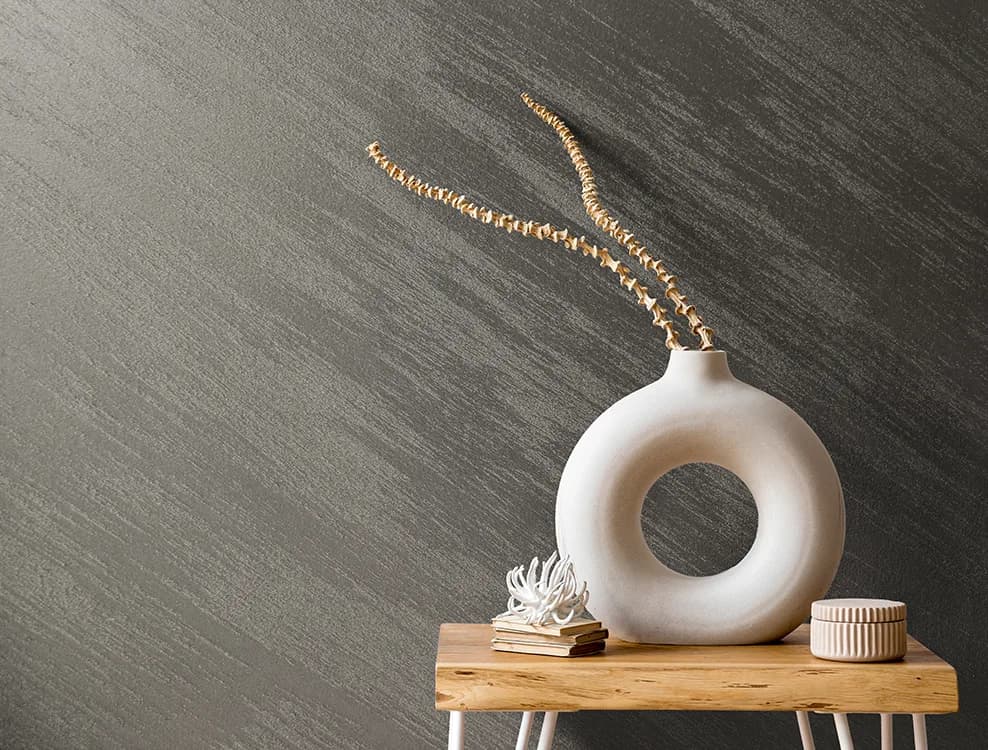
Decorative plaster is a coating material applied to interior walls with a trowel or spatula to create a textured, patterned or seamless surface. Unlike flat paint, it leaves visible texture and thickness on the surface, and its pattern is formed by hand movements during application.
On silkcoat.com, "decorative plaster" is not listed as a separate product category. The silk plasters category is described as "healthy decorative silk plaster coatings", and silk plaster itself is defined by the site as a decorative interior wall coating based on powdered polymer and prepared by mixing with water. Marmarino Plus and Travertino, which are applied with a trowel and spatula and give plaster-like textures, are listed on silkcoat.com in the effect paints category. In this article, decorative plaster is used as a general term covering these three product groups. The look of decorative plaster varies with the structure of the material, the number of coats and the trowel movements.
What types of decorative plaster are there?
Among Silkcoat products, the types of decorative plaster are silk plaster, a lime-based coating with a marble pattern, and a travertine coating with an antique stone look. The table below compares the three types based on the technical information on silkcoat.com:
| Property | Silk plaster (Elegant) | Marmarino Plus | Travertino |
|---|---|---|---|
| Composition | Powdered polymer based | Lime based, with a pure acrylic binder | Acrylic copolymer, cement based |
| Preparation | Kneaded with about 6 lt of water per bag | Used without thinning | 20-25% water added for the first coat |
| Application tool | Plastic trowel or spray gun | Spatula and trowel | Trowel, roller and special tool |
| Thickness or coverage | Average 1 mm, 220-300 g/m² | 4.5-5.5 m²/kg, 250-300 g/m² | 1-1.5 m²/lt, 1500-2500 g/m² |
| Drying | 24 hours | Fully dry in 24 hours | 1 day per coat |
| Appearance | Seamless, lightly textured, warm surface | Marble pattern | Antique stone, travertine lines |
The most obvious difference between these three types is how they are prepared: silk plaster comes as a powder and is kneaded with water, Marmarino Plus comes ready to use, and Travertino is thinned with water for the first coat. For a detailed comparison of effect paint and silk plaster, see our article effect paint or silk plaster.
What are the properties of silk plaster?
According to silkcoat.com, silk plaster is a powdered-polymer-based, water-based, odourless and anti-static decorative interior coating; it contributes to heat and sound insulation and does not collect dust. It is applied at an average thickness of 1 mm and its drying time is 24 hours.
Silkcoat's silk plasters category includes the following products:
- Prestige and İpek Sıva Serileri (Elegant) (silk plaster series): Decorative interior wall coatings based on powdered polymer, supplied in bags; their coverage is 220-300 g/m².
- Smart Colours: A tintable silk plaster; according to silkcoat.com, one bag covers an area of about 4 m².
- Gümüş ve Altın Sim (silver and gold glitter): A glitter additive used to give silk plaster and effect products a sparkling look.
According to the İpek Sıva Serileri (Elegant) page, the product is easy to apply and, thanks to its water-based formula, does not harm human health or the environment. We cover the application and advantages of silk plaster in detail in our guide what is silk plaster.
Where is decorative plaster used?
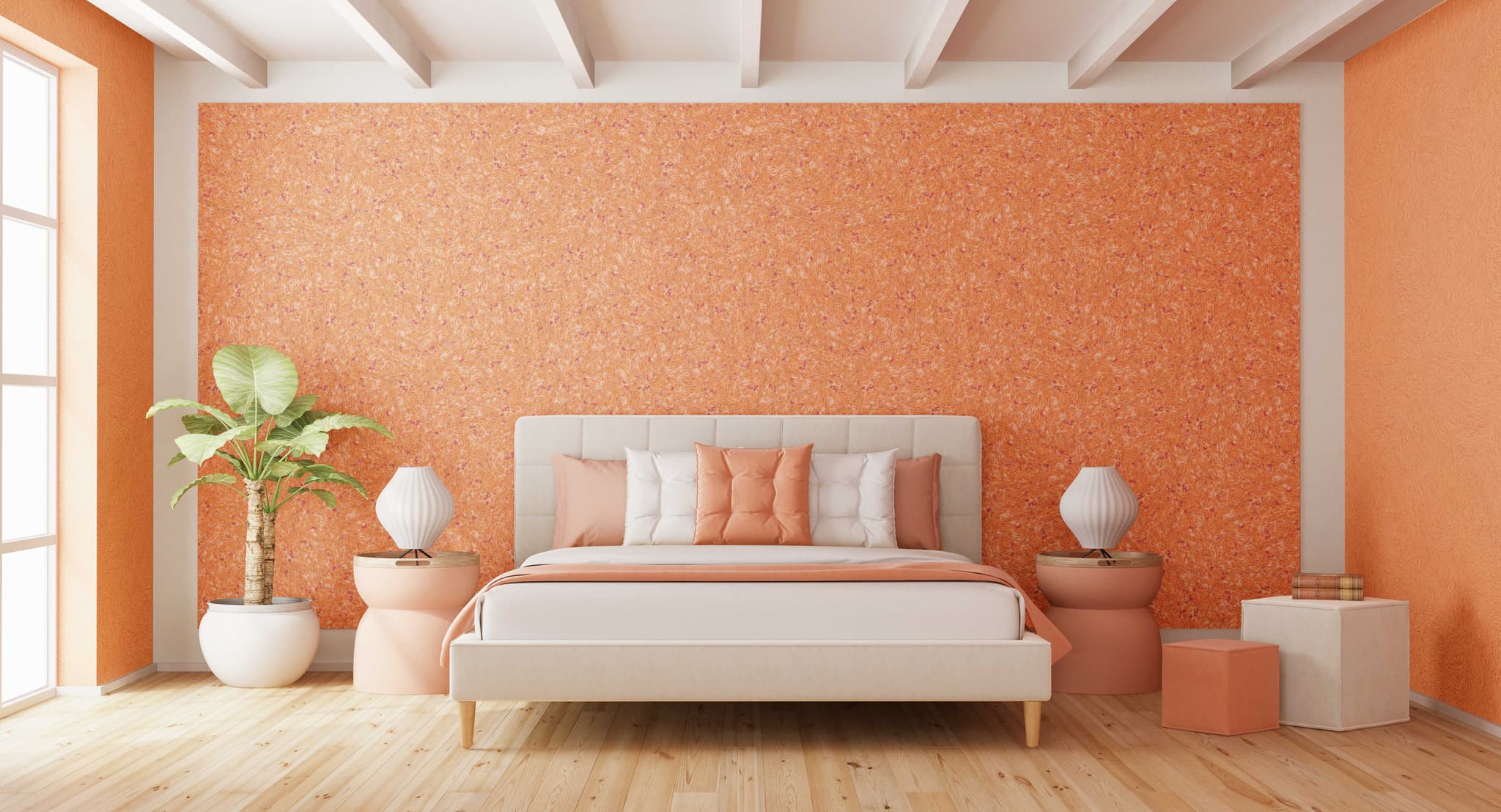
According to silkcoat.com, silk plaster is used in dry interiors such as living rooms, bedrooms, children's rooms and offices; it is not recommended for bathrooms, kitchens or exterior walls. Marmarino Plus and Travertino are also described on silkcoat.com as finishes for interior surfaces.
silkcoat.com lists the surfaces each type of decorative plaster can be applied to as follows:
- Silk plaster: Skim coat, gypsum plaster, plasterboard, wood and non-alkaline surfaces. It is not applied to glass, brick or metal surfaces, exterior walls or damp substrates.
- Marmarino Plus: Interior surfaces such as previously painted surfaces, concrete, plaster, cement boards, wallpaper and glass-fibre textured surfaces.
- Travertino: Painted surfaces with prepared substrates; interior surfaces such as concrete, plaster, rough render and cement-bonded particle board.
We explain how to choose a primer for each type of substrate in our article choosing a primer before effect paint; for silk plaster, Silkcoat Primer is used according to the silkcoat.com instructions.
How is decorative plaster applied?
Applying decorative plaster starts with surface preparation; the material is then prepared according to the product instructions and applied with a trowel. According to the silkcoat.com instructions, silk plaster is kneaded with about 6 lt of water per bag, left to rest for at least 20 minutes and applied with a plastic trowel at an average thickness of 1 mm.
The silk plaster application steps on silkcoat.com are as follows:
- Prepare the surface: The surface is cleaned of all dust, dirt and grease; blistered and previously painted surfaces are lightly sanded.
- Prime: Newly plastered surfaces are first given a coat of Silkcoat Primer; on old painted, dirty or damp surfaces, residues are removed and Silkcoat Primer is applied after SX 2000 Cila.
- Prepare the material: The contents of the bag are emptied into a container holding about 6 lt of water, kneaded thoroughly and left to rest for at least 20 minutes.
- Apply: The material is applied with a plastic trowel using a plastering technique at an average thickness of 1 mm; a spray gun can also be used.
- Do not stop halfway: The surface should not be left half-finished during application, and tools should be cleaned with water immediately.
On newly plastered surfaces, wait at least 28 days before application. Room and surface temperature should be between +5°C and +35°C.
How are Marmarino Plus and Travertino applied?
Marmarino Plus is applied unthinned in two coats with a spatula and polished with a trowel at the final stage; Travertino is applied in layers with a trowel, and each coat is left to dry for 1 day. According to the silkcoat.com instructions, wait at least 4 hours between coats of Marmarino Plus.
The application of the two products differs in the following steps:
- Marmarino Plus: Once the second coat has dried, the product is applied with a trowel or spatula using irregular diagonal and vertical-horizontal movements; at the final stage, the surface is polished by pressing the trowel up and down and sideways.
- Travertino: The first coat is thinned with 20-25% water, applied with a trowel and left to dry for 1 day. Before the second coat, the surface is dampened with a roller; when the second coat is almost dry, lines are drawn with the back of the trowel.
- Travertino final coat: On the third day, the surface is dampened again and, before it is fully dry, Silkcoat Arteco thinned by 25-30% is applied with a special tool.
We describe how to create the marble pattern step by step in how to apply marble effect paint, and the travertine texture in our travertine wall coating guide.
What should you consider when choosing decorative plaster?
When choosing decorative plaster, the desired look, the humidity of the room, the type of substrate and the application time should all be weighed together. According to silkcoat.com, silk plaster is only for dry interiors, while applying Travertino stretches over several days because of the waiting time between coats.
The following trade-offs can help with the choice:
- Look: Silk plaster for a seamless, lightly textured surface, Marmarino Plus for a marble pattern, Travertino for an antique stone look.
- Humidity: Silk plaster is not used in bathrooms, kitchens or on damp substrates.
- Time: Silk plaster is finished in a single application and dries in 24 hours; with Travertino, each coat takes 1 day to dry.
- Skill: The polishing of Marmarino Plus and the line-drawing step of Travertino call for more trowel technique than silk plaster.
Conclusion
- Decorative plaster is an interior wall finish applied with a trowel that gives the wall texture, pattern and depth.
- In Silkcoat products, the decorative plaster look is achieved with silk plaster, Marmarino Plus and Travertino.
- According to silkcoat.com, silk plaster is based on powdered polymer, kneaded with water, applied at an average thickness of 1 mm and dries in 24 hours.
- Silk plaster is for dry interiors such as living rooms, bedrooms, children's rooms and offices; it is not recommended for bathrooms, kitchens or exterior walls.
- You can browse the products on the silk plasters page and get in touch with us for the right decorative plaster for your space.
Decorative plaster is a coating applied to interior walls with a trowel to create a textured or patterned surface. In Silkcoat products, this look is achieved with silk plaster, marble-patterned Marmarino Plus and antique-stone-look Travertino.
According to silkcoat.com, silk plaster is not recommended for bathrooms, kitchens or exterior walls; it is used in dry interiors such as living rooms, bedrooms, children's rooms and offices.
According to the silkcoat.com instructions, the contents of the bag are emptied into a container holding about 6 lt of water, kneaded thoroughly, left to rest for at least 20 minutes and applied with a plastic trowel at an average thickness of 1 mm.
According to silkcoat.com, the drying time of silk plaster is 24 hours. Marmarino Plus is fully dry in 24 hours, while with Travertino each coat is left to dry for 1 day.