Does Travertine Effect Paint Look Like Real Travertine? Cost and Weight Compared
Does travertine effect paint look like real travertine? We compare Travertino with natural stone on looks, weight, cost items and application.
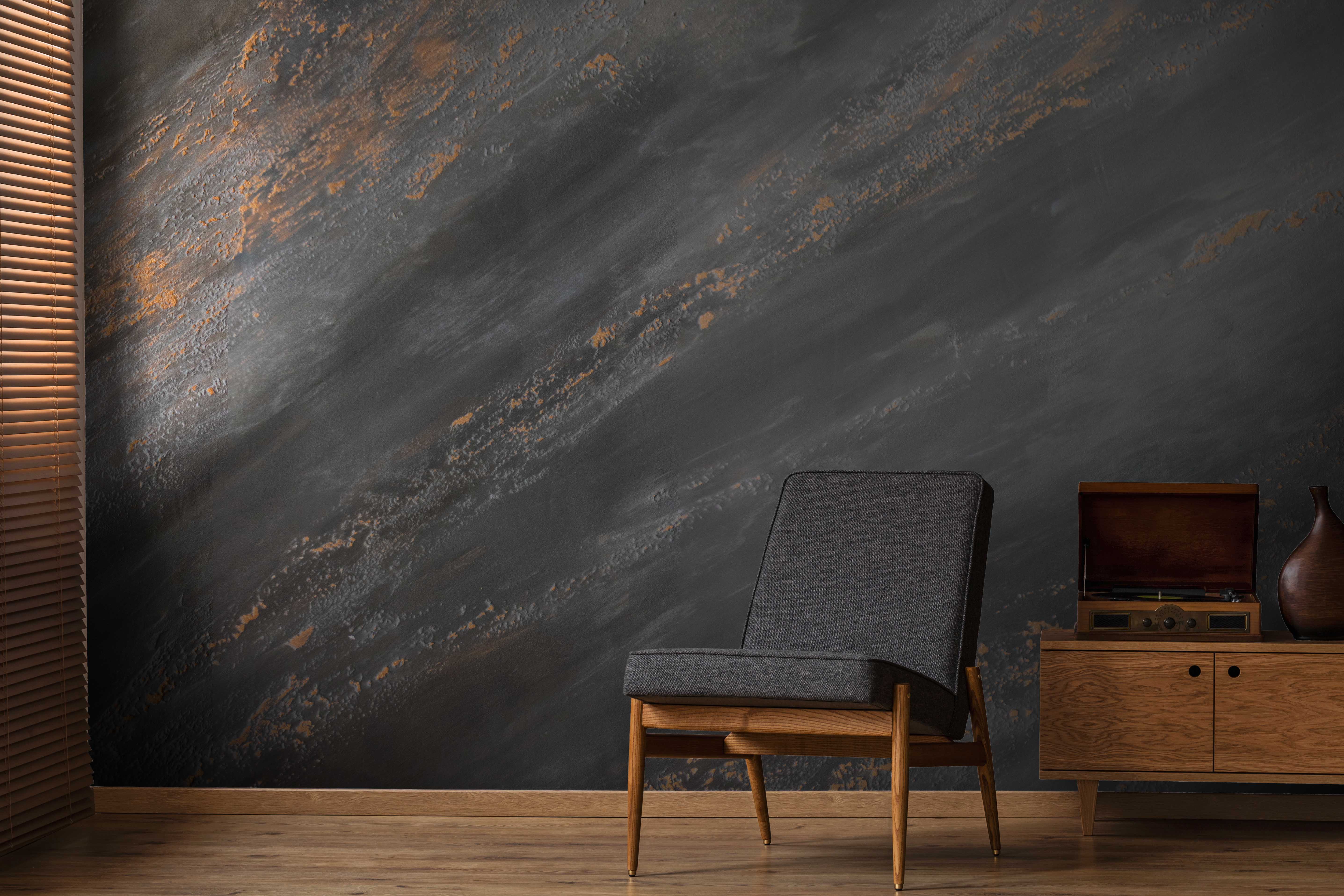
Short answer: Yes. Applied correctly, travertine effect paint gives a wall an aged, textured stone look that comes very close to real travertine. Silkcoat Travertino is applied at just 1.5-2.5 kg of material per square metre, with none of the load, cutting, tile adhesive mortar or grouting work that natural stone cladding involves. You notice the difference in coolness and depth when you touch it up close, not in how it looks.
What is travertine effect paint?
Travertine effect paint is a decorative coating that gives walls the porous, streaked and aged look of natural travertine stone. Travertino, made by Silkcoat for exactly this purpose, is an antique stone decorative paint based on acrylic copolymer and cement. According to the product information:
- It offers an aged, modern stone look.
- It allows for different pattern applications.
- It is water-based, harmless to people and the environment.
Does travertine effect paint look like real travertine?
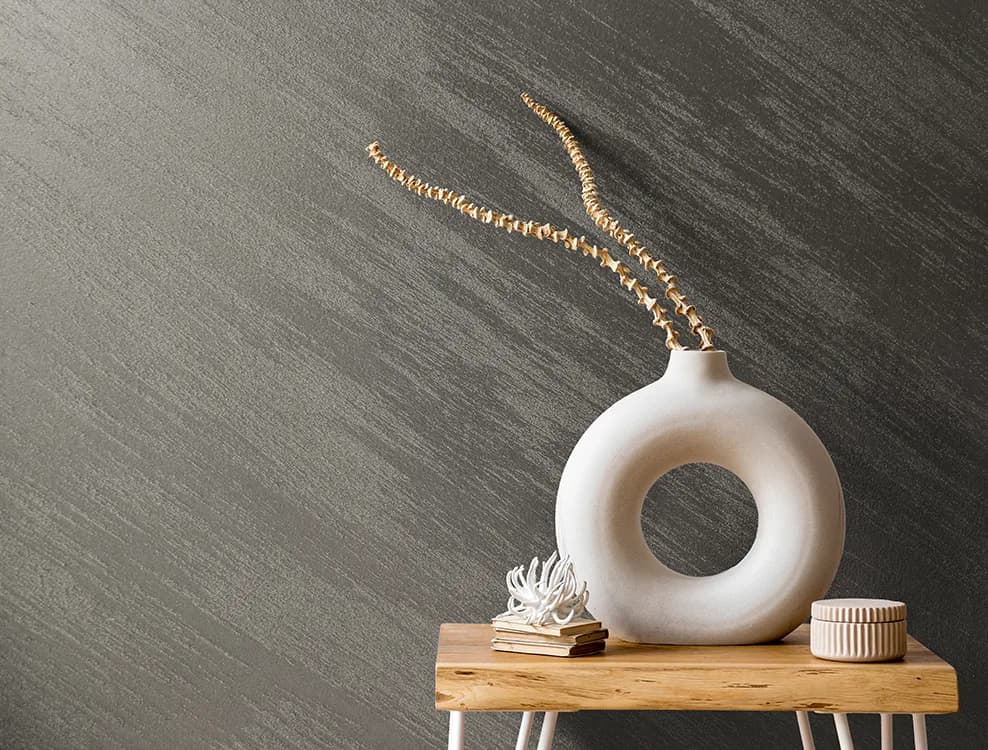
Visually, yes. When the second coat of Travertino is almost dry, lines are drawn into it with the back of the trowel; these lines imitate the characteristic veining of natural travertine. Arteco, applied as the final coat, adds colour variation and depth to the surface. The finished surface is hard to tell apart from natural stone from a few steps away.
The differences are as follows:
- Natural stone feels cold and hard to the touch; effect paint takes on the temperature of the wall.
- Natural stone shows the joints between slabs (grout lines); effect paint gives a seamless, continuous surface.
- Natural travertine is also used on floors and exterior façades; Travertino is an interior product.
Travertine effect paint vs natural travertine
| Criterion | Travertine effect paint (Travertino) | Natural travertine cladding |
|---|---|---|
| Load on the wall | 1.5-2.5 kg of material per square metre | Much heavier, with stone slabs, adhesive and mortar |
| Appearance | Seamless, continuous stone texture | Slab and grout lines are visible |
| Application | 2 coats by trowel + Arteco final coat | Cutting, bonding, grouting |
| Materials | 15 kg and 25 kg buckets | Stone slabs, adhesive, grout |
| Where to use | Interior walls | Interior and exterior, floors |
| Renovation | A new coat can be applied on top | Requires removal |
How much weight does travertine effect paint save?
Travertino's consumption is 1500-2500 g/m², i.e. 1.5-2.5 kg per square metre. Natural stone cladding, on the other hand, requires adhesive and mortar on top of the weight of the stone itself. This difference matters especially:
- On plasterboard, in older buildings and on lightweight partition walls, where extra load is unwanted;
- On ceilings and high walls, where installing stone is difficult;
- In shops, hotels and restaurants and other commercial spaces that are refurbished often.
How does travertine effect paint compare on cost?
We don't quote figures here, because the exact price depends on colour, area size and labour. But when you look at the cost items, the difference is clear:
- Effect paint: Materials (Travertino and Arteco) + primer/filler + trowel labour.
- Natural stone: Stone slabs + cutting waste + adhesive + grout + stonemason labour + transport and, if needed, wall reinforcement.
With effect paint there is no cutting waste, no heavy material handling and no removal cost. You can get pricing for your project by contacting us.
How is travertine effect paint applied?
- Surface preparation: The surface is cleaned of dust, dirt and grease; flaking and previously painted surfaces are lightly sanded. Cracks are repaired with Akrilik Macun.
- First coat: Travertino is mixed with 20-25% water until smooth and applied to the whole surface with a trowel. Leave it to dry for 1 day.
- Second coat: The surface is dampened with water using a roller and the second coat is applied with a trowel. When it is almost dry, travertine lines are drawn with the back of the trowel; then leave it to dry for another day.
- Final coat: On the third day the surface is dampened with water again and, before it dries completely, Arteco thinned by 25-30% is applied with a special tool.
During application and drying, the ambient and surface temperature must be between +5 °C and +35 °C. Because the product is cement-based, only mix with water as much as you need for each coat. For detailed application steps, see our Travertino wall coating guide.
Summary
- Travertine effect paint gives a look very close to real travertine; the difference is felt in touch and coolness.
- Travertino is applied at 1.5-2.5 kg per square metre, eliminating the load, cutting and grouting work of natural stone.
- With no cutting waste, transport or removal costs, it is usually the more economical option.
For other options, take a look at our effect paints page.
It is hard to tell from a few steps away. Up close, you can feel the coolness and hardness of natural stone, while effect paint gives a seamless, continuous surface.
The first coat dries in 1 day and the second in 1 day; the Arteco final coat is applied on the third day. So the application is completed in about three days.
No. Travertino is made for interior surfaces and is applied to prepared interior surfaces such as concrete, plaster, rough plaster and cement board.
Travertino's consumption is 1500-2500 grams per square metre. It is sold in 15 kg and 25 kg buckets.