
The first thing a kitchen surface has to deliver is not looks but cleanability. Fat particles released while cooking settle on the wall as a thin film, and whether that film wipes off without a mark decides how the wall looks a few years later.
The splashback is a separate question
The band between hob and worktop takes direct splashes, heat and steam; that is the territory of glass and ceramic. Paints and decorative finishes belong on the wall above the units, in the dining area and on the ceiling.
Continuity in an open kitchen
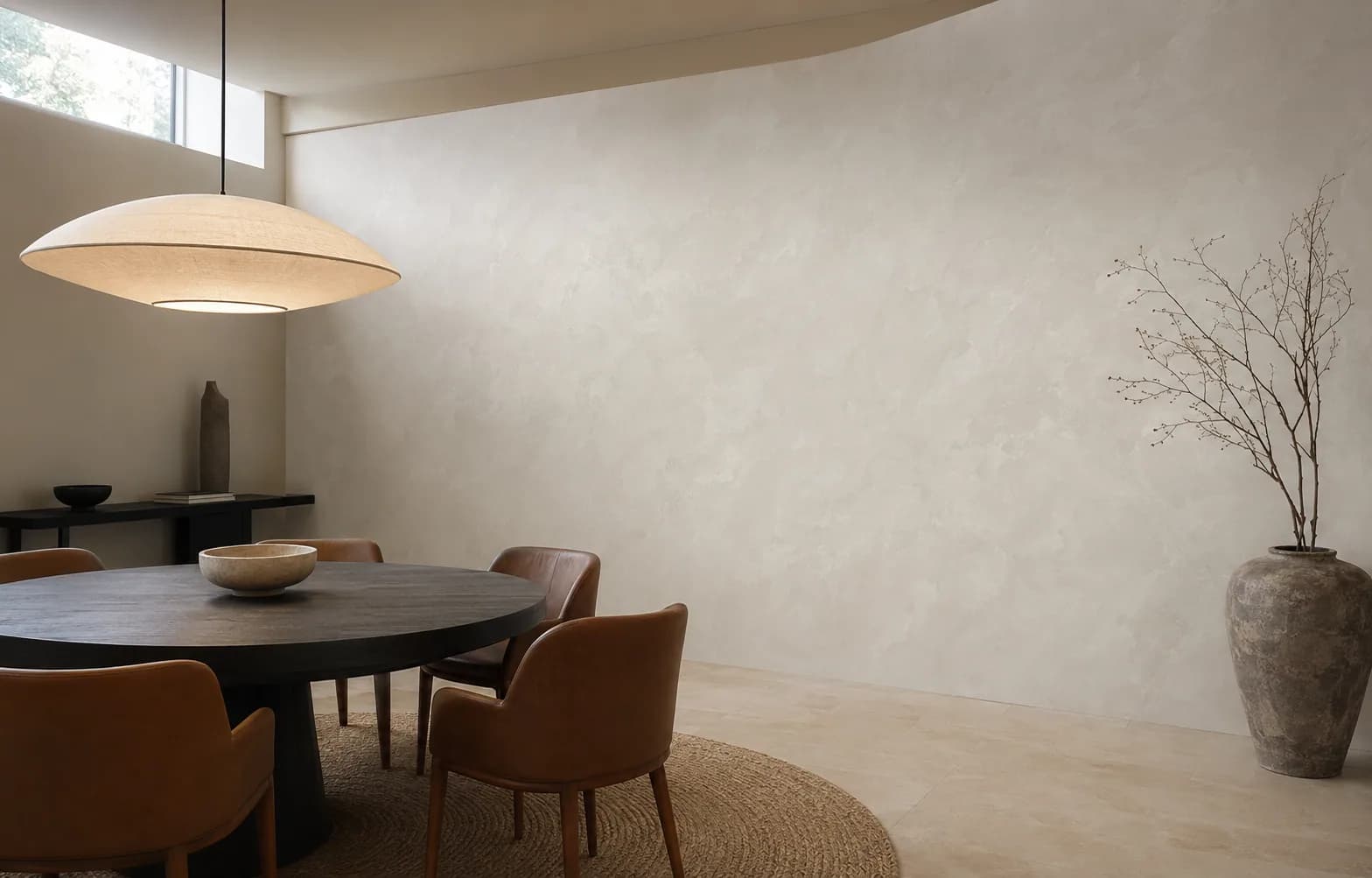
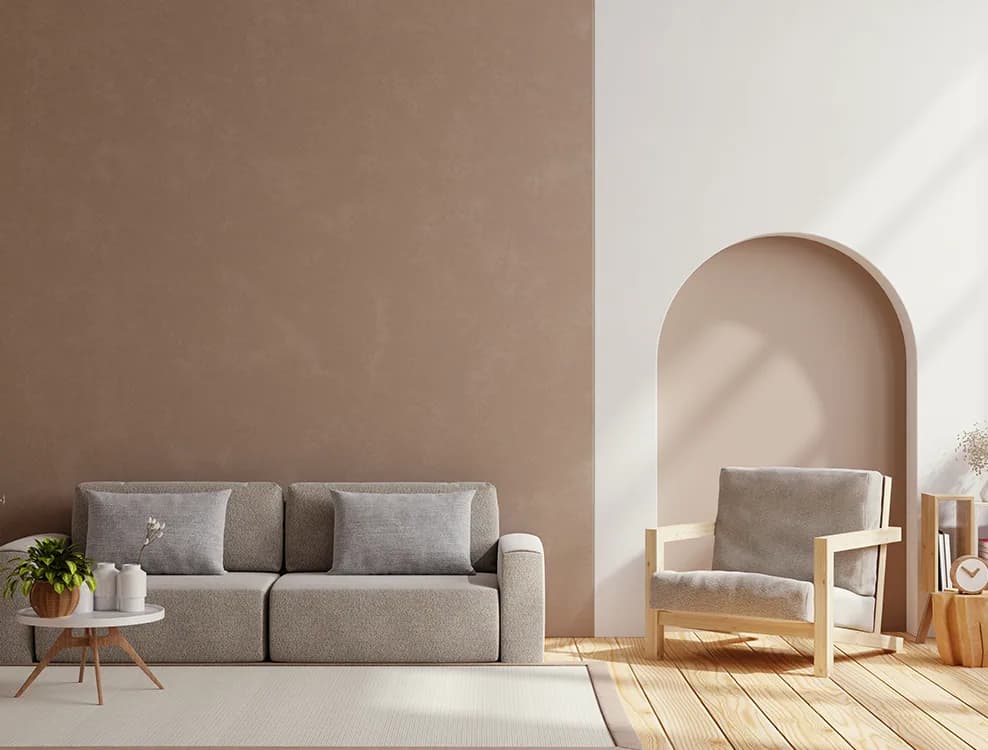
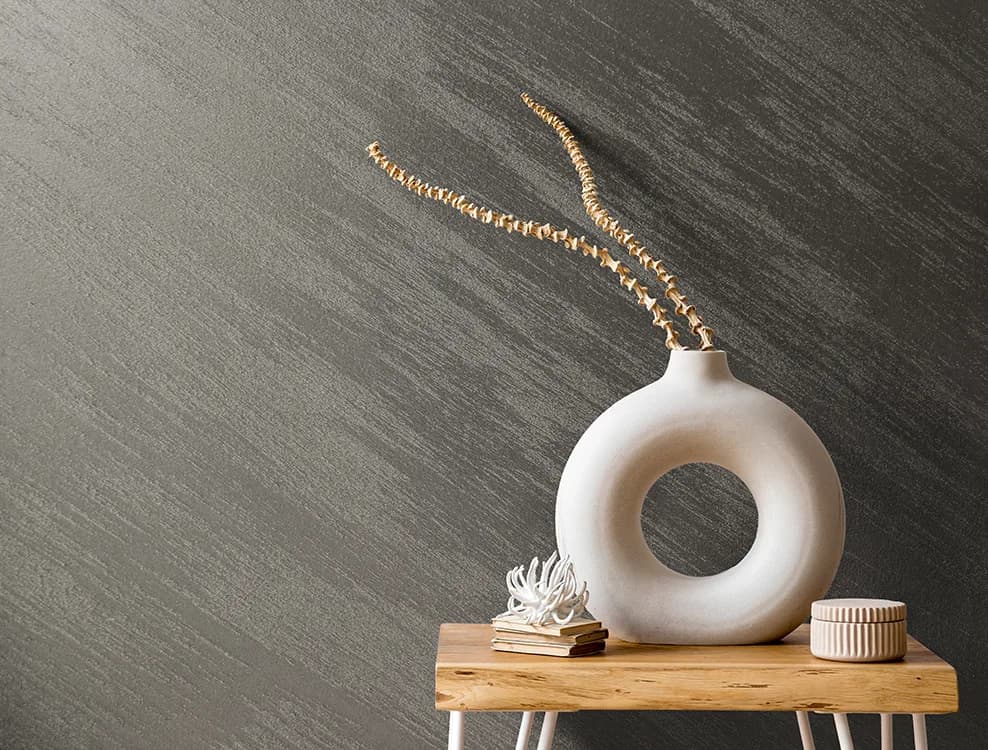
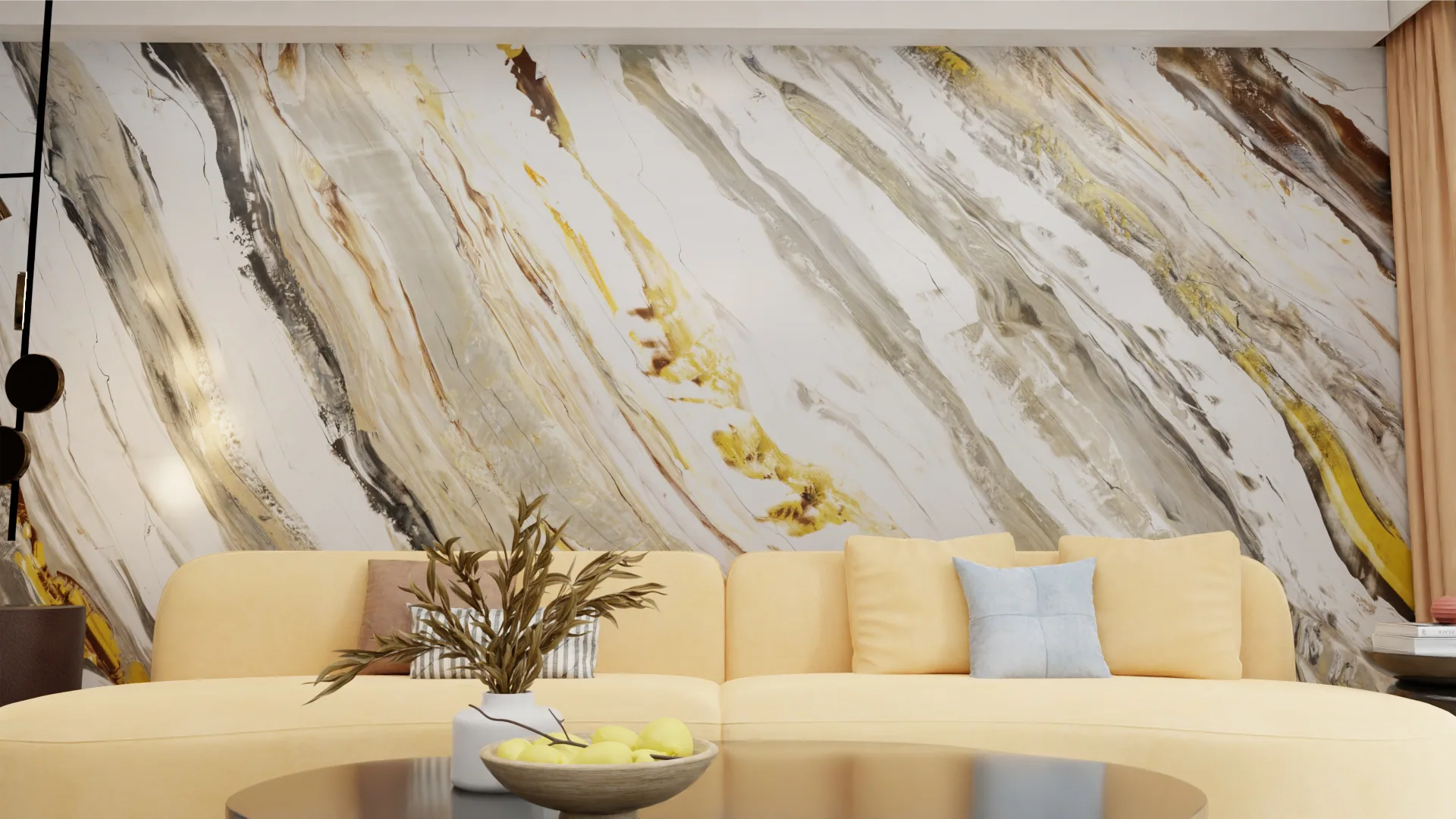
If the kitchen opens into the living room, the two surfaces have to finish each other. A common arrangement carries the decorative texture of the living room as far as the dining area, then switches to a highly washable topcoat in the same tonal family for the cooking zone, with the change landing on an architectural line.
Cabinets and wood
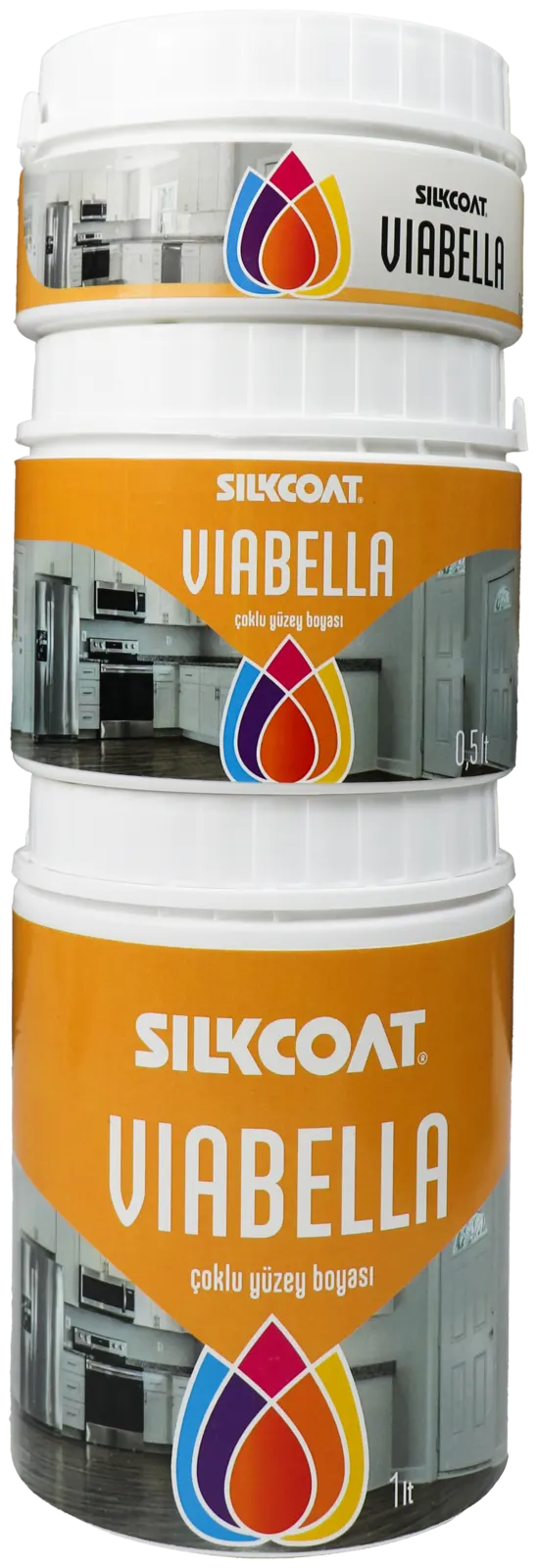
In a kitchen refresh, doors age faster than walls. Conversion paints that bond to different substrates make it possible to renew the colour of doors and shelves without replacing the whole kitchen.